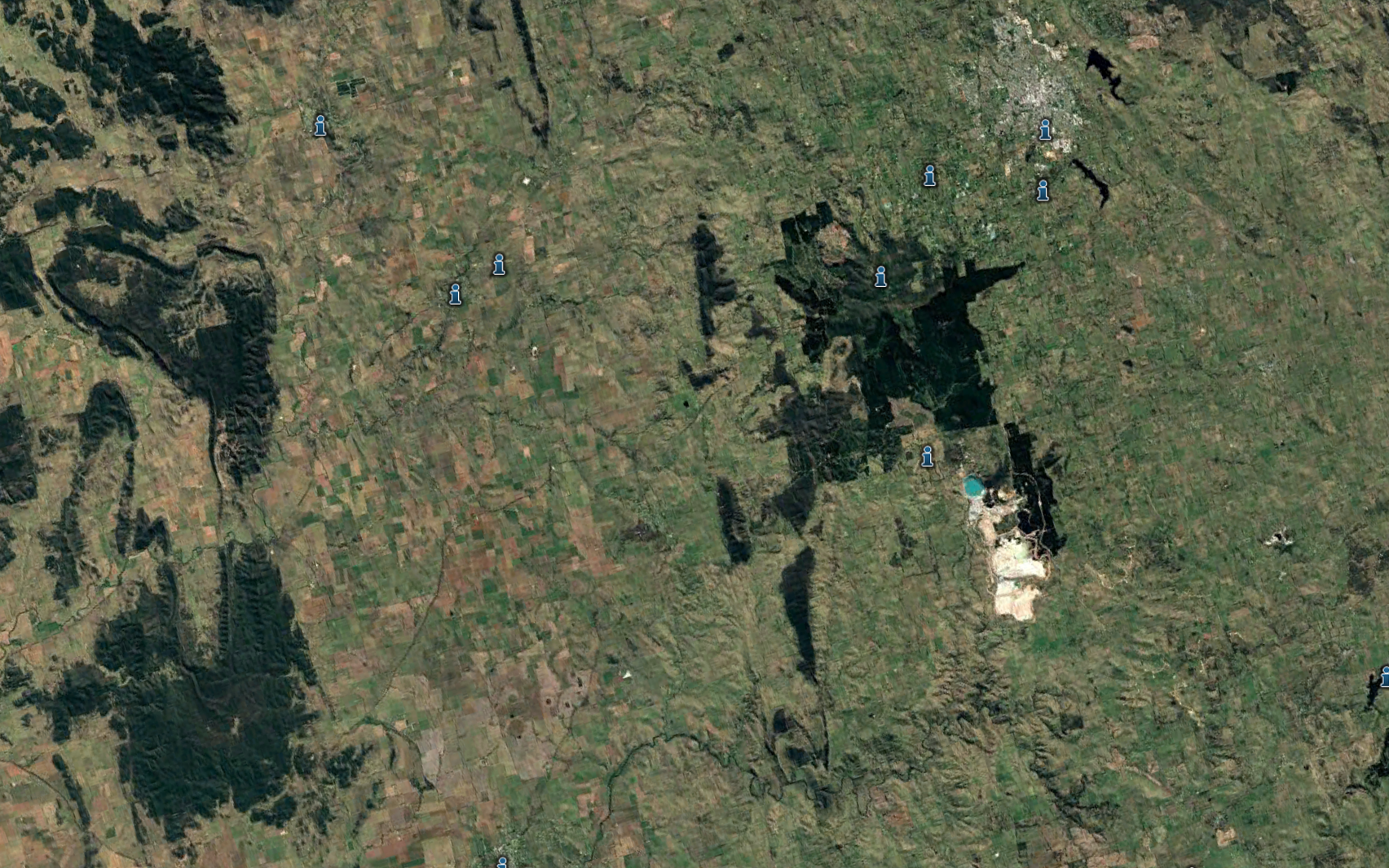
Mount Canoblas the centre of a drainage catchment I visited and videoed in 2010 and pointed out the problems that would eventually result in a disastrous flood in 2022
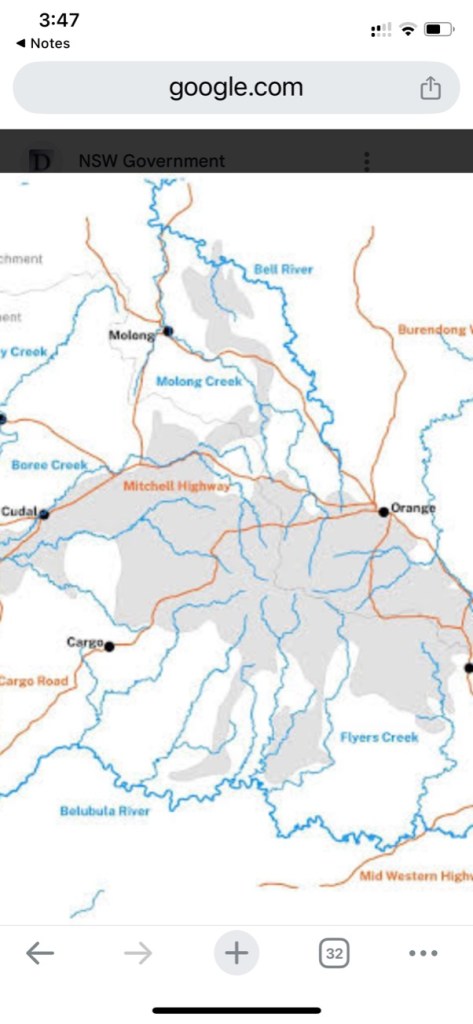
Mount Canobolas is the centre of all the streams radiating out from this map. Mount Canobolas volcanic soils a very porous and surface water is collected underground in the fractured rock aquifers covering this entire area.
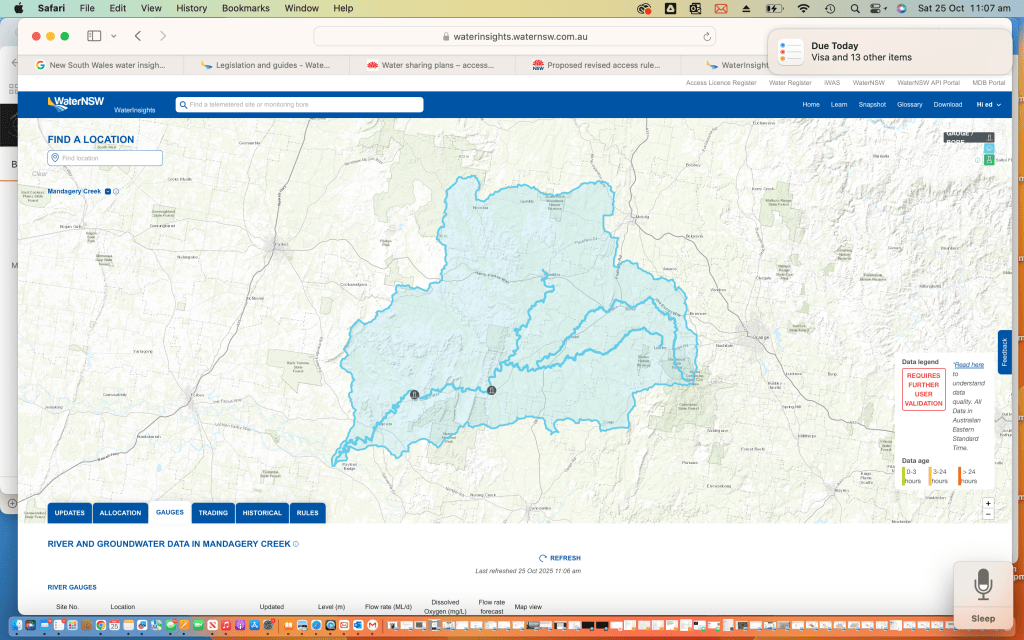
The blue shaded area on this map which is the Mandagery Creek catchment contains some of those streams radiating out from Mount Canobolas potentially carrying water right to the Lachlan River below Eugowra
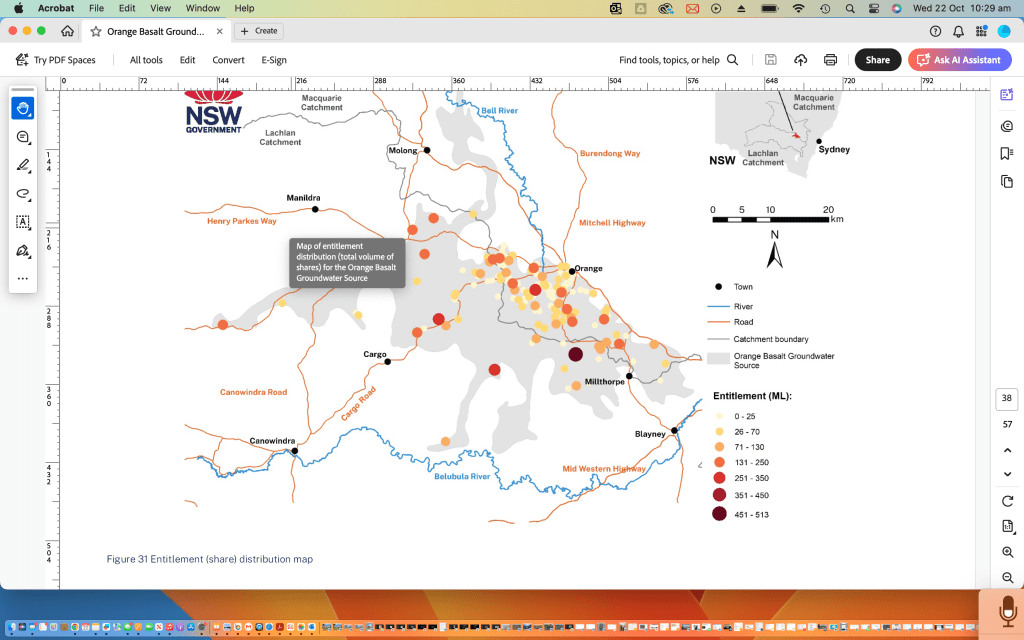
Map of entitlement distribution (total volume of shares) for the orange basalt ground water source. This water source is adjacent to the Mandagery Creek water source.
I wrote the following poem. I videoed the above video. Recorded the above audio all in 2010. Pointing out the problems of overuse of our vital ecsystems 15 years ago.

 Google earth doesn't lie

It's shows the earth from the sky
.
 The Upper Lachlan catchment isn't flat

 we can be sure of that.

What I see. No tree,

only water carved wrinkles
.
Free to carve deeper

. Run water run and scour.

It's a joke that you can no more soak

Look, look down at the manhandled Mandagery


It's a shame.

It's just a drain.

To speed the rain.

 Sudden storm like an express train

. Winds it's way to a salty end on the Lachlan plain.

We've got the brains to slow the rains
.
 And there are some good souls go to pains

. As a bystander I am shocked

  by the stocks impact.

Piecemeal it won't heal.

How much floggen and delog'n
.
How much pug'n and bog'n.

Join together.

 Make a chain to restrain the flow
.
 A chain of land owners to recreate the chain of ponds

. A chain of resistance to stock
.
  A virtual lock on vulnerable land.

 Collar the cattle.

Shock the stock of that block.

Give them some other till it can recover

. GPS not only a factor in steering ya tractor

. Steers the stock.

 They yield to a virtual field.
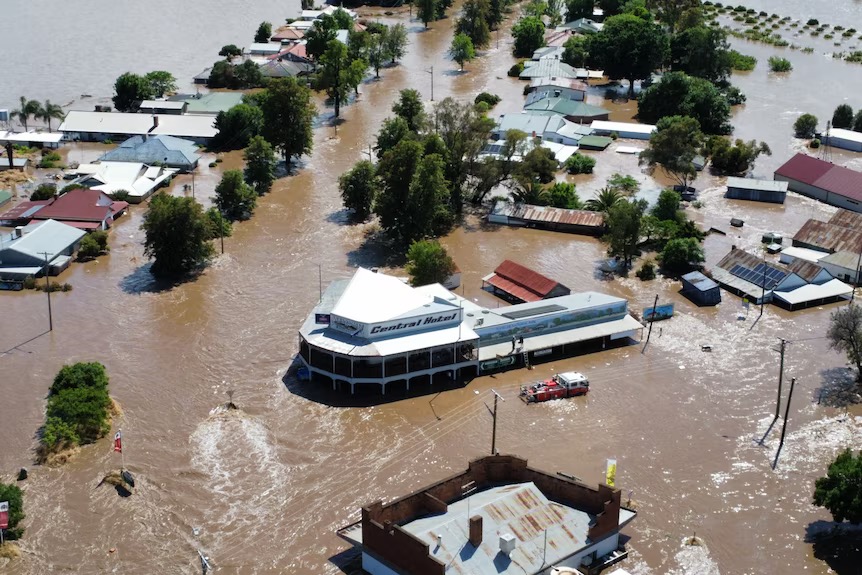
photo curtesy ABC news.
Eugowra. Main Street during the 2022 floods.
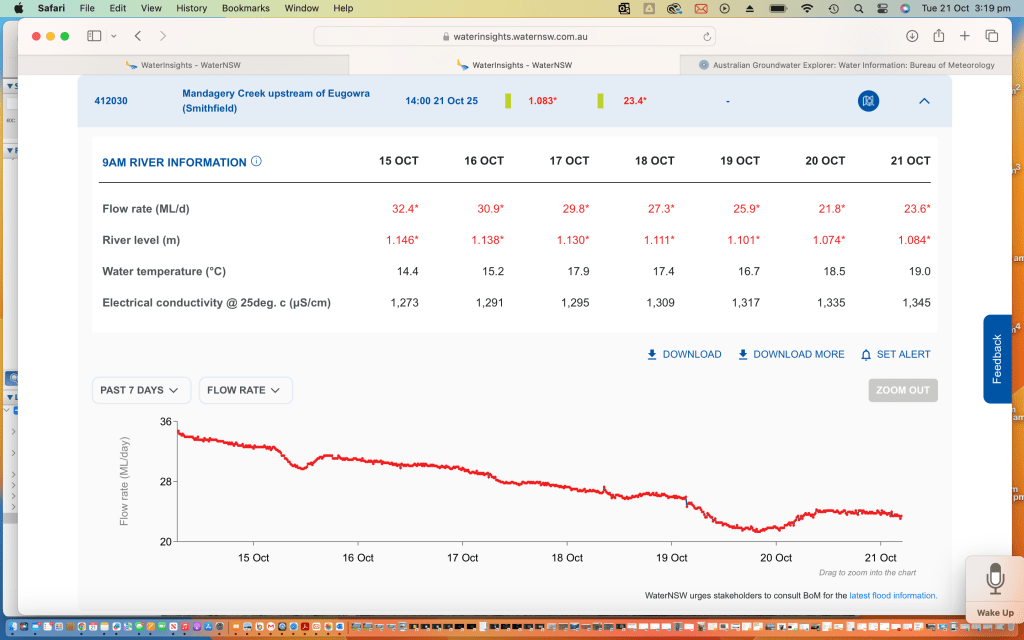
look at the monitor bores around Mount Canobolas groundwater catchment
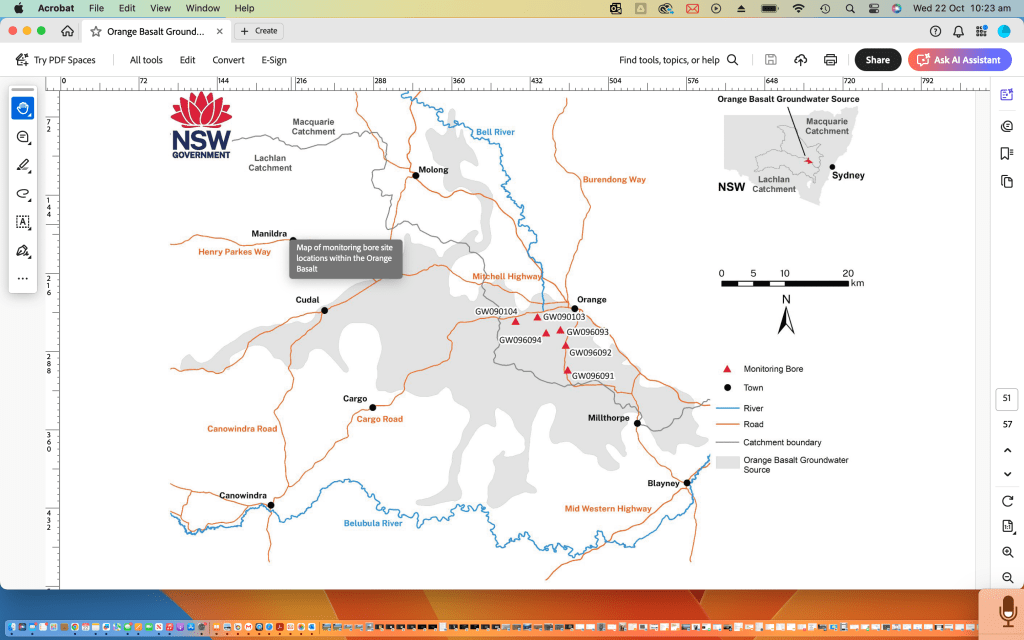
Look at the extent of the catchment called Mount Canobolas groundwater
All of the lachlan catchment surface water sources
Extraction rates from bores around Mount Canobolas ground water source
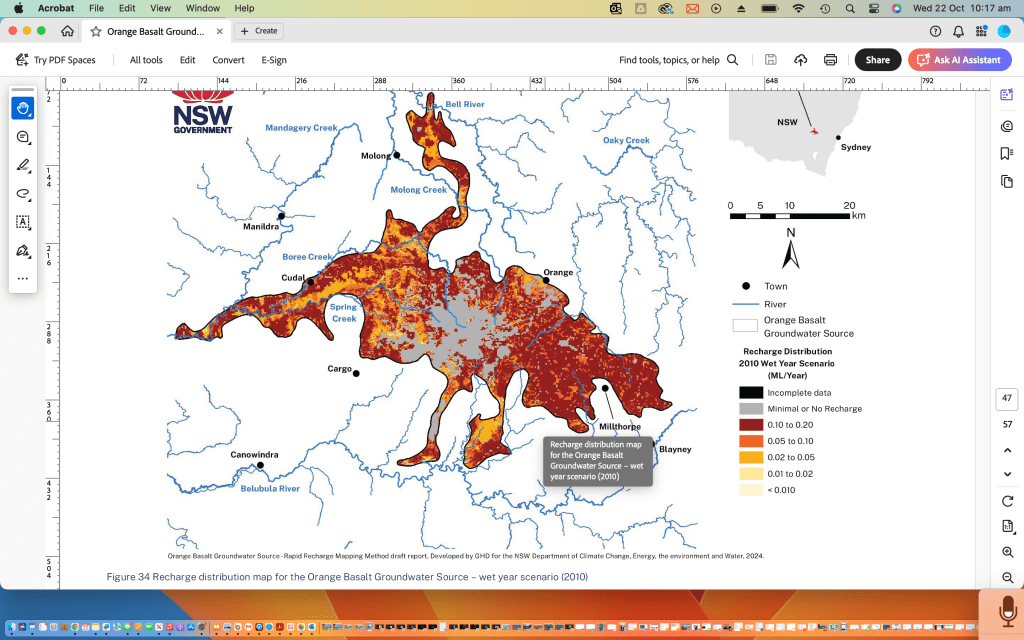
Recharge of Canobolas ground water sources in good years
Recharge of Canobolas ground water sources in poor years
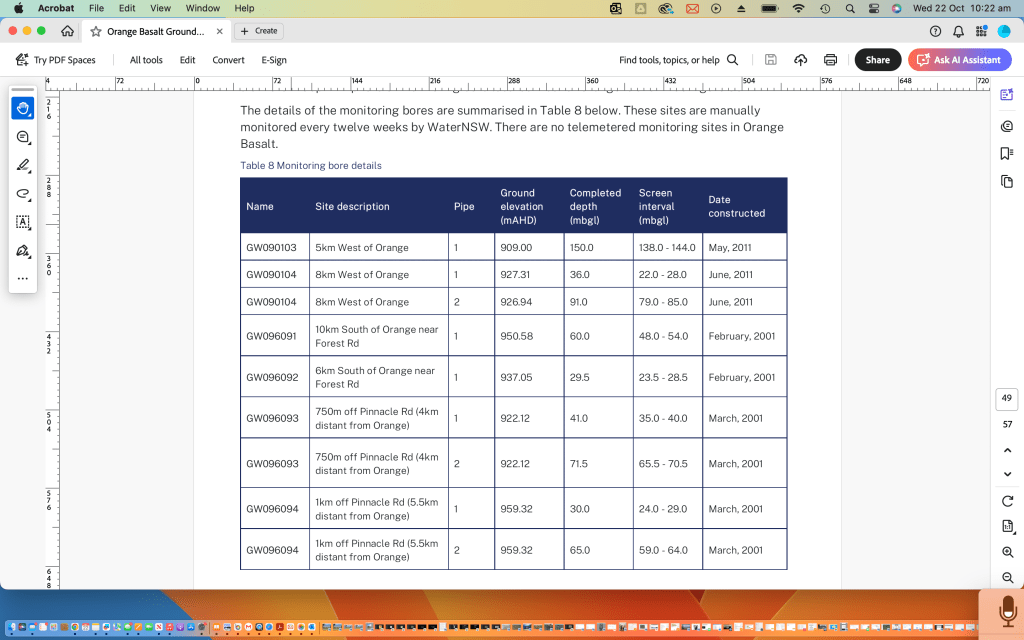
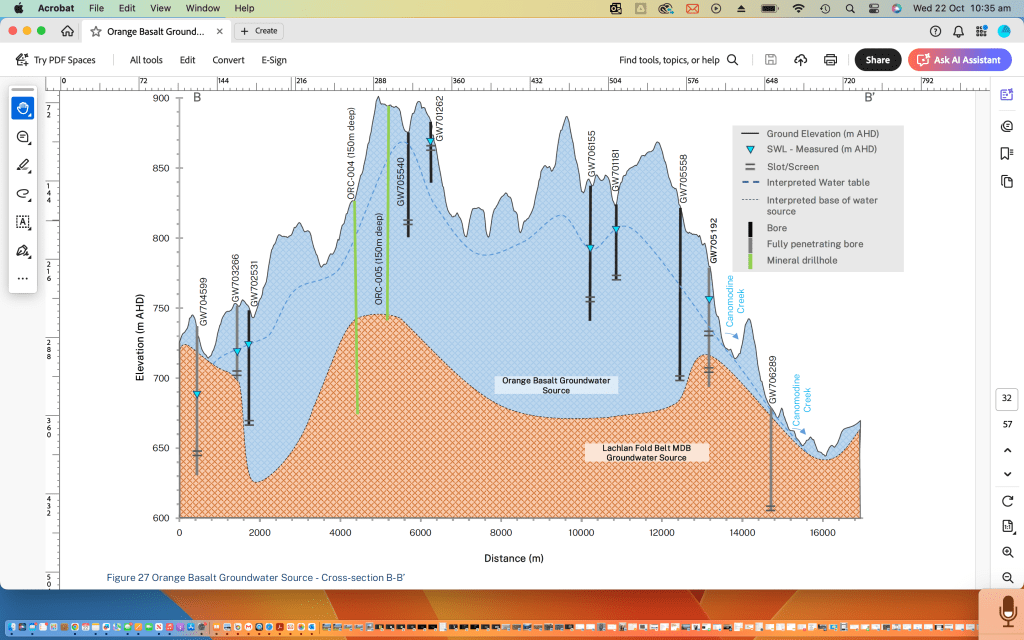
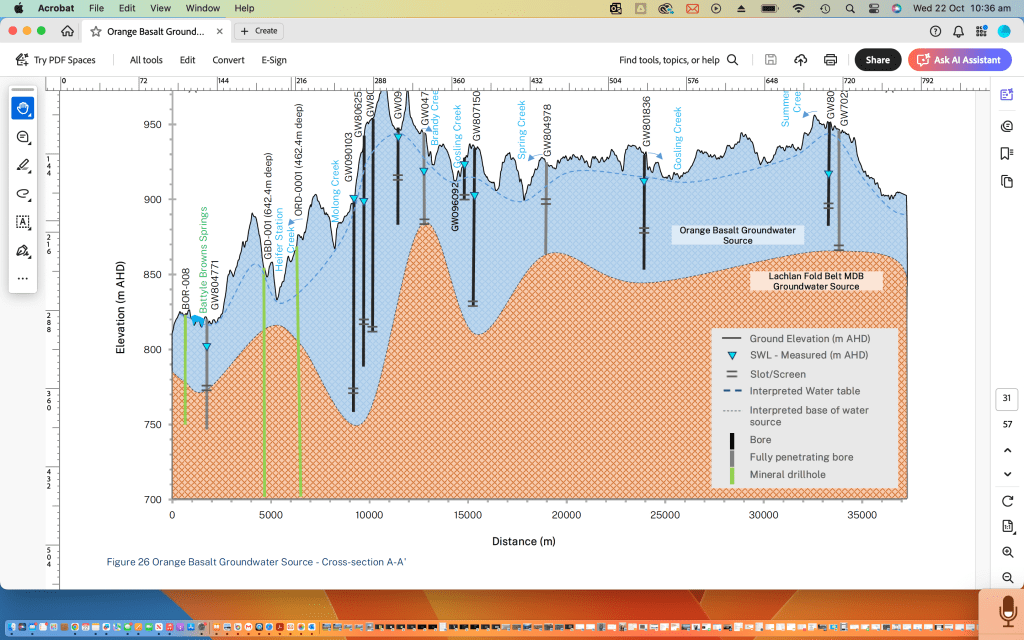
Bores in the Canobolas ground water source and also the Lachlan fold belt fractured rock water source
More bores in the Canobolas groundwater source
I acknowledge that use of data from Google Earth and the New South Wales government websites
THE RESURRECTION OF LAKE CARGELLIGO. It had been dry for awhile. This video was taken on fifth of February 2010 as rains started to fall.
by:
Edgar T. Vagg

Eddie's editing take.

I watch a scene on the screen.

A resurrection of a lake.

On the third month it rose again from the dead.

The camera zoomed in on the distant shoreline.

I'm taken aback with the flood of emotion at the flood of water and its motion. Taken back to my childhood playground. Oh! Wading summers, willow summers, white-capped waves wash over wallowing wags. Whooping and wailing.

Yesteryear as sharp as the smell of weed and water and waders, pardalot and coots and water rat under willow roots.

Show me more for my memory store.

The camera zooms the placid waters.

Rowing and bailing, becalmed.

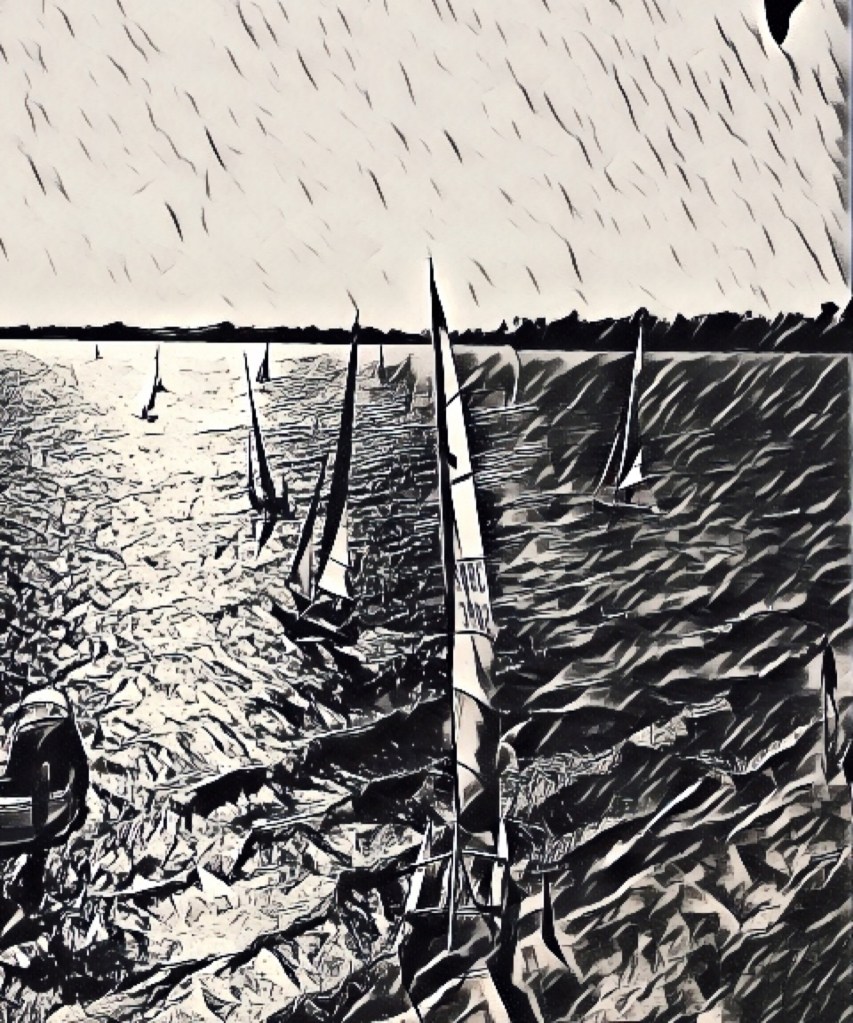
Sailing and bailing, gibeing and leaning and reaching in a choppy southwester. Shocked by the cool wet spray on a scorching summer's day.

Now shocked by the power of emotion.

An old friend has risen from the dead. Resurrected by moisture from the distant ocean.

Lake Cargelligo
Lake Cargelligo risen from the dead on the 15th February 2010
Cattle drive in the fifties from Bourke to Lake Cargelligo.
Related by Tom Holmes to Eddie Vagg on 2nd August 2011.
Dalgetys alerted Dave Cleaver to a big mob of cattle at Bourke.
Dave, Matt Hooker, Tom Meadows, Eddie Meadows decided that they would drive them back to the Lake and split them up when they got back.
Tom Holmes had cut his leg badly getting fence posts with his grandfather Tom Meadows.
Tom was on light duties so was seconded as a member of the droving team along with Des Vagg both still youngsters. Tom was 19 Des about 20.
Des had been a member of Daves shearing team.
They were given a mob of horses for the run. Tom Holmes picked out a little quiet white pony, no saddle.
There was a good looking horse that hadn’t been ridden and old Tom Meadows said it needed a breaker.
“Give me a saddle and I will ride it”, said Des. Bucked like hell but he stayed with it. Gave the saddle back and rode it bareback for the rest of the trip.
Matt Hooker had an old truck as the chuck waggon .
There were horse and carts and Eddie Meadows had a cut down car for a ute which wife Fay would run as a messenger vehicle to get supplies when needed.
She had Glenda and I imagine Carmel with her as they were only todlers.
A huge camp oven was constanly full of stew made from sheep sometimes beef as deals were made with passing stations.
Ollie Germine from Twin Wells between Cobar and Mount Hope was one noted station owner.
The camp oven was kept on Matt Hookers truck with a weight of something like a sugar bag on it to stop it from spilling.
Reheated over the campfire at tucker time. Pumpkins whole would be put in the camp oven after seeds removed.
They would kill and salt meat. Old Tom had a cool safe for fresh meat. They did the trip in winter/ spring weather, cooler, sometimes wet. Made old Toms damper making difficult.
Lots of yarns round campfire. Old Tom was as a bullock driver. He once was called on during the floods to get 90 bales of wool out of Merrigal and bring them 40k to the rail head a Lake Cargelligo. the trucks couldn’t get in.
Old Tom would ride back miles to an emu nest to collect eggs to make omlets. The old hen would keep laying.
The cattle were corralled at night with ringlock . They were a quiet mob of mixed breeds.
Old Tom rounded up a killer himself when he got to Cowan Downs. He used to work there dam sinking with his bullocks so felt entitled to one or two.
The station owners were welcoming so they did get to have a shower but it was mostly a dip in a dam.
The young fellows were paid five pounds a day. They were on the road for about 2 months. I remember brother Des coming home. He had a big black beard.
As the blacks and the greys with the Browns and the bays feed in the moonlight spell.
The eerie clink of the hobble chains
Comes clear on the crystal air.
As the cattle tramp out wide of the camp and stare at the fire there.
The peg-dogs Crouch as they watch and wait to keep the mob at bay
As an old dog lies with drowsy eyes and dreams of a distant day
And I dream too, of another night many years ago when a nervous mob with hearts athrob was pacing to and fro.
As I sat alone by the fire-side watching the moon appear
An owl swept by with a piercing cry and the cattle swung off in fear.
As I call to my mates and spring for my horse I saw the first fence fall as the frenzied feet of the cattle beat. No hope of stopping all
The air soon filled with a thundering roar of hoves on the powdering ground.
And the boss cried out “it’s a desperate ride but we’ve got to turn them around”.
We caught them up in the timbers edge after following them through the trees. I tighten my grip on reins and whip and press closer with my knees.
Their heaving backs like ocean waves rolled in the moonlight glow as the weak were spent they fell and went under the hooves below.
The boss and Mike, farther on than me, were swinging on to lead,
when I heard a scream, and the living stream flowed over one fallen steed.
The boss stopped his horse and rushed to Mike and lifted the trampled head. Then called to me.” Dont stop to see. I fear mike is dead.”
We chase them down to the treeless plain.
As whips rang out in command. As they jostled and bawled and stumbled and sprawled then started again alarmed.
But we held them in as their longhorns clashed, as they staggered then swung about.
and they puffed and sighed and propped and shied. But we held them with whip and shout.
We buried Mike in the town next day, good stockman he had been but rather sly with a shifty eye. If you know just what I mean.
A week went by we were droving still one man and one horse less when a car drew up with two strangers spry, spruce in their city dress.
They asked for Mike and the boss replied that the man they sought was dead. “we wanted him for a murder grim”. the old man then said.
“You’re a week too late” the boss remarked for sentence has been passed. And the cattle trod with the wrath of God on a dreadful night that’s past.
There’s a homeless wind on the plain tonight and the ring of the drover’s bell and I hear as before The stampede roar the night that Michael Fell.
Jean Graham
This poem belongs to my daughter in law Lauren Vagg’s grandmother.
She was born on the Plains. Lived her early years at “Pine Park” Jerilderie
Published this poem in a collection with her Mother Elizabeth called Verse of the Riverina in 1975
She married a Thomas from Lake Cargelligo =. She has since deceased. She spent some time with my wife teaching her her poetry skills. She did this to help her with her brain damage. I was so impressed with this work “stampede” .
It’s not about profit and power; it’s about the people and our precious planet! Join the exhilarating journey of the Plain Train! Puffing Billy, Brilliant Billy, Brainy Billy—schooled at SFX Lake Cargelligo and soaring to the heights of the world’s greatest universities! Now, let’s passionately rally together and awaken the realization that we, as humans, need to rise above our ignorance!
R’esum’e-William Plain. History
2011 Emeritus Professor, Nagoya University of Foreign Studies
1998-2011 Nagoya University of Foreign Studies, professor, Educational Linguistics
1993–98 University of Tsukuba, Japan, professor, Educational Linguistics
1990-93 Niigata University, Japan, professor, ELT
1986-90 University of Torino, Italy, lecturer
1989 Teacher Trainers course at Pilgrims English Language Courses, University of Canterbury (Great Britain)
1987-89 MA TEFL from the University of Reading (thesis: ‘Awareness Training in the MA TEFL classroom’)
1988 University of Reading, Great Britain, teaching on EAP summer course
1985-88 Bank of San Paolo, Torino, Italy, teacher
1980-85 Independent Teaching Service, Geneva, director
1980 Development studies course at the Institut Universitaire des études de développement, University of Geneva (Switzerland)
1978-80 Certificat en français moderne, University of Lausanne (Switzerland)
1978-80 Cours Commerciaux de Genève, Switzerland, teacher
1976-78 University of Minho, Braga, Portugal, lecturer
1977 TEFL course by Pilgrims English Language Courses, University of Canterbury (Great Britain)
1975-78 British Institute, Guimarães, Portugal, teacher-in-charge
1974-75 British Institute, Bologna, Italy, teacher
1972-75 Diplomas (4) in areas of natural medicine from British colleges
1971-73 Export consultancy concerned with SE Asian – Australian trade
1969-70 Australian Department of Trade and Industry, export research
1965-69 BA (major in English Language and Political Science), University of Sydney (Australia)
Dear Bill Plain {my letter to William Plain 8th December 1922 seeking his support}
Re
Letter to Decimillennial Australia:
A Voice to the Nation
This edict of yours so impressed me when I started out to publish a book of Poems and Prose on the demise of the Lachlan Valley in Central Western New South Wales.
I have used it as an adjunct to voicing and reinforcing my opinions by way of poetry and prose.
I did go to school with you at Saint Francis Xavier in Lake Cargelligo.
But a bursary took to you further on.
Sincerely
Edgar Vagg
Ps. I wrote this letter earlier to let you know what I was doing. And now I have this wonderful letter from you. The flooding in the Lachlan is easing. At its hight it broke all records. Broke levies and flooded houses. But mine was high and dry.
{William Plain related to me sixth of December 1922}
Ed,
imagine my surprise to see someone making a contribution for my work on creative discussion, and in doing so providing a connection to a period aeons past when we sat in the same classroom in Lake Cargelligo, as though your gesture somehow establishes that year as a point of departure towards my lifetime of attempting to make sense of a few simple ideas, leading to my website, creativediscussion.org, arising from the insights of thousands of students, and the more recent earthsight.org, attempting to communicate with a much more recalcitrant audience of politicians and decision makers.
Your communication leads me to update my Earthsight project, and, in grateful recognition of your reminder, I have just now added a submission to parliament, “Act on Climate”, that I made in 2020 but hadn’t yet added to earthsight.org. Many thanks.
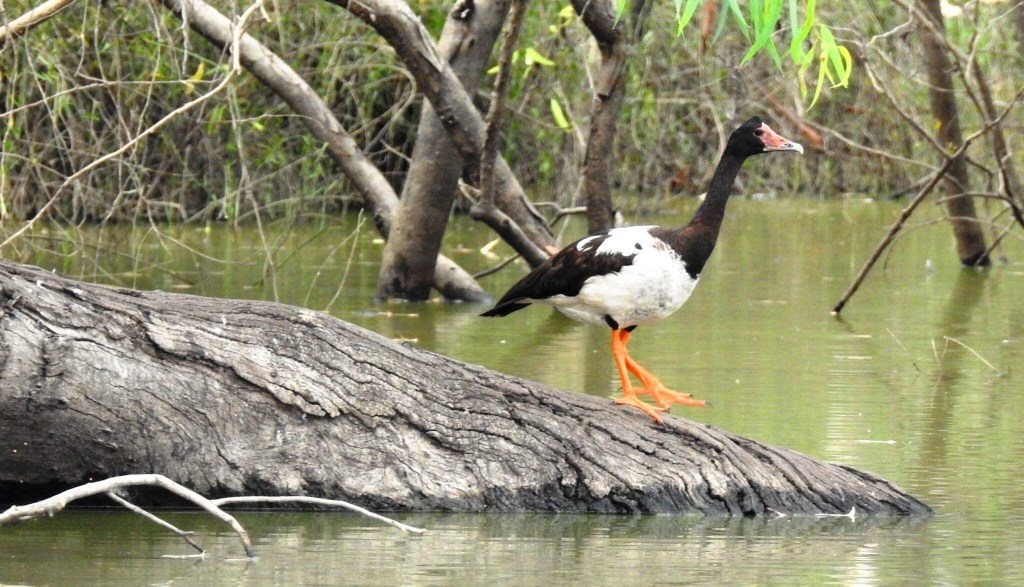
Eddie Vaggs description of this image (The magpie goose. We don’t usually see them in Cargelligo wetlands. But they were here in numbers in 2019 a particularly wet Summer.) Photo courtesy of Craig Cromlin and bureau of meteorology
Looking through my records, I find this email I am now replying to, and your reading of “A Country under the Weather”, with the insightful observation of “a people who knew that no land is won or lost by war”. In today’s moment of constitutional recognition, the assertion that “no land is lost by war” is a positive reminder that Australia has not been lost by a mere 2 centuries of invader wars, not when 2 millennia, 2 decimillennia, more accurately 6 or even 10 decimillennia, have created a civilisation, an exceptional people, with a unique export, a continental civilisation based on peace (peace between peoples and peace with country), as observed by Bruce Pascoe, as well as the transformative “I am responsible for country” (today we need to add: “and planet”).
In many of my Earthsight papers I have included a reminder from ancient wisdom that “insight is the key to creativity”, easily accessible in the simple process of Earthsight Discussion, a term I now use to refer to “Creative Discussion using Plain Pair Groups”, occasionally wondering whether this practice may unfurl the wings of the butterfly of chaos theory.
“Act on Climate” is my latest attempt to make a little suggestion, while “Decimillennial Australia” (earthsight.org, March 2019) indicates who we need to be listening to: the “product of wounded country”, who might even be helped by helping the larger world to actually see.
Decimillennial Australia has probably done this before, recovering from major catastrophes; surely the separation of Tasmania and loss of coastal plains (continental shelf), what we know as the Deluge, was one, and the present ongoing Anglo deluge calls not simply for a Voice to Parliament, but even more, a “voice to the nation”, First People generated and totally independent, arising from creative interaction within multiple communities, which, who knows, might perhaps be facilitated by the “creative ideas (that) ripple out across communities and organisations” of Earthsight Discussion.
Perhaps planetary change can start down along River Road.
Speaking of rivers, I hope you are not being flooded out at the moment. I’ve never driven along River Road, but using Google Earth I can imagine you may be at considerable risk. Murrin Bridge seems to be even more at risk.
On 30 Oct 2019, at 09:43, Edgar Vagg <edvag@me.com> wrote:
Bill.
I met you in Lake Cargelligo at your mother Molly ne Chanter”s funeral memorial service. Was impressed withCreative Discussion using Plain Pair Groups
Bringing Wisdom into Planetary Leadership
The drought and the severe stress created in the Lachlan Valley has brought a small group, Cargelligo Wetlands together. Conventional meetings are still being held and I will eventually bring up your ideas of plain pair groups. At the moment I have another important agenda. To release my book of poems spanning my life experiences in Lake Lake Cargelligo . I’m working on an EPUB for Apple Books of the contents. It’s poems and prose I have written and gathered together over the years . They are mainly environmental. And push the same agenda as you that humans are stupid. I have mentioned your work from
creative discussions.org. I can send you a link for your perusal. It’s a draft at the moment. Created on Pages on an Apple MacBook Pro laptop. I’m aiming to have an impact on citizens attitude towards global warming with its release. At First an E-book with audio readings of the poems on Apple Books and eventually a hard copy with audio included. I’m including a sample poem in audio in a following email.
Edgar Vagg
703 River Road
Lake Cargelligo
NSW
2672
Phone 0428981287
Billy Plains Edict
This his his letter to Decimillennial Australia.
A Voice to the Nation published in Earthsight.org in March 2019
Description of image by Eddie Vagg (Lake Ballyrogan an original ephemeral lake against the Lachlan Range not far from ‘”Atholstane” Bootawa Road where William Plain was raised. It was converted in the 1950s to Lake Brewster water storage linking it to the Lachlan River.)
The already established Anthropocene Mass Extinction, the 6th major extinction, for which the dominant world civilisation is responsible, is now leading us in the direction of exponential global warming and civilisation collapse, or even worse.
We need help, the world needs help, and the urgent need for long-term global sustainability seems to point to First Peoples, and particularly the Australian indigenous civilisation, as among the few who hold the keys to the future. The very long term continuous and highly successful nature of Australian culture and land management over multiple tens of thousands of years means “Decimillennial Australia” needs to establish a “voice to the nation”, to advise on the best way to transform the totality of our civilisation so as to assure that there can be a future. There is a continuum from homo sapiens sapiens to homo stupidens stupidens which englobes whole cultures, entire continents, over centuries and millennia. Ours, the so-called ‘western civilisation’, in many key respects is at the homo stupidens stupidens end of the spectrum.
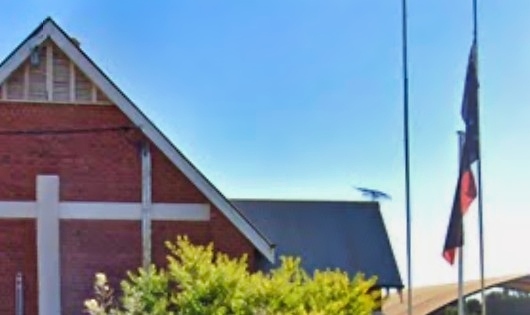
(Francis Xavier School Lake Cargelligo. William plane received a bursary from here to further his education.)
The Australian decimillennial culture in its historical dimension is undoubtedly at the homo sapiens sapiens end. I am inviting those in the indigenous community with ‘access’, to reach back beyond 1788, beyond the two centuries of destruction and belittlement, back into the depths of that culture, and bring forth the knowledge, the wisdom, the essence of 100,000 years of an ever-developing culture, community and responsibility for the earth. Today, this century, that knowledge may well be the key to the future, the key to there being a future. The new Australian culture of two centuries, along with that of much of the present world, is destroying our planet. That’s the meaning of the term, ‘the Anthropocene mass extinction’, which has its origins with the industrial revolution – about the time the doctrine of Terra Nullius arrived on Australian shores.
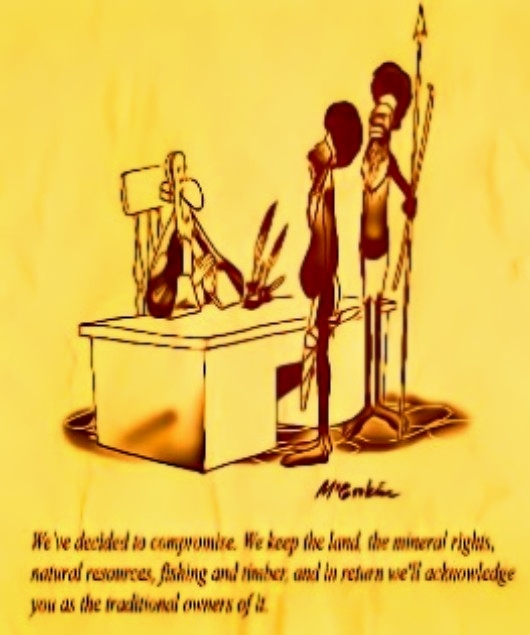
Caption
(Governor Phillip. “We decided to compromise. We keep the land. The mineral rights. Natural resources. Fishing and timber. And in return we will acknowledge you the traditional owners of it”.)
We don’t realise what we have done, and don’t know how to change. But our problem is now the problem of all peoples, those who have caused the present situation, as well as those who have always worked to contain the damage and respect the planet. It is to be hoped that the most ancient of those wisdom cultures, perhaps the most peaceful and the most responsible, can now become the guide that can advise our leaders and our people – and find ways to lead them to listen and be informed. Looking at the world today, much of the planet is the detritus of the brutality of the Western search for domination and conquest – ever perfected by today’s corporatocracy, financeocracy and oligarchy. The Earth herself is now looking to you, to the people who have tended the earth for 100,000 years, spanning geological catastrophes that today we seek to ignore, while closing our eyes to similar ecological catastrophes we have already created in ‘our’ epoch of the Anthropocene. The 10 millennia that has seen the development of what is now the ‘western civilisation’ that dominates, destroys and is slowly reducing to detritus the major part of the entire world population and its natural diversity evidently do not carry the seeds of wisdom we are desperately in need of today. On the contrary, the 10 decimillennia of Australian civilisation, the peoples who eschewed the deceptive riches of quantity for the wealth of quality, can present the essential understanding that can lead this country, and the entire planet, to a new world, a world of people and planet, rather than a world of profit and power for the few.
We need your assistance to avoid a futurecide that could be worse than the Permian Mass Extinction. The dominant world culture does not have the answer. Any attempt to avoid the risk of exponential warming while using the same technologies and structures that caused it is doomed to failure. We need something new, something ancient, the wisdom and expert knowledge that guided the most successful and sustainable culture and land management of all time, with its respect for life, for community, for country, for planet. There we may find a guarantee of a long-term future for our grandchildren and their grandchildren, and beyond. This process of creating a new world, a world with its origins in so many and varied traditions of sustainable agriculture and supportive communities around the world, would certainly make judicious use of the multitude of non-impactual aspects of the present world; much of our science and technology and culture can be compatible with a ‘planet with a future’. We also need to sustain a deep confidence in the evolutionary direction of the living planet over 4 billion years of dynamic homeostasis, despite the 5 major extinction events to date. We have now initiated the 6th, the first ever where a single species is uniquely responsible. But because we have caused it, through a species-wide reevaluation of our role in the ecosphere, we can initiate a process of fundamental and radical change that can make the world a much better place to live in, for all, and at the same time guarantee a future, for all. The threat of global warming can dissipate by quickly – very quickly – eliminating the causes of the Anthropocene extinction: the excessive human footprint and the carbon overload as well as the massive exploitation of both planetary and human resources.
To do this we certainly need to reevaluate the type of society and economy, the type of leadership, that have developed over centuries, if not longer. The important work of identifying and promulgating the values and the ways-of-being that can help us to draw back from the brink is the most urgent challenge our species has faced.
It seems this type of world that can guarantee that there will be a future has already existed, perhaps in many parts of the world, but on a very long-term continuous basis it has flourished most importantly in Australia. Today such a world desperately needs to be imagined, guided and nurtured into existence by those who have access in the not so distant past to a living culture that can inform our world today. By itself, our world seems incapable of achieving this.
Eddie Vagg.Member of Cargelligo Wetlands and Lakes inc.
I would also like to acknowledge the Wetlands Warriors in the boat on this cover post. Peter Nilsson and Richie Suckling who have allowed me to use their home turf to explore the Robinson Crusoe island and the extensive Cargelligo Wetlands adjacent to these properties. Photograph by Craig Cromlin
A voice to the nation The already established Anthropocene Mass Extinction, the 6th major extinction, for which the dominant world civilisation is responsible, is now leading us in the direction of exponential global warming and civilisation collapse, or even worse.
We need help, the world needs help, and the urgent need for long-term global sustainability seems to point to First Peoples, and particularly the Australian indigenous civilisation, as among the few who hold the keys to the future. The very long term continuous and highly successful nature of Australian culture and land management over multiple tens of thousands of years means “Decimillennial Australia” needs to establish a “voice to the nation”, to advise on the best way to transform the totality of our civilisation so as to assure that there can be a future. There is a continuum from homo sapiens sapiens to homo stupidens stupidens which englobes whole cultures, entire continents, over centuries and millennia. Ours, the so-called ‘western civilisation’, in many key respects is at the homo stupidens stupidens end of the spectrum.
The Australian decimillennial culture in its historical dimension is undoubtedly at the homo sapiens sapiens end. I am inviting those in the indigenous community with ‘access’, to reach back beyond 1788, beyond the two centuries of destruction and belittlement, back into the depths of that culture, and bring forth the knowledge, the wisdom, the essence of 100,000 years of an ever-developing culture, community and 19responsibility for the earth. Today, this century, that knowledge may well be the key to the future, the key to there being a future. The new Australian culture of two centuries, along with that of much of the present world, is destroying our planet. That’s the meaning of the term, ‘the Anthropocene mass extinction’, which has its origins with the industrial revolution – about the time the doctrine of Terra Nullius arrived on Australian shores.
We don’t realise what we have done, and don’t know how to change. But our problem is now the problem of all peoples, those who have caused the present situation, as well as those who have always worked to contain the damage and respect the planet. It is to be hoped that the most ancient of those wisdom cultures, perhaps the most peaceful and the most responsible, can now become the guide that can advise our leaders and our people – and find ways to lead them to listen and be informed. Looking at the world today, much of the planet is the detritus of the brutality of the Western search for domination and conquest – ever perfected by today’s corporatocracy, financeocracy and oligarchy. The Earth herself is now looking to you, to the people 21 who have tended the earth for 100,000 years, spanning geological catastrophes that today we seek to ignore, while closing our eyes to similar ecological catastrophes we have already created in ‘our’ epoch of the Anthropocene. The 10 millennia that has seen the development of what is now the ‘western civilisation’ that dominates, destroys and is slowly reducing to detritus the major part of the entire world population and its natural diversity evidently do not carry the seeds of wisdom we are desperately in need of today. On the contrary, the 10 decimillennia of Australian civilisation, the peoples who eschewed the deceptive riches of quantity for the wealth of quality, can present the essential understanding that can lead this country, and the entire planet, to a new world, a world of people and planet, rather than a world of profit and power for the few.
We need your assistance to avoid a futurecide that could be worse than the Permian Mass Extinction. The dominant world culture does not have the answer. Any attempt to avoid the risk of exponential warming while using the same technologies and structures that caused it is doomed to failure. We need something new, something ancient, the wisdom and expert knowledge that guided the most successful and sustainable culture and land management of all time, with its respect for life, for community, for country, for planet. There we may find a guarantee of a long-term future for our grandchildren and their grandchildren, and beyond. This process of creating a new world, a world with its origins in so many and varied traditions of sustainable agriculture and supportive communities around the world, would certainly make judicious use of the multitude of non-impactual aspects of the present world; much of our science and technology and culture can be compatible with a ‘planet with a future’. We also need to sustain a deep confidence in the evolutionary direction of the living planet over 4 billion years of dynamic homeostasis, despite the 5 major extinction events to date. We have now initiated the 6th, the first ever where a single species is uniquely responsible. But because we have caused it, through a species-wide reevaluation of our role in the ecosphere, we can initiate a process of fundamental and radical change that can make the world a much better place to live in, for all, and at the same time guarantee a future, for all. The threat of global warming can dissipate by quickly – very quickly – eliminating the causes of the Anthropocene extinction: the excessive human footprint and the carbon overload as well as the massive exploitation of both planetary and human resources.
To do this we certainly need to reevaluate the type of society and economy, the type of leadership, that have developed over centuries, if not longer. The important work of identifying and promulgating the values and the ways-of-being that can help us to draw back from the brink is the most urgent challenge our species has faced.
It seems this type of world that can guarantee that there will be a future has already existed, perhaps in many parts of the world, but on a very long-term continuous basis it has flourished most importantly in Australia. Today such a world desperately needs to be imagined, guided and nurtured into existence by those who have access in the not so distant past to a living culture that can inform our world today. By itself, our world seems incapable of achieving this.









 CargelligoWetlands