Mount Canoblas the centre of a drainage catchment I visited and videoed in 2010 and pointed out the problems that would eventually result in a disastrous flood in 2022
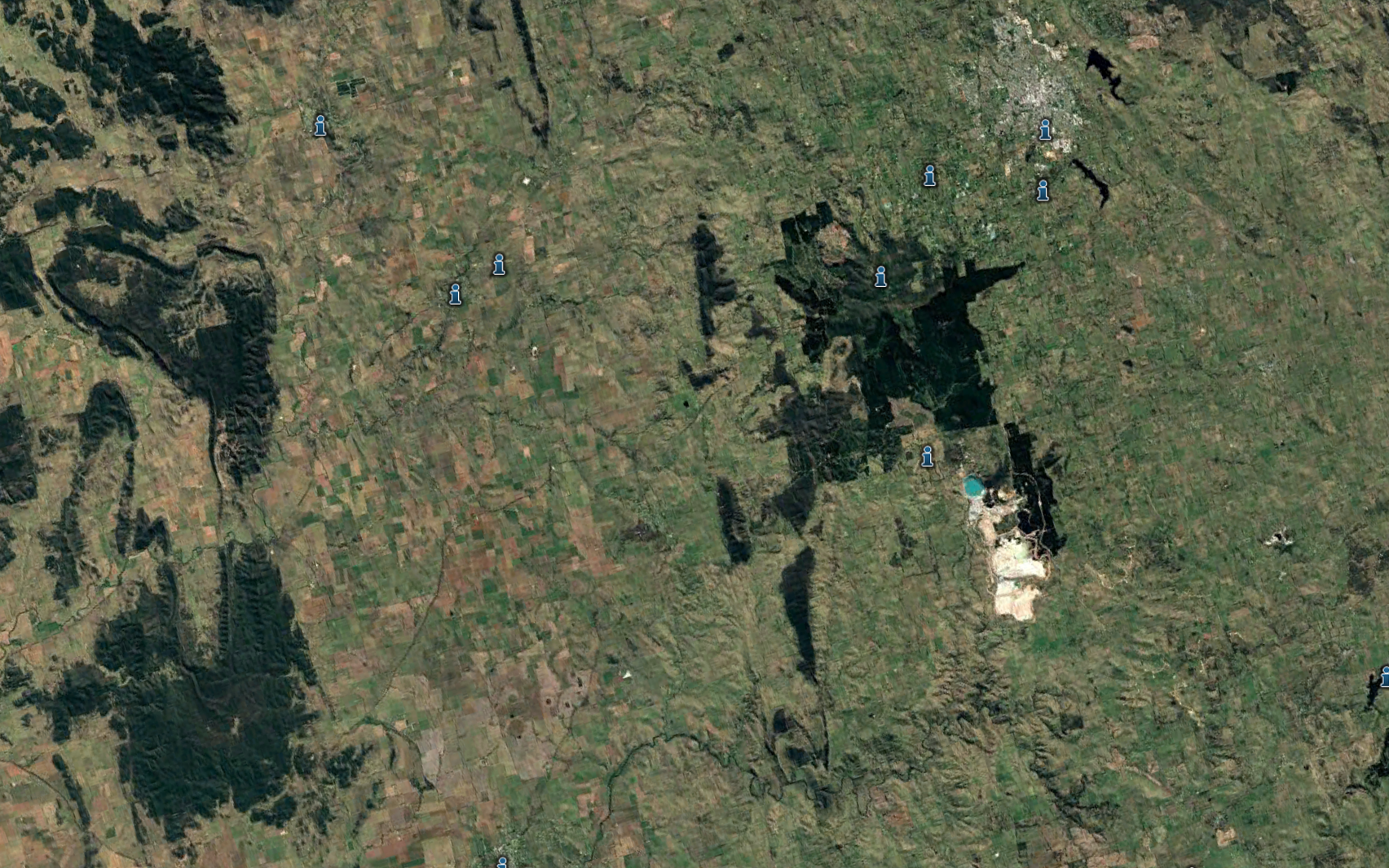
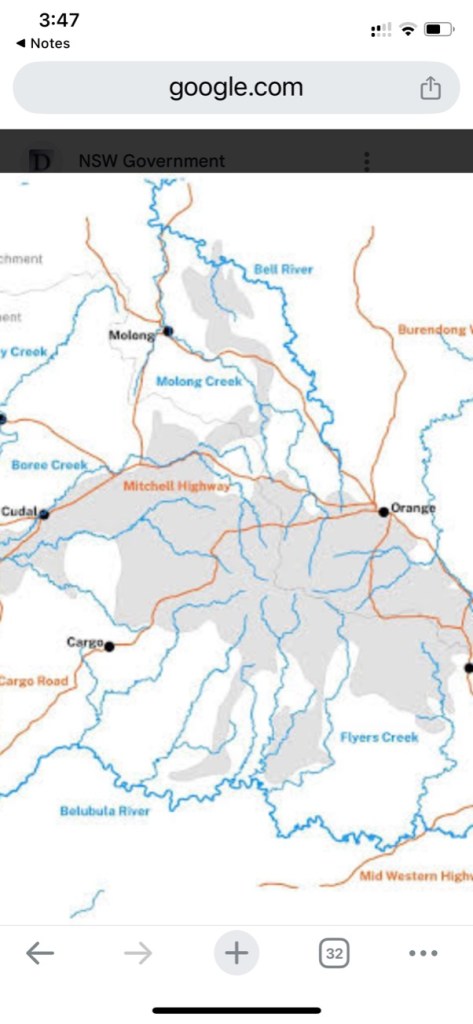
Mount Canobolas is the centre of all the streams radiating out from this map. Mount Canobolas volcanic soils a very porous and surface water is collected underground in the fractured rock aquifers covering this entire area.
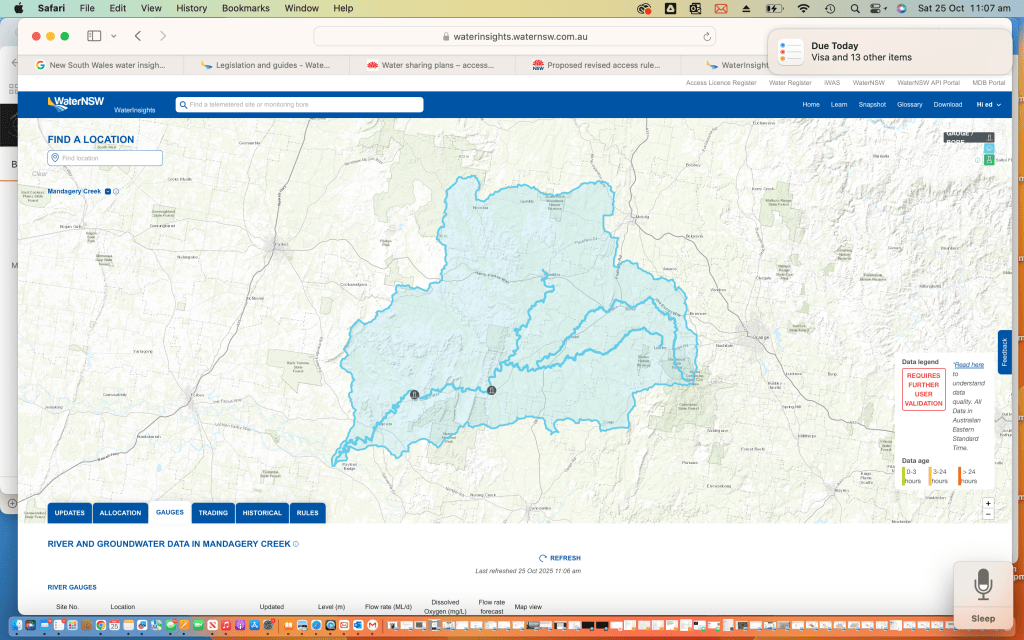
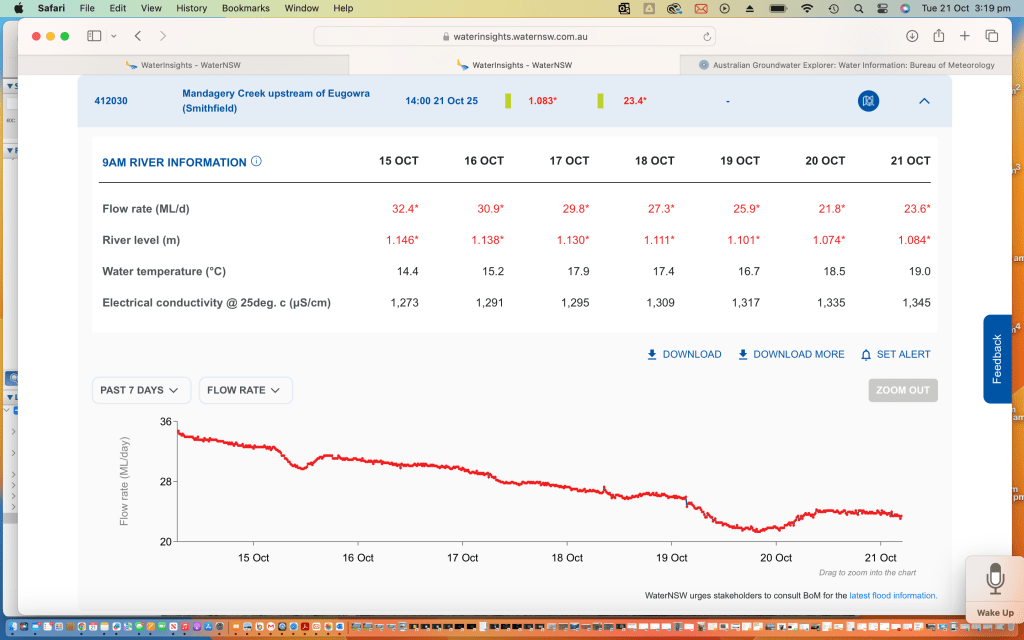
The blue shaded area on this map which is the Mandagery Creek catchment contains some of those streams radiating out from Mount Canobolas potentially carrying water right to the Lachlan River below Eugowra
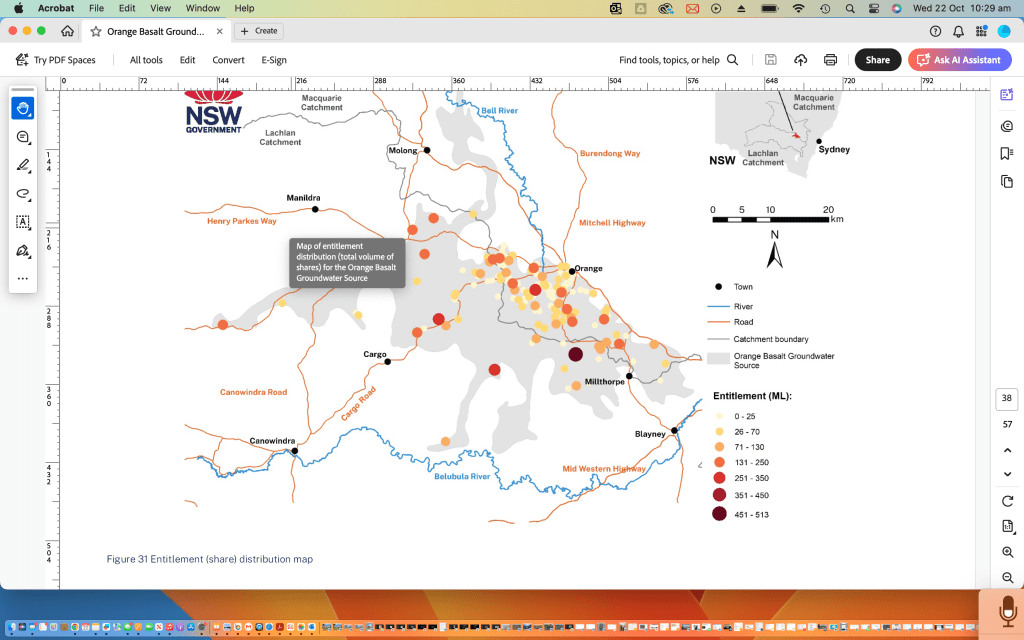
Map of entitlement distribution (total volume of shares) for the orange basalt ground water source. This water source is adjacent to the Mandagery Creek water source.
I wrote the following poem. I videoed the above video. Recorded the above audio all in 2010. Pointing out the problems of overuse of our vital ecsystems 15 years ago.

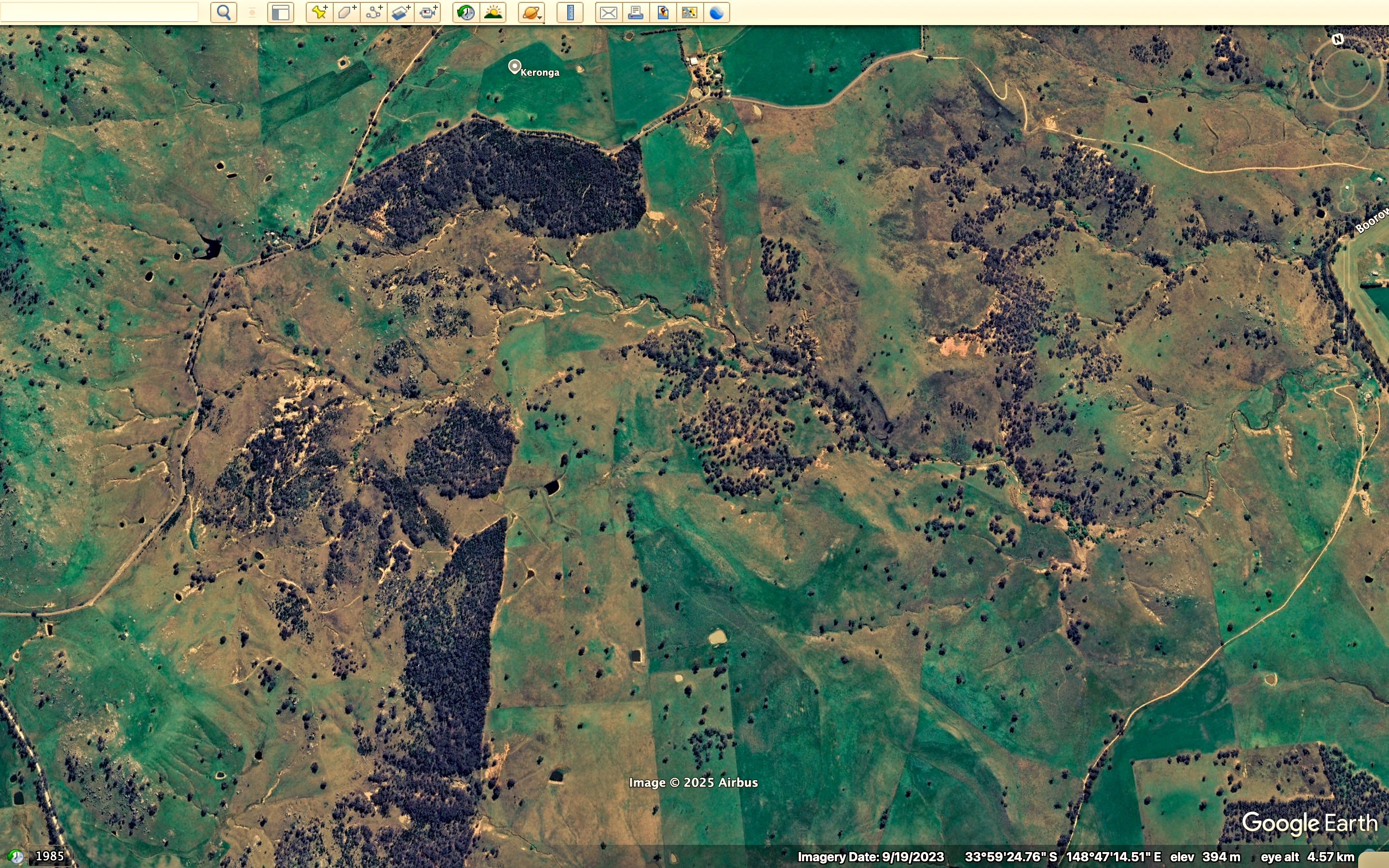
 Google earth doesn't lie

It's shows the earth from the sky
.
 The Upper Lachlan catchment isn't flat

 we can be sure of that.

What I see. No tree,

only water carved wrinkles
.
Free to carve deeper

. Run water run and scour.

It's a joke that you can no more soak

Look, look down at the manhandled Mandagery


It's a shame.

It's just a drain.

To speed the rain.

 Sudden storm like an express train

. Winds it's way to a salty end on the Lachlan plain.

We've got the brains to slow the rains
.
 And there are some good souls go to pains

. As a bystander I am shocked

  by the stocks impact.

Piecemeal it won't heal.

How much floggen and delog'n
.
How much pug'n and bog'n.

Join together.

 Make a chain to restrain the flow
.
 A chain of land owners to recreate the chain of ponds

. A chain of resistance to stock
.
  A virtual lock on vulnerable land.

 Collar the cattle.

Shock the stock of that block.

Give them some other till it can recover

. GPS not only a factor in steering ya tractor

. Steers the stock.

 They yield to a virtual field.
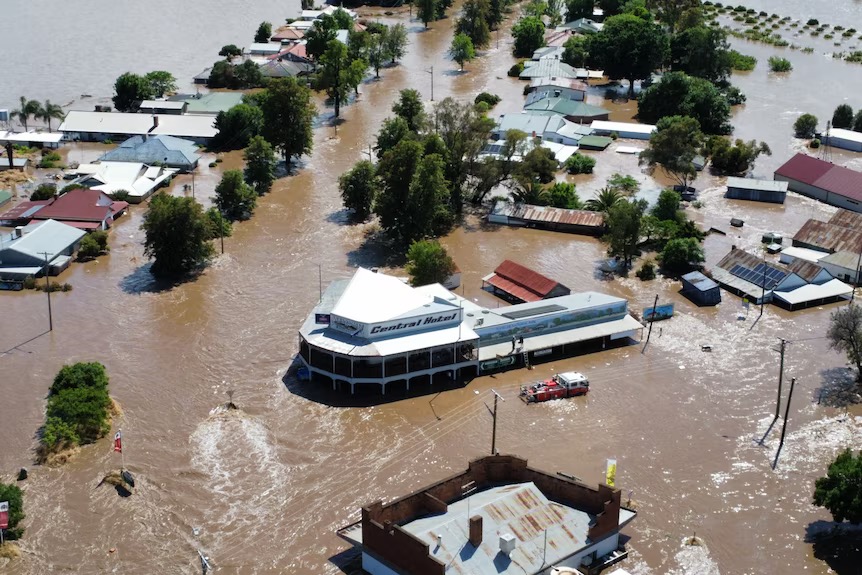
photo curtesy ABC news.
Eugowra. Main Street during the 2022 floods.
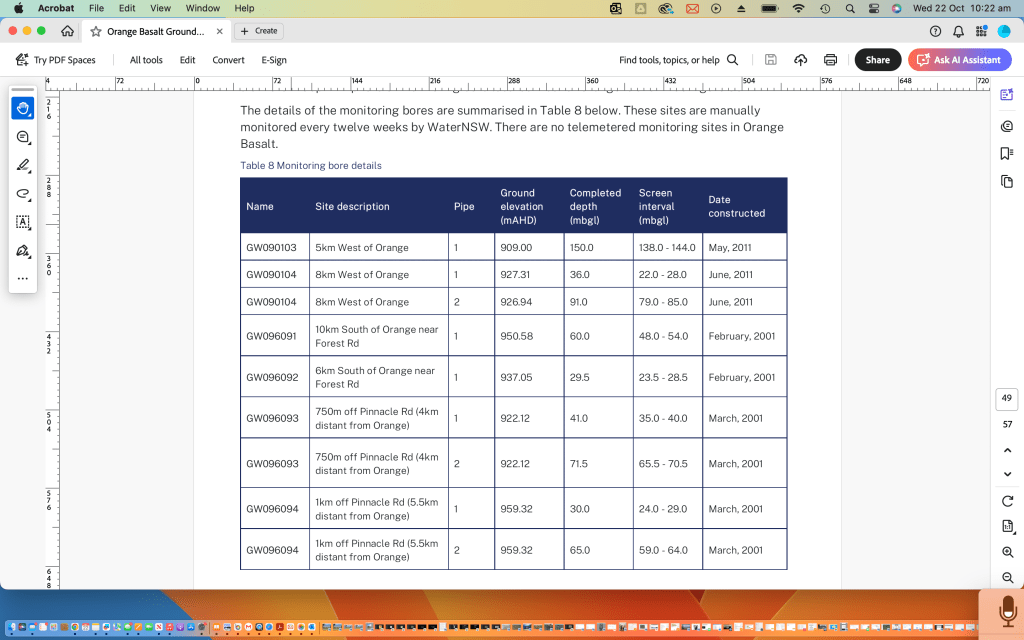
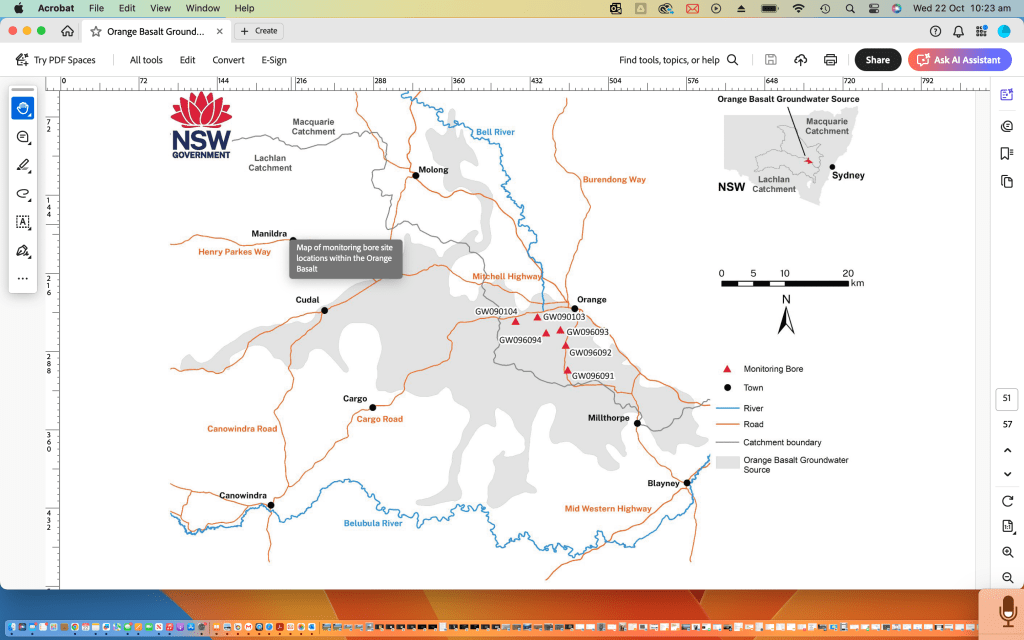
look at the monitor bores around Mount Canobolas groundwater catchment
Look at the extent of the catchment called Mount Canobolas groundwater
All of the lachlan catchment surface water sources
Extraction rates from bores around Mount Canobolas ground water source
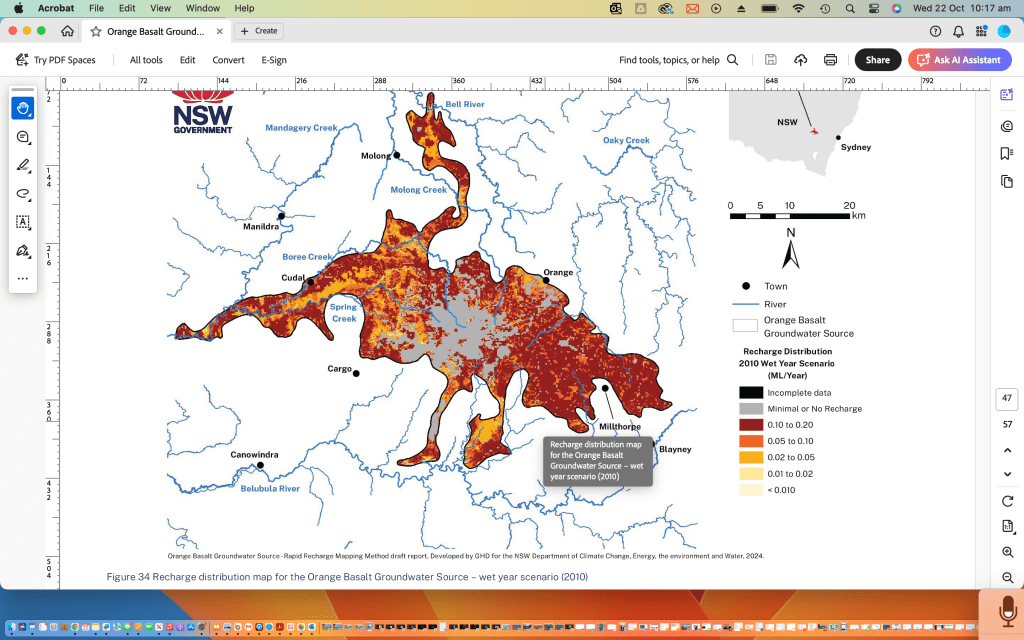
Recharge of Canobolas ground water sources in good years
Recharge of Canobolas ground water sources in poor years
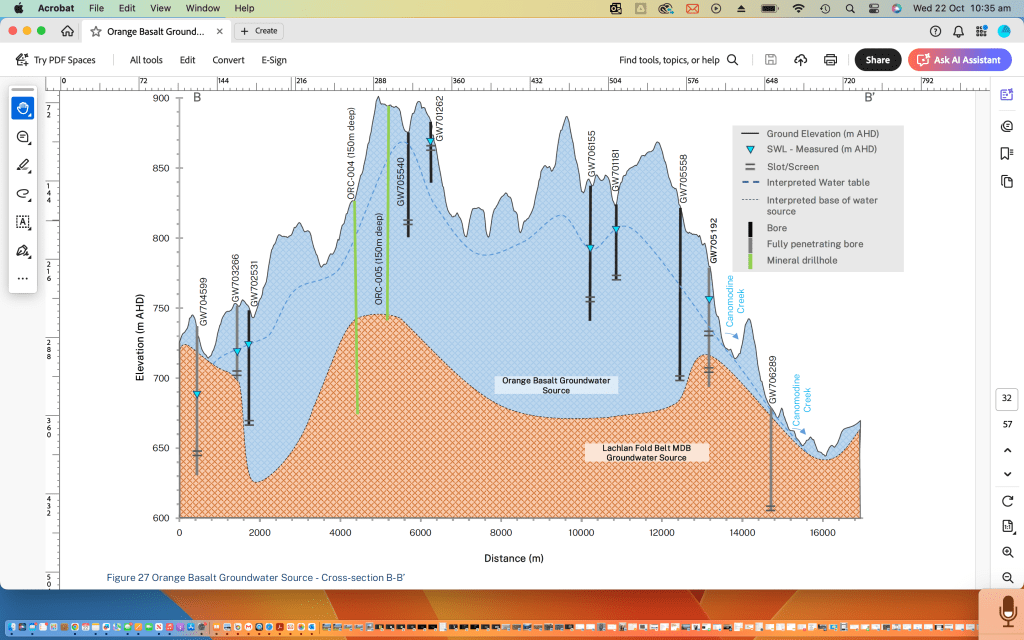
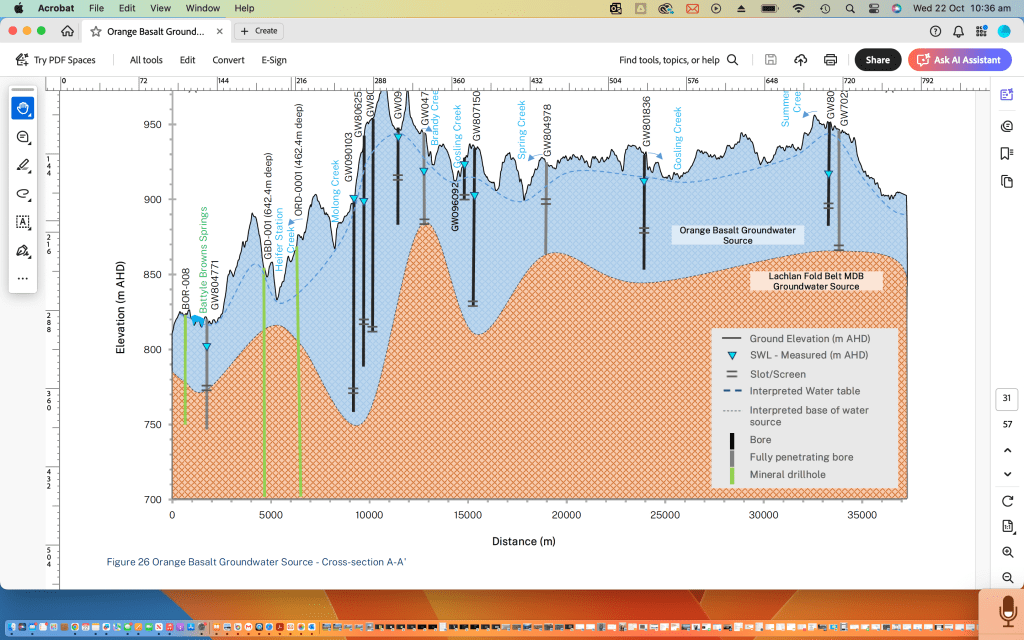
Bores in the Canobolas ground water source and also the Lachlan fold belt fractured rock water source
More bores in the Canobolas groundwater source
I acknowledge that use of data from Google Earth and the New South Wales government websites
This poem was written and recited about 2013. It was posted to YouTube at that time. It can be found under my YouTube name Edvagg
We are all on the blunder bus.
All brandishing a blunderbuss a blunderbuss. Blowing out our brains to the strains of "We shall overcome" There's a blunderbuss of regulations
Coming from nervous nations Be aware, cosmic care Is there The force that sets the course The unconscious cosmic influence Surges through humanity. Devoid of vanity Everybody cheers the blundering bus.
There's very few jeers for the blundering bus Science drives the blundering bus Its an atomic powered blunderbuss Not the gun-powdered one of old Ignorance is onboard the blundering bus Parliamentary Acts are a blunderbuss of regulations They're coming from nervous nations All designed to deploy and destroy opponents that annoy Don't despair, cosmic care Is there. The force that sets the course The unconscious cosmic course Surging through humanity. Devoid of vanity Sages throughout the ages have written and still do With this power of intuition often thought taboo, pages and pages of music and verse From their pen to you Steering us from the god of reason Throughout every season.
Here, from my pen to you
without further ado:
I'm cold in this cocoon of warmth. I'm deflated in this pumped up world. I'm not worshipping the god of reason I'm considered unreasonable. I'm looking in a cave but finding no monsters. I'm looking to the mountains and see no gods. The ancient spirits have abandoned us disbelievers. No ancient altars of sacrifice to appease the gods. But there are sacrifices. With a stroke of a pen more powerful than a bolt of lightning a rainforest is sacrificed to the god of reason.
There's no native gods to pull us into line. To smote us with plagues. To point the bone at our unearthly throne. They have been disposed of Dispossessed. Dismissed from their custodial duties. There's great fears for the land they nurtured well The land despairs Rainfall repairs.
With the Gods gifts of bounteous rain What do we do? Inflict more pain What do we do? Gain more gain For the gravy train Its reasonable to run with the gods gifts Its reasonable to run down rangelands Its reasonable to run with excesses Run a race horse Run off to the races Rearrange your faces Run off the rails
Now, out of their twiggy forest pop holes. Comes the afflicted addicted depicted as lost souls The God of reason,* our new mythical monster In the form of a blind mole surges forth Emerges from the Underground it haunts Usurps these lost souls primitive urges And begins its scourges . Like gaunt emaciated sheep they are sacrificed Captured for the chop Drained of every drop of godliness Resort to splurges depraved urges. Reasonableness resurges No hunt, no hounds. Nature is outward bound In the automated towns. Insulated from the dust storms, norms as the earth warms.
Anarchy abounds in the surrounds. Those with compassion are lashed for a lash'n, leaded or beheaded. Their captors kill at will to satisfy an ill -gotten notion that they are the chosen ones with guns. The appointed, anointed sons of reason Commandos commanding in the killing season.
Holy cow! Stop it now! Bond yourself with the benevolent gods. Reconnect with their world, the sod. They're not unreachable. They're are unpreachable. I implore. Adore Restore Their sanctuary, the savannahs, the woodlands, the rivers And the oh so twiggy forests and Twiggy Forrest's plan for unemployed man** The plan, to have everyone work again with dignity. No mentally degraded. No poor bastard parading jaded In prisons yard. Hard drugs Too hard No poor unfortunate.
The Mythical monsters of old who once kept civilisation from shitting in its own nest, are no more. They have been kicked out the door. But we have created a new one. The devils son
The new Mythic God of Reason conquers nature. Changes the season. Extinguishes species. Lives in its own fecies. And ohhh Brother, rapes its own mother. To man its a mental menace. Drugs his panacea. Its menacing, Subjugating, Subordinating and decimating Mother Earth for all its worth. She has taken a stance, Led us on a merry dance. Thrown her humans out of tilter. They smoke with no filter, Create strife. Live life as if there's no tomorrow, Borrow From the future. If you stand in the way of their loot they'll shoot ya.68 Why, why Do the non humans cry? " human nature we hate ya." Well. we have placed ourselves above them,
We don't love them. We have bared the plains And stopped the rains. No more do our rivers deliver The life giver water as they orta. Flood plain gums we plunder. Their death cracks like thunder. Startles the cockatoo community, Trying to maintain its unity, While we march on seemingly free of impunity. But. We are not so, see, the cracks are starting to show. Watch the wind blow, Desiccating the treeless land, Shifting sand, Temperatures climbing, Species declining. Now the first living thing Throws its hat in the ring. The simple cell Is giving us hell, Bacteria and virus Defy us. Think you can kill us with your chemical stew says Giardia the harder ya try The more we defy. We are one with nature, not one above With no love. She is vulnerable. But when push come to shove, She has a winner They eat us for dinner. The virus Defy us She has these little ones, They have big guns, Fighting on a hidden front A guerrilla stunt. They are winning, Thinning Us. Multiple resistance Ensures their persistence. They frustrate those who think they can dominate, Annihilate. Panicky people are just as liable To re-interperate the bible. The lord told moses on the mountain With the mob below idolising. Take this tablet and you will be on the path to ecstasy.
The bibles been skewed. The message has been misconstrued With modern man As it can. Now we are taking ecstasy tablets, This wandering, aimless lost band still idolising.
Reference: **Article by Jared Owens in the Australian 31st July 2014 "Twiggy Forrest plan" * Youtube clip "Approaching the unconscious" by C.arl Yung
Can we justify. The means of existence. The unbalanced way we disregard all for our own ends. We can and we do despite the evidence to the contrary. We need six planets to sustain our way of life. Then it would still put each planet we invade out of tilter. Because we still haven’t realised the link with every facet of the universe we live in. The chain. The chain of unbroken systems that support all the elements of this amazing planet. The ancient tribes did!.
deep gouged out channels.
drained flood plains.
Bovine belted banks.
No thanks
We can’t deny extraction. That is part of the symbiosis of entities. Every entity relies on something for its existence. It’s the over extraction and destruction of a link that upsets the equilibrium.
I got a plan. The Bureau of Metrology got the wherewithal. Using their regularly updated soil moisture map of Australia. The soil carbon maps of Australia. The saltation studies. The rainfall records.
The northern indigenous tribes have the wherewithall : The reestablishment of native perennial pastures using fire.
My Plan A
The use of GPS collared cattle. The use of Drovers. Remove the fences mental and material.
The wilder beast herds of old in Africa followed the feed across the veldt. And still do.
The bison did the same across America. Their journey ended when they were ere slaughtered by the invaders to starve the Indians out of existence.
The Spanish Shepard’s for thousands of years drove their stock across Spain following the pastures and still do.
Graziers of the Riverina moved their stock to the summer pastures of the high country of the Southern alps. Until they proved a danger to precious bogs.
Kidman the Pastoralist had his properties from northern to southern Australia to take advantage of Northern Rains of summer and the southern rains of winter.
We with modern technology could have our herds follow the feed.
The square paddock mentality for cropping and grazing brought to this great Southland from European conditions. Conditions that even European farmers are finding are destructive. It has to change. Cell grazing would work close to major centres where compost is available to regenerate tired soils.
Saltation of our land and water was held in check by our First Nation people knowingly or unknowingly by the way they used the land and its waters
Our settlers knowingly or unknowingly have left a timebomb . That time bomb was salination. Salt was ubiquitous in the Australian environment. It resides in our marine origin sedimentary rocks and saline ground water. Tree cover. perennial grasses and native farmers kept the system in this variable climate in sync .
It’s not to late to On riverside, log jams and overflows on floodplains maintained wet marshy swamps and billabongs*. This environment kept salt from surfacing. The soggy flood plains refreshed our fresh water streams and aquifers . They remained seeping and weeping through droughts. The rivers scour now freed of log jams. Just a channel for water orders to arrive on time. Bowmaster
A huge study of salt in the environment has been undertaken since European settlement. Today we have the bad news from minister of environment and heritage that this time bomb like land mines is being triggered by our land use and we have to change the way we do things.
While southern Australia shows little shift towards wetter or drier conditions for Autumn 2019 the past two to three decades have seen a decline in autumn rainfall. For example, from 1990, 24 of the 29 years have brought below average rainfall to southeast Australia (below the 1961-1990 average).
In addition to the natural drivers such as the El Niño–Southern Oscillation and the Indian Ocean Dipole, Australian climate patterns are being influenced by the long-term increasing trend in global air and ocean temperatures. SAM a system in the southern ocean is moving our southern fronts further south.
*Peter Andrews (rebuilding wet floodplains)
I can see the answer to disillusionment.
But i dont want to put my finger on it. It feels as if it would alienate me. Isolate me from where i am or imagine i am in my community.
I see the problem and the answer as divisive.
(Excuse me there is a willy wagtail knocking on my window). Oh he’s just picking last nights trapped insects off
the window. One of these days i will learn to communicate with them. (Love their energy.)
I suppose that is my view of the world as a human. Nothing in the cosmos is alien to me. Every thing is a link in the chain. Broken disillusioned people are broken links.
Trauma
I don’t expect any of us from the environment we call lake Cargelligo have anything to do with the trauma that was inflicted on the first people after the first fleet arrived. It’s the present day traumas that are perpetrated. These are the ones we are responsible for, as a people’s . As people’s, we can do something about. Do something about the traumas here and now. If we don’t then we are as guilty as our forebears.The traumas that exist in this community have their roots in natural ecosystems that Lake Cargelligo is so blessed with. Human beings need the natural environment to maintain equilibrium. Every thread of existence every thread of this web every ounce of our being depends on this web.
There’s other ways to pull away from a depressive road. At present too many are falling, crushed by the pressure to conform. Conform is the norm when it comes to violence. It’s normal to bash your partner to be big amongst your mates. Crowing to them that she gets what she deserves. Nailing the perpetrators. Is hard. Jailing the perpetrators is harder. Community unity to change the culture. Destroy the vulture who preys on our mind. We can all write. Express yourself. Honestly write what is depressing you. Write what’s makes you happy. We can put all these community stories together. Put them together on stage in the old theatre to expose our lack of understanding as a community
Three articles by Conversations journalists clarifying Uluru statement from the heart. Headed by a plea by Post author Eddie Vagg in the form of a poem.
Eddie Vagg’s poem First People inspired by ancient campsite, cries out for Truth Telling
I'm not kidd”n

I walk across an ancient midden.

I feel I just want to throw a spear.

There is something here.

I know about this tragedy.

But this is not a parody.

There is a spirit in this clay pan

where a spirited race once ran.

The flint flakes

Shells from Rivers and lakes

And the honing stone

Petrified bone.

An energetic race once called this spot home.

The energy is sometimes there.

Strongest in the spring morn.

When they had the cool late winter burn

 green shoots would return.
then the roo’s were Ambushed and speared.

I amble further on

the energy is gone.

So has the tribe.

Sulphur Crested’s

The messenger bird

Rested in the trees.

their late evening screeching

smacks of violence

And the campfire silence
The Voice: what is it, where did it come from, and what can it achieve?
This is the first article in our three-part series explaining Voice, Treaty and Truth.
This week, the government will introduce a constitutional amendment into parliament to establish the Aboriginal and Torres Strait Islander Voice. If successful, it will go to a referendum likely in October or November.
We now know the wording of the amendment and referendum question the government is proposing. But what exactly is the Voice? Where did it come from? And what it can achieve?
What is the Voice?
The Voice provides permanent representation and recognition for Aboriginal and Torres Strait Islander peoples in the Constitution.
The Voice will be a new body that represents Aboriginal and Torres Strait Islander people from across Australia to provide their input into the decisions, policies and laws that are made by the government and parliament.
This is consistent with the UN Declaration on the Rights of Indigenous Peoples, which says Indigenous peoples have a right to participate in government decision-making in matters that affect their rights, through their own political institutions.
Across the world, similar types of institutions and relationships have been established, including in Sweden, Norway and Finland with the Sami people, and with the Māori in Aotearoa. There are also many similar relationships that Indigenous peoples have with the state in North and South America.
However, it’s also important to remember the Voice has been developed as a response to our local circumstances, and in particular, the lack of formal agreement – such as a treaty – or formal recognition of the rightful place of First Nations in Australia.
In Australia, the Voice will be constitutionally enshrined. This means successive governments can’t overturn it. It will be established as a new constitutional body in a new chapter (Chapter 9) at the end of the Constitution.
The key function of the Voice – to make representations to the government and parliament on matters relating to Aboriginal and Torres Strait Islander people – will also be constitutionally protected. But the government and parliament cannot be compelled (for example, through litigation) to follow these representations. As such, this body would not have “veto” power and is not a “third chamber”.
Rather, the Constitution is setting up a mechanism designed to improve decisions, policies and laws through First Nations input on matters that affect them. These matters might directly affect Aboriginal and Torres Strait Islander people, such as changes to the native title law, but it could also include broader laws and policies that have a particular impact on them, such as environmental protection laws or electoral laws. These decisions would be improved through their input.
Other details about the Voice will be decided by parliament through the normal legislative process. This ensures the Voice’s design can be flexible and evolve as required. These details include:
how many representatives will comprise the Voice
how they will be selected
what its internal processes will be
what powers it will need to perform its functions, such as accessing government information, and
how the Voice will interact with parliament and the executive.
As many constitutional experts have explained, establishing the key principles and leaving the detail to be determined through the legislative process is a normal – and desirable – way to design constitutional institutions.
That is not to say we don’t know what the Voice will look like – there has been significant work done on this. Most recently, the government has released a set of principles that will guide the initial legislative design of the Voice, should a referendum be successful.
The Voice also performs another important constitutional role: it recognises Aboriginal and Torres Strait Islander people as the First Peoples of Australia in the Constitution. At the moment, the Constitution is entirely silent with respect to Aboriginal and Torres Strait Islander people.
Where did it come from?
The Voice has been proposed by Aboriginal and Torres Strait Islander people as the best solution to respond to their overwhelming feeling of disempowerment and structural disadvantage.
The concept of the Voice, when understood as recognition and representation, has a long history. The advocacy for greater political representation for Aboriginal people stretches back to a 1938 petition organised by Yorta Yorta man William Cooper.
The modern advocacy for constitutional recognition stretches back to Prime Minister Paul Keating’s response to the 1992 High Court native title decision known as “Mabo”. This included a social justice reform package that recommended constitutional recognition, to be determined through a series of conventions and negotiations with Aboriginal and Torres Strait Islander people.
This never happened, however. It wasn’t until 2010 that constitutional recognition was raised again as part of Julia Gillard’s minority government negotiations with independent MP Rob Oakeshott. This resulted in the establishment of the Expert Panel on Constitutional Recognition of Indigenous Australians, which reported in 2012.
The panel recommended recognition should be achieved through a series of changes, and most controversially a clause in the Constitution about racial non-discrimination. The Labor government never responded to the proposal and the Coalition dismissed it as a “one-clause bill of rights”.
Following this, in 2015, Aboriginal and Torres Strait Islander leaders developed the Kirribilli Statement, which requested a new set of consultations to break the stalemate on recognition.
This led to the bipartisan establishment of the Referendum Council and a A$10 million commitment to undertake nationwide consultations with Aboriginal and Torres Strait Islander people – as had been proposed back in the 1990s but never happened – as well as non-Indigenous consultations.
At the same time, groups like the Cape York Institute under Noel Pearson began significant work on a proposal for an Indigenous representative constitutional body, which would lay the conceptual foundations of the Voice. This included the development of some initial drafting by constitutional expert and professor Anne Twomey.
The Indigenous members of the Referendum Council, under the leadership of Aunty Pat Anderson, Megan Davis and Pearson, designed a series of locally led dialogues to understand the reform priorities of First Nations people across the country.
Each dialogue selected representatives to attend a First Nations Constitution Convention. After days of negotiations over such pressing questions as sovereignty and how best to achieve aspirations like a treaty, the convention endorsed the Uluru Statement from the Heart.
This called for two stages of reforms. First, a constitutionally enshrined Voice. Second, Makarrata, which is a Yolngu word for “coming together after a struggle”, to include agreement-making (a treaty) and truth-telling. Voice. Treaty. Truth.
What can it achieve?
The Voice is both a practical and symbolic reform.
Practically, the Voice is informed by decades of research and the experience of people on the ground, that decisions, policies, laws and most importantly outcomes are improved when Indigenous peoples are empowered and involved in the process.
Symbolically, the Voice offers Australia a chance to design a more inclusive narrative of nationhood, informed and strengthened by the participation of First Nations people.
In Australia, we have tried to address these issues before, including through bodies like the National Aboriginal Consultative Committee and the National Aboriginal Conference in the 1970s, the Aboriginal and Torres Strait Islander Commission (ATSIC) from 1990-2005, and smaller ministerial advisory bodies.
These bodies did good work and made a real difference, despite having limited power and resources. They often faced hostile political environments where a change in government would undermine the progress made.
But none of these bodies were enshrined in the Constitution, and each was dismantled, often at times of heightened political tension with the government. So, Aboriginal and Torres Strait Islander people were not able to have independence, stability, continuity or the necessary capacity to engage with government in a meaningful, ongoing way.
The Voice offers a highly practical reform, which for the first time will offer independence and stability through constitutional enshrinement.
The Voice is also an important stepping stone towards other key reforms in the relationship between Aboriginal and Torres Strait Islander people and the state – in particular, treaty and truth as described in the Uluru Statement.
The sequencing of Voice, Treaty, Truth has been given significant thought.
Voice precedes Treaty because fair, modern treaty negotiations require first the establishment of a representative Indigenous body to negotiate the rules of the game with the state. It can’t be left to the state alone, and the state must have a group of people with whom to negotiate.
In Victoria, this was achieved through a specific representative institution – the First Peoples Assembly.
Truth follows Voice and Treaty, because, as Torres Strait Islander political scientist Sana Nakata explains, Voice ensures Truth will matter more than just “continued performance of our rage and grief for a third century and longer”. Voice establishes the power for Treaty, and Treaty establishes the safekeeping of Truth.
As historian Kate Fullagar explains, truths about Indigenous history in Australia are well-known – there have already been royal commissions into colonial violence, the stolen generation, and Black deaths in custody. But they have been too easily forgotten, and they have not led to change.
The Voice presents an opportunity for improving the relationship between First Nations and the State through stable political empowerment that will give all Australians an opportunity for a better, shared future.
Lecturer, Griffith Law School, Griffith University
Disclosure statement
Gabrielle Appleby is a member of the Indigenous Law Centre at UNSW (Sydney). She served as a pro bono constitutional consultation to the Regional Dialogues and First Nations Constitutional Convention that delivered the Uluru Statement from the Heart.
Eddie Synot is a Senior Engagement Officer with the Uluru Dialogue and a Centre Associate with the Indigenous Law Centre at UNSW (Sydney).
First Nations people have made a plea for ‘truth-telling’. By reckoning with its past, Australia can finally help improve our future
What actually is a treaty? What could it mean for Indigenous people?
This is the second article in our series explaining Voice, Treaty and Truth. Read the first article in the series here.
The Uluru Statement from the Heart calls for Voice, Treaty and Truth. These aspirations are intended as a sequence of reforms, that advance towards a just settlement with First Peoples.
The federal government is committed to holding a referendum later this year to put an Aboriginal and Torres Strait Islander Voice in the Australian Constitution. The government has also agreed to implement the Uluru Statement “in full”.
Following the referendum, it’s expected attention will shift towards a Makarrata Commission to “work on a national process of treaty-making and truth-telling”. In fact, reports suggest the government might move even faster.
But while Treaty has long been part of the political landscape, it is not well understood. Many Australians wonder what a Treaty is, what it would achieve, who it would be negotiated with, or for whom, and how. We’ll explore some of these questions here (in brief).
Why does Australia not have a Treaty?
When European colonial powers encountered Indigenous peoples, they often negotiated treaties. These agreements dealt with a range of matters, including trade and military alliances. They also set out rules to share the land and maintain peaceful relationships.
These colonial-era treaties were regularly broken. However, they recognised Indigenous peoples had the right to deal with land and exercised sovereignty over that land.
The British did not engage in treaty talks in Australia. They never sought to negotiate with the owners of this land. Instead, they claimed the land belonged to no one and took it for themselves.
Historians have debated why the British took this approach. Some have argued as a penal colony with a substantial military force there was no need to negotiate trading relationships with the original owners. Others have argued the racist attitudes of the day were influential.
Whatever the reason, the result is Australia is an outlier. As a result, many Aboriginal and Torres Strait Islander peoples believe the moral and legal basis of the nation is “a little legally shaky”.
What is a Treaty?
The absence of a Treaty is one of the major challenges facing the Treaty debate in Australia. Without a history of treaty-making, the concept of what a treaty is or involves remains vague for many people, including government.
It means some people can argue a Treaty is dangerous or it would lead to the breakup of the nation. This makes little sense because a Treaty is a marriage not a divorce. It’s about bringing communities together and building strong relationships based on self-determination.
Governments might argue they’re already engaged in treaty-making. There are many examples of bureaucracy adapting its policy formulation and delivery to reflect community aspirations for a greater say in the delivery of services.
Such “partnerships”, “co-design” and local decision-making with government are valuable. They mark an important shift in promoting Aboriginal and Torres Strait Islander peoples’ participation in policy development and service delivery. But simply calling an agreement a “treaty” doesn’t make it a treaty.
Australia has signed up to a range of international legal instruments that concern the rights of Indigenous peoples. These legal instruments set a clear standard for what makes an agreement a treaty. A treaty must satisfy three conditions.
A treaty acknowledges Indigenous peoples are a distinct political community different to other Australians. This is because Indigenous peoples are the only group of Australians who owned, occupied, and governed the continent before colonisation. This recognition also acknowledges the historic and contemporary injustices that invasion has caused
A treaty is a political agreement reached by a fair process of negotiation between equals. Negotiation helps ensure everyone’s interests can be considered. But securing a fair negotiation process can be difficult. In Victoria, the First Peoples Assembly and State government have agreed to a Treaty Negotiation Framework that sets out principles to guide Treaty talks
Treaties involve both sides committing to responsibilities, promises and principles that bind the parties in an ongoing relationship of mutual obligation and shared responsibility. Most importantly, while the outcomes of any negotiation will differ according to the parties, a treaty is built on the recognition of Indigenous peoples’ inherent sovereignty. As part of this, a treaty will provide for some degree of self-government. What this looks like in practice will be worked out in negotiations.
A treaty will also include a range of other elements. It could include financial compensation, return of land, formal recognition of historic wrongs, and symbolic gestures of reconciliation, such as apologies.
Treaties are unique agreements. As Professor Megan Davis explains, they are aimed at “settling fundamental grievances, and establishing binding frameworks of future engagement and dispute resolution”.
Modern treaties are different from historic treaties
There is a long history of treaty-making all over the world from which Australia can draw lessons. But it’s important to note modern treaties differ from those negotiated in colonial periods. They are more technical and legally complex. They are also negotiated against a long history of inequitable relationships.
They will also be subject to Australian law. While colonial-era treaties were international agreements between two sovereign communities, modern treaties will be subject to Australian law.
Progress has been slow, but important steps have been taken at the state and territory level. For instance, in February this year, the Queensland government introduced the Path to Treaty Bill 2023 into the state parliament. The bill will establish and finance an independent First Nations Treaty Institute to “help prepare and support First Nations people for treaty negotiations with the state”.
That same month, the South Australian government introduced a bill to establish a Voice to the Parliament, with a treaty process to follow.
In Victoria, after several years of patient work, negotiations between the First Peoples Assembly and state government are expected to begin by the end of the year. Similar processes are underway in the Northern Territory, Tasmania and the ACT.
Every treaty process has its own challenges and complications and it’s too early to tell whether these processes will result in meaningful settlements. Nevertheless, they demonstrate two key things.
First, Treaty is a matter of political will, not legal impossibility. Second, looking towards the referendum later this year, the existence of treaty processes across the country suggests Australians may be willing to deal with the unfinished business of colonisation and its consequences.
Lecturer, Faculty of Law, University of Technology Sydney
Disclosure statement
The authors do not work for, consult, own shares in or receive funding from any company or organisation that would benefit from this article, and have disclosed no relevant affiliations beyond their academic appointment.
State refusals to respond to truth have led to renewed calls for processes that will detail the impacts of colonisation in the everyday lives of Indigenous people. These calls were an important part of the Uluru Statement from the Heart, which sought “the establishment of a First Nations Voice enshrined in the Constitution”, complimented by “a Makarrata Commission to supervise a process of agreement-making between governments and First Nations and truth-telling about our history”.
As legal scholars Gabrielle Appleby and Megan Davis have commented, the call for truth-telling in the Uluru Statement is just one part of a wider call for structural reform intended to ensure improvement in the lives of Aboriginal and Torres Strait Islander people.
Why truth?
Beginning in the 1980s, formal truth-telling processes (usually called truth commissions) emerged as a method of reckoning with the past in deeply divided societies around the world. Perhaps the most famous example is the South African Truth and Reconciliation Commission, which aimed to address the gross violations of human rights that happened under apartheid.
Truth commissions like this are generally temporary, state-sanctioned inquiries that typically last from one to five years, with a remit to investigate particular events and examine specific violations over a defined period of time. This typically involves collecting testimony from victims and (sometimes) perpetrators.
It is only relatively recently that truth-telling processes have been used as a response to settler colonial violence, most notably via Canada’s Truth and Reconciliation Commission, which arose after a class action lawsuit on behalf of the roughly 150,000 First Nations children taken from their familes and placed in residential schools.
The Uluru Statement isn’t the first time First Nations on this continent have called for truth-telling. Since colonisation, Indigenous peoples have insisted that Australia must not look away from their experiences of dispossession and survival.
When these truths have been told, however, they have all too often been met with denial, defensiveness or even aggression. For example, when the Stolen Generations inquiry pointed to evidence of the forcible removal of Indigenous children that, it charged, constituted a breach of the UN Convention on Genocide, there was an immediate conservative backlash. The Howard government rejected the findings of the inquiry in one of the earliest salvos against what conservatives have termed a “black armband” view of Australian history.
There is a reason settler governments have been reluctant to engage in truth-telling. First Nations often seek truth as a means of changing an untenable status quo, reshaping society’s attitudes so as to improve their own future prospects and reaffirm their distinct sovereignties and their right to self-determination.
As the non-Indigenous Canadian political scientist Courtney Jung has argued, while settler governments may try to use the conclusion of a truth commission to “draw a line through history”, First Nations seek to build “not a wall but a bridge”, using truth-telling to “draw history into the present, and to draw connections between past policy, present policy, and present injustices”.
Whose truths? What truths?
Broadly speaking, First Nations peoples seek truths that address three key themes: narrative and memory; trauma and healing; and responsibility and justice.
We have described this potential as “the promise of truth”, in which truth-telling leads to a kind of agreement between Indigenous and settler peoples, rather than being a process centred on the state and its violence.
The promise of truth is that it will change national narratives and produce a new, shared collective memory that acknowledges crimes of the past; it will contribute to the healing and recovery of Indigenous people who have been harmed by colonisation and dispossession; and it will compel settlers and their institutions to take responsibility for the harms of colonisation.
This approach stands in contrast to what we have called the “colonisation of truth”, through which truth-telling is seen primarily as rehabilitative of the settler colonial state while obscuring ongoing injustices. When truth is colonised, it may reproduce narratives that restore aspects of settler legitimacy and treat injustices as being solely in the past. Alternatively, this version of truth may treat First Nations people merely as victims, telling stories of harm and trauma without delivering reparation. Or it may suggest that the demand for responsibility and justice has been fulfilled simply by engaging in the truth-telling process, rather than treating the telling of truth as a starting point for a fairer future.
Truth, then, is complex, and what it may achieve in the Australian context is not yet clear. As treaty processes progress in several Australian jurisdictions, the commitment to truth-telling seems likely to be a part of future negotiations. This close connection between treaty and truth is unique to the Australian case and confirms the strongly held belief that truth has transformative potential. We do not yet know whether the linking of truth and treaty will produce the transformation in relationships that is so urgently needed.
Victoria, which announced a commitment to treaty in 2016, is the jurisdiction most advanced in testing this proposition. In 2022, Victoria established the Yoorrook Truth and Justice Commission (Yoorrok is a Wemba Wemba word meaning “truth”), marking a new era in Australian truth-telling focused on the history of invasion and colonisation of First Nations’ territories. Until the creation of Yoorrook, no previous commission, royal commission or inquiry into colonisation in Australia has included the word “truth” in its official title.
Yet still, truth is not a straightforward proposition. “Truth burns,” as Indigenous academic Marcia Langton recently put it. Sometimes, truth-telling is painful and connects directly to harm and injustice.
Truth is tricky. It can appear to open spaces for new understandings, while simultaneously shutting these spaces down and reinforcing the colonial status quo.
Ultimately, truth-telling is uncomfortable but necessary, as change in any relationship inevitably is. But this is where the possibility lives. As new truth-telling takes place across this continent we have an opportunity to imagine what it might mean to be in a relationship that does not deny the truth of First Nations’ lives, or the truth of how Australia has come to be.
Professor, School of Social and Political Sciences, Co-Director, Indigenous-Settler Relations Collaboration, The University of Melbourne
Disclosure statement
The authors do not work for, consult, own shares in or receive funding from any company or organisation that would benefit from this article, and have disclosed no relevant affiliations beyond their academic appointment.
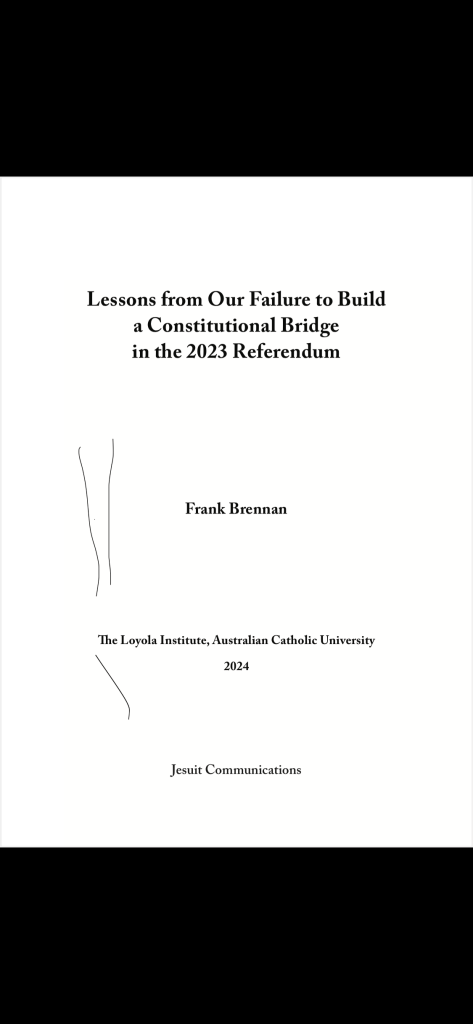
To bring you up-to-date on this post. If you are interested in Frank Brennans article . He was a noted participant in constructing approaches to the voice. This article is awash up of the failed referendum vote. This article is available on Apple Books



 CargelligoWetlands