cargellio-wetlands-logo
  • Home
  • About
    • Video gallery
    • Photo Gallery
  • Services
  • Pricing
  • FAQ
  • Portfolio
  • Testimonial
  • Blog
  • Contact
  • Chapter 3 Wiradjuri

    February 28th, 2025

    Gentle carbon footprint, made by the ancient clan. 

    Blown away by the willy willy that is modern man, 

    where, where are the Wiradjuri ways these days. 

    The gentle smoke of camp fire cooking replaced by industrial Hayes and social malaise. 

    Massive carbon footprint of modern man decimates and desiccates. The landscape raped and trampled on, its spirit gone. 

    Walk the street discreet as Wiradjuri did, feeling the pulse of the land though naked feet. No freeway ramp to the bush camp. Don’t pave the path or the hearth. Don’t incur the spirits wrath.   

    Couldn’t we take something from their stewardship to right the ship. Do a backflip from this dead end trip. 

    Take the flock off the block. Range the herd so that they don’t have to live in their own tird. Graze like wilder beast, let them feast on forage fresh and green and you won’t even see where they have been. 

    Farmer with depression in a drinking session  with a migraine driving him insane yells invane my grain my grain failed again no rain no rain just pain.

    the body corporate bounty bound compromised  promises diminished resources builds racecourses. 

    System lotteries bound to attract the immune system compromised chip eaters huddled round chip heaters in a fuel compromised world.

    Basic emotions, anger, desire misplaced on fire. Domestic violence the neighbours silence. a bash’n instead of compassion,  out of control. Man becomes the devils son. Deadly when he has a gun. The victim trapped no where to go. The beatings grow.

  • Chapter 4 Freedom

    February 28th, 2025

     It’s wrong to cage us in this great southern land. The spirit of this land is of freedom of movement. The spirits were upset when invaders curtailed freedom of people to go . Invaders put up fences mental and material in this wide brown land. Greedy for possessions, addicted to ownership they strangled the freedom of movement and cultures . And  new comers still do. When will we newcomers learn of the spirit that is Australia. It is powerful and will continue to ask for respect. As it did of the first peoples and still does. My train of thought on this approach to writing about Australia is to: Bring out the story of the power of the land to look after itself and push back  attempts to destabilise. I’m saying that the every part is important to the whole and this is held together by the spirit. I’m arguing that the present malaise has come about because actions have destabilised the great south land and the spirits are upset. 

    There is hope for a turn around if we take a new course. Which is the old course

    1. Push to Adopt the same laws of movement that the first peoples had. 
    2. peel the wool from eyes. Feel the pain in the terrain. Somethings missing.The mighty rivers are a drain in pain.the forests of red gum all forlorn. Natives: no more do they roam, confined in their ancient home. Uninitiated  youth youth strewth release them let them go black and white to shake out the depression. Peeved with grievance they advance without dance to destruction.  Ice elation, frustration.  Not concerned?  You peel the wool from your eyes

    A drain in pain

    Don’t say it’s ok

    Lachlan’s a drain in pain

    No more overflow, Clancy 

    No more fords, Cobb and Co

    Just pumps and syphons in whirring whining symphony.

    deep gouged out channels. 

     drained flood plains.

    Bovine belted banks. 

    No thanks

    Once an Oxley’s exploring demise

    His daily diary opened our eyes.* 

    A journey of disaster, logged forever after.

    In hindsight no surprise.

    Stream beds clogged, logged, natures weirdest weirs and distorted dams

    Log jams

    Intermittent high flows and low flows

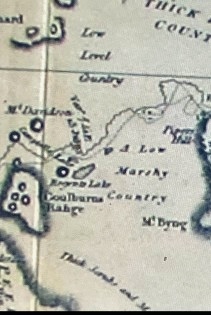
    these two images were taken 200years apart

    Oxleys journals of his journey down the Laughlan

    Overflows and chain-of -ponds. 

    Cumbungi fonds, bird throngs and songs

    Water was wise.

    Waters would rise 

    Catching them by surprise 

    Overnight

    Overflowing 

    Filling marshes and lakes 

    Dryland vanished, vanquished 

    Explorers-exasperated,

    bogged drays, 

    boats blocked,

    Explorers defeated .

    We now know it was

    The remnant rainfall from

    Saturated slopes

    Springs and soaks 

    Recharging streams, aquifers and floodplains

    Weeping and creeping 

    Regenerating wetlands

    Continuous wetlands

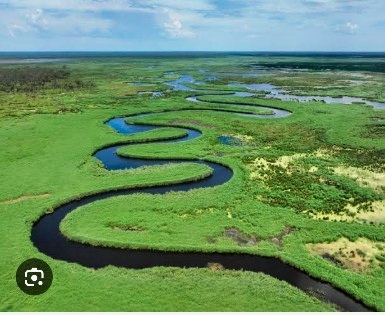
    The Lachlan River meandering through the greater Cumbung  swamp . In contrast to the drained floodplains along the present irrigated sections of the mid and upper Lachlan River.

    Recharged floodplains

    Oozeing  constantly seeping slowly,

     boggy flood plains

     After no local rains only winter front rains.

    Falling on the distant slopes.

    Lachlan’s a drain in pain

    Time to regain

    It can be done with will

    A bitter pill

    A bit up hill

    Take courage and cure the ill. 

    *Oxleys journal of his journey down the lachlan 1817. Gutenberg Press. 

  • Chapter 5 A post to clarify the reason for my posts

    February 25th, 2025

    I have a life time in this lachlan riverine environment. I consider myself an environmental poet.

    And I hope visitors will be inspired to protect the environment around them from what I have to say about climate change on a community level.

     and any funds gained from my writing projects goes towards the betterment of the wetlands area particularly the aboriginal inhabitants.

    Lachlanriverlung .com 

    Not enough clouds and too many shrouds.

    The forest exploded all along the great divide

    “Abide with me” the spirit cried and people died

    Burnt remains of lives and livelihoods.

    Burnt bodies in buildings.

    Bush shrouded in silence.

    Life of all kinds was silenced with this violence..

    Gondwana giants fire felled. For thousands of years they dwelled.

    fires quelled for 200 years by the greenery of the scenery,

    This was after the fire fallow fellow and his band was banned

    The super drought dried it out.
    And let the demon fire rout.
  • Chapter 6 Wow. I got hold of this Book amazing library of poems and prose.

    February 25th, 2025

    Salvaged them from the wreckage of the Anthropogenic Era error.  From the black box of the wreckage. Out in barren back blocks of the scorched continent.

     Got them. Now. Hurry, last rocket to the moon space port. Smuggled the box recording through 

    The alien custom officials. Cajoled, bought. 

    Now. Much to do 

    Think outside the box , 

    I’ve landed on the dark side of the moon.

    No radio signals just dust and rocks. Now. Tucked up in my life support cocoon. I’ll go to work soon

    I’m in the dark as to what approach . 

    Exposing this. I could be liable. 

    Nah, not a subject I have to broach

    I swear on the bible. 

    They are for humanity’s clawback, got to be told.

    So here I go, bold.

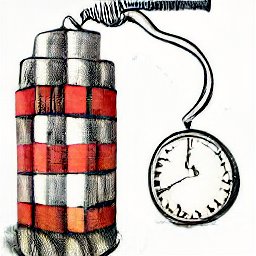
    • Time bomb
    • We have to act quick tick tick tick tick tick materialistic tick tick tick tick we are the black hole with a global goal to swallow ourselves whole  tick tick tick tick
    • Pharmacist in ivory towers finding false fixes fix fix fix  
    • Morning brink,
    • Colour my window pink 
    • through insipid smoky clouds.
    • Farmers assist in seeding
    • Waiting in vain for rain
    • Prays to a christian god
    • To save the grass on his sod
    • They’ve forgotten the spirits
    • The caretaker spirits who are paid no respect
    • Who wail in the  night through their medium the belah and the nightjar
    • “Mother earth, mother earth, they belittle your worth.”
    • They sing high and whiney  “Science is not our forte.
    • Otherwise we would have fought a.
    • When you first came our way a.
    • Den we coulda thwarted the force you hit with 
    • We coulda done ya in with  myth 
    • Pointed a bone at your unearthly throne.
    • It may still happen, stop sapp’n sanity with your vanity. 
    • A murder of crows and the spirits they enclose. Await your repose. When you turn up you toes. Bury deep or they’d scavenge you soul from a six foot hole.
    • More liable than your Bible to bring plague. On that level you are so vague.

  • Chapter 7 Cargelligo Wetlands in crisis

    November 22nd, 2023

    What to do about the influx of carp after the floods and as it seems forever after

    One solution is to eat them

    European carp victim of  prejudice. Here is why they get a bad rap.

    Off-flavour taint of aquaculture products, including around European carp is a global issue reducing consumer confidence in the farmed produce (as well as the wild caught carp of our lakes and rivers). As they are taken up via the gills of fish, and deposited in the lipids (fats) of the animal. If the fish are not purged, resulting undesirable muddy earthy flavour taint can be tasted by consumers. These undesirable flavour and odour is caused by the terpenoid compounds namely geosmin and 2-methylisoborneol, produced as secondary metabolites by certain bacteria including the cyanobacteria and actinomycetes. Geosmin is a neutral oil, with an approximate boiling point of 270 C, which contains carbon and hydrogen, but no nitrogen. It undergoes a reaction with acid (vinegar is an acid) to give odorless geosmin, a neutral oil, with an approximate boiling point of 230 C, which contains only carbon and hydrogen. 2-methylisoborneol, is also reduces to an odorless compound with acid

    A study on the reduction of off-flavour compounds that cause “earthy” and “musty” organoleptic sensorial characteristic in fresh water systems was conducted. These compounds include geosmin and 2-methylisoborneol (MIB), which are produced as metabolites by some algal and bacterial species. Drinking water and aquaculture commodities affected by these compounds become undesirable to consumers, and market values tend to drop significantly. Triple distilled water samples spiked with approximately 1 μg Kg-1 geosmin and 1 μg Kg-1 2-methylisoborneol were dehydrated through acidification using two different food grade organic acids (acetic and citric acid), at different concentrations: 0.1, 1.0 and 4.0% (w/w). Levels of geosmin and MIB reduction were determined using Solid Phase Microextraction (SPME) and Gas Chromatographic/Mass Spectroscopic (GCMS) analyses. Results showed that acidification treatments of the off-flavour compounds using varying concentrations of acetic and citric acids significantly reduced the concentrations of geosmin and MIB in the samples. Treatments with 1.0% citric acid and 4.0% acetic acid significantly reduced the concentration of geosmin to concentrations as low as 0.07±0.03 and 0.09±0.01 μg Kg-1 respectively, while the reduction of MIB to concentrations of around 0.05±0.01 μg Kg-1 was achieved at a minimum concentration of 0.1% of either acid used. Previous studies reported that products of the dehydration process of geosmin and MIB produce non-odourous products such as argosmin, and 2-methylenebornane and 1-methylcamphene respectively.

     Armed with this kind of knowledge, we can begin a journey to reduce the impact of carp in our waterways by putting a dent in their population, and start educating the public on how to eat them. They do it in the northern hemisphere. Treating them like repulsive vermin has put up a wall of ingrained prejudice, so deep in our Aussie culture and it will be hard to overcome.

    This tells us that the expansion & creation of companies like Charlie Carp and K&C Global ( Keith Bell) Fisheries could utilize more of the Carp biomass & at the same time reduce the amount of Chemical fertilizers used on farms & in homes, which vastly affect the health of our waterways when run offs occur after rain.

    If the Koi Herpes Virus is released then it is very possible that this will no longer be an option.

    Keith Bell, the fisherman who is responsible for almost all the Carp exported from the country in the last two decades, states that once the Carp begins rotting, it can’t be used for either pet food or fertiliser. He says that even if the fish could be collected in time (a matter of hours after dying), the volume would probably overwhelm processing facilities. Carp isn’t being used for pet food at the moment and the fertiliser industry only processes a couple of hundred tonnes per year, according to Keith.  

    Now if we are to utilize Carp for Fertilizer on a larger scale this will also increase the need for Commercial Fishing Operators to catch them.

    This leads me to my next point – Commercial Fishing & Export. Currently there appears to be no export of Carp. That does not mean the demand is not there for it. Keith Bell was exporting thousands of tonnes of Carp every year until 2015 when he sold up & moved overseas. This was because the drought reduced his catch numbers to become unviable

    Keith, who was exporting a couple of thousand tonnes of Carp per year from Australia from the late 90’s until 2016, when he sold up & moved to Mississippi. In the article “Weaponising Herpes – What could possibly go wrong with Carpageddon?” he was further quoted in saying “It’s a wasted resource” & said that restrictions placed on what equipment he could use to catch the fish & restrictions to minimise the bycatch of native fish, made fishing Carp too expensive. By relaxing some of these restrictions on commercial fishing, it could possibly boost the export of Carp.

    identify the spike point.

    • Lateral View
    • Dorsal View

    FULL COLOURX-RAY

    Also known as:

    Carp

    Oriental Carp

    Common Carp

    River Rabbit

    Koi

    Common Group Name:

    Carps

    Family Name:

    Cyprinidae

    Genus Name:

    Cyprinus

    Species Name:

    Cyprinus carpio


    Dispatch Method:

    Carp can be very tolerant of air exposure and can live for prolonged periods in ice slurrys. To maximise their eating qualities they should be killed humanely by iki jime, or a firm knock to the head before being placed in an ice slurry after bleeding.


    Fish Description:

    • European Carp have small eyes, thick lips with two barbels at each corner of the mouth, large scales and strongly serrated spines in the dorsal and anal fins.
    • The colour is variable depending on water conditions, but is commonly olive green to grey dorsally, fading to silvery yellow on the belly.

    Fish Distribution:

    • Carp are actually native to Asia, but ancient traders are thought to have spread the fish west into Europe.
    • From there carp have been introduced into Australia on several different occasions. European carp have been introduced into the Murray-Darling system as well as many other water bodies and rivers in south eastern Australia.
    • Small populations also occur in Tasmania and Western Australia.
    • They also have been translocated into many other countries and are now one of the most widely distributed freshwater fishes in the world.

    Fish Size Common Length:

    40-50 cm, maximum size exceeds 120 cm and 60 kg.


    For assistance with identifying fishes, see fishesofaustralia.net.au. For information on size and bag limits, check out the website of your State Fisheries Department.
    We thank fishesofaustralia.net.au and Australia’s various Fisheries Departments for some of the thumbnail images used to assist with fish identification on this website and its applications, as licensed for use under Creative Commons Attribution 3.0 Australia. Thanks also to Michigan State University and Georgia Aquarium for generous donation of xrays of some US fish species.

    What Is Ike Jime?

    Ever wonder why yellowtail or bluefin sashimi tastes better at a truly authentic sushi bar? You’ve probably brought fish home from a trip and created your own sashimi platter only to discover it didn’t quite taste the same and the texture wasn’t as nice as what you’re accustomed to ordering at your favorite Japanese restaurant. You just harvested the fish yesterday – it doesn’t get any fresher, so what gives? The way a fish is handled once it comes aboard is what truly makes the difference in terms of taste and quality. Welcome to Ike Jime. Follow this simple four-part process and you will enjoy an elevated caliber of fish at home or on the back of your boat.

    The finest quality seafood is often associated with sashimi, sushi, and other Japanese raw fish preparations. Ike jime is a traditional Japanese slaughter technique that involves instantaneously euthanizing a fish by inserting a spike into its brain cavity. The fish is then thoroughly bled and undergoes spinal cord destruction (shinkei jime) before getting iced down.

    Why Is Ike Jime Important?

    Ike jime produces a biochemically superior grade seafood product as the process helps to eliminate stress and the natural consequences of death. When a fish experiences stress, its brain goes to work by flooding the muscles with lactic acid, cortisol, and adrenaline. Core body temperature also rises. The combination of hormones and elevated temperature turns muscle tissue to mush and negatively impacts taste. When performed correctly, ike jime prevents this from occurring.

    The following four steps will yield tremendous results. When performed correctly, you will notice not only a better tasting fish but a fish that will last longer. The term “fresh” is commonly used by grocery stores to convince you to buy their imported fish. A properly processed fish will stay “fresh” significantly longer. Harvested with the ike jime method, fish can be refrigerated for weeks when safely stored in a vacuum sealed bag or airtight container. This process not only makes the fish taste better – it also lasts longer, has zero smell, and reduces waste as it won’t spoil nearly as fast, allowing you to respect the fish and the fishery to the maximum ability.

    Go to Ike Jime Steps

    After rejecting outright asphyxiation for being cruel, and clubbing the fish by hand for being inefficient and easy to mess up, the institute (the Institute of acquelculture in Shepherdstown West Virginia landed on automated stunners from Seafood Inovations in Australia, which they’ve been using ever since. 

    There’s plenty of evidence that killing fish with a blow to the head results in better food. But Tsui wanted to see if using the full ike jime process, including spinal cord destruction, made a significant difference. There were slight differences immediately after death, but a few days after slaughter, the color, texture, and pH levels were about the same, suggesting that a quick, calm death is the most important route to high-grade fish.

    Fish for eating we have people to eat them all cooks are there to make fish palatable you should not be a cook unless you can. Soak them in vinegar 50 50 with water overnight removes the unpleasant taste.

    European Carp a no different.

    the fish have to go. Eat them as roe . Even the mail gonads make a dish if that’s what you wish.

  • Chapter 8 Time Bomb

    August 9th, 2023

    1 Time bomb.

    No way forward. 

    I am the blighter writing for the blighted.

     Perhaps that’s a bit short sighted.

     Qualification on First Nation, nil. Raised on galah stew. That’ll do.

    The job is not easy. It’s Amount’n to . A mount’n to high. A mount’n of work. 

    Some will deny hands down. But I’ll try. Hands up, reach for the sky . This is a hold up, hand over your country, no reason why. Good buy Britain, goodbye blackfella culture good bye.

     We have to act quick tick tick tick tick tick. 

    Materialistic tick tick tick tick. 

    We are the black hole. 

    With a global goal Audio

    to swallow ourselves whole.  

    Tick tick tick tick. 

    Pharmacist in ivory towers finding false fixes fix fix fix. 

    Morning brink, 

    colour my window pink 

    through insipid smoky clouds. 

    Farmers assist in seeding, 

    Waiting in vain for rain. 

    Prays to a Christian god 

    to save the grass on his sod. 

    They’ve forgotten the spirits. 

    The caretaker spirits who are paid no respect.

     Who wail in the  night through their medium the belah and the nightjar.“Mother earth, mother earth, 

    they belittle your worth.

    ”They sing high and whiney. 

    “Science is not our forte. 

    Otherwise we would have fought a. When you first came our way a. 

    Den we coulda thwarted the force you hit with. 

    We coulda done ya in with myth. 

    Pointed a bone 

    at your unearthly throne”.

     It may still happen, 

    stop sapp’n sanity with your vanity. 

    A murder of crows and the spirits they enclose. 

    Await your repose.

    When you turn up you toes.

     Bury deeper. They’d scavenge you soul 

    from a six foot hole. 

    More liable 

    than your Bible 

    to bring plague.

    On that level you are so vague.

    Eddie Vagg

    I am the blighter writing for the Blighted

  • Chapter 9 CONVERSATION’S view on the voice

    April 23rd, 2023

    Three articles by Conversations journalists clarifying Uluru statement from the heart. Headed by a plea by Post author Eddie Vagg in the form of a poem.

    Eddie Vagg’s poem First People inspired by ancient campsite, cries out for Truth Telling

    I'm not kidd”n
    
    I walk across an ancient midden.
    
    I feel I just want to throw a spear.
    
    There is something here.
    
    I know about this tragedy.
    
    But this is not a parody.
    
    There is a spirit in this clay pan 
    
    where a spirited race once ran.
    
    The flint flakes
    
    Shells from Rivers and lakes
    
    And the honing stone
    
    Petrified bone.
     
    An energetic race once called this spot home.
    
    The energy is sometimes there.
    
    Strongest in the spring morn. 
    
    When they had the cool late winter burn
    
     green shoots would return. 
    then the roo’s were Ambushed and speared.
    
    I amble further on 
    
    the energy is gone.
    
    So has the tribe. 
    
    Sulphur Crested’s
    
    The messenger bird
     
    Rested in the trees.
    
    their late evening screeching  
    
    smacks of violence
    
    And the campfire silence


    The Voice: what is it, where did it come from, and what can it achieve?

    This is the first article in our three-part series explaining Voice, Treaty and Truth.

    This week, the government will introduce a constitutional amendment into parliament to establish the Aboriginal and Torres Strait Islander Voice. If successful, it will go to a referendum likely in October or November.

    We now know the wording of the amendment and referendum question the government is proposing. But what exactly is the Voice? Where did it come from? And what it can achieve?

    What is the Voice?

    The Voice provides permanent representation and recognition for Aboriginal and Torres Strait Islander peoples in the Constitution.

    The Voice will be a new body that represents Aboriginal and Torres Strait Islander people from across Australia to provide their input into the decisions, policies and laws that are made by the government and parliament.

    This is consistent with the UN Declaration on the Rights of Indigenous Peoples, which says Indigenous peoples have a right to participate in government decision-making in matters that affect their rights, through their own political institutions. 

    Across the world, similar types of institutions and relationships have been established, including in Sweden, Norway and Finland with the Sami people, and with the Māori in Aotearoa. There are also many similar relationships that Indigenous peoples have with the state in North and South America. 

    However, it’s also important to remember the Voice has been developed as a response to our local circumstances, and in particular, the lack of formal agreement – such as a treaty – or formal recognition of the rightful place of First Nations in Australia.

    In Australia, the Voice will be constitutionally enshrined. This means successive governments can’t overturn it. It will be established as a new constitutional body in a new chapter (Chapter 9) at the end of the Constitution.

    The key function of the Voice – to make representations to the government and parliament on matters relating to Aboriginal and Torres Strait Islander people – will also be constitutionally protected. But the government and parliament cannot be compelled (for example, through litigation) to follow these representations. As such, this body would not have “veto” power and is not a “third chamber”. 

    Rather, the Constitution is setting up a mechanism designed to improve decisions, policies and laws through First Nations input on matters that affect them. These matters might directly affect Aboriginal and Torres Strait Islander people, such as changes to the native title law, but it could also include broader laws and policies that have a particular impact on them, such as environmental protection laws or electoral laws. These decisions would be improved through their input.

    Other details about the Voice will be decided by parliament through the normal legislative process. This ensures the Voice’s design can be flexible and evolve as required. These details include: 

    how many representatives will comprise the Voice 

    how they will be selected 

    what its internal processes will be 

    what powers it will need to perform its functions, such as accessing government information, and 

    how the Voice will interact with parliament and the executive.

    As many constitutional experts have explained, establishing the key principles and leaving the detail to be determined through the legislative process is a normal – and desirable – way to design constitutional institutions.

    That is not to say we don’t know what the Voice will look like – there has been significant work done on this. Most recently, the government has released a set of principles that will guide the initial legislative design of the Voice, should a referendum be successful.

    The Voice also performs another important constitutional role: it recognises Aboriginal and Torres Strait Islander people as the First Peoples of Australia in the Constitution. At the moment, the Constitution is entirely silent with respect to Aboriginal and Torres Strait Islander people.

    Where did it come from?

    The Voice has been proposed by Aboriginal and Torres Strait Islander people as the best solution to respond to their overwhelming feeling of disempowerment and structural disadvantage.

    The concept of the Voice, when understood as recognition and representation, has a long history. The advocacy for greater political representation for Aboriginal people stretches back to a 1938 petition organised by Yorta Yorta man William Cooper.

    The modern advocacy for constitutional recognition stretches back to Prime Minister Paul Keating’s response to the 1992 High Court native title decision known as “Mabo”. This included a social justice reform package that recommended constitutional recognition, to be determined through a series of conventions and negotiations with Aboriginal and Torres Strait Islander people. 

    This never happened, however. It wasn’t until 2010 that constitutional recognition was raised again as part of Julia Gillard’s minority government negotiations with independent MP Rob Oakeshott. This resulted in the establishment of the Expert Panel on Constitutional Recognition of Indigenous Australians, which reported in 2012. 

    The panel recommended recognition should be achieved through a series of changes, and most controversially a clause in the Constitution about racial non-discrimination. The Labor government never responded to the proposal and the Coalition dismissed it as a “one-clause bill of rights”.

    Following this, in 2015, Aboriginal and Torres Strait Islander leaders developed the Kirribilli Statement, which requested a new set of consultations to break the stalemate on recognition.

    This led to the bipartisan establishment of the Referendum Council and a A$10 million commitment to undertake nationwide consultations with Aboriginal and Torres Strait Islander people – as had been proposed back in the 1990s but never happened – as well as non-Indigenous consultations.

    At the same time, groups like the Cape York Institute under Noel Pearson began significant work on a proposal for an Indigenous representative constitutional body, which would lay the conceptual foundations of the Voice. This included the development of some initial drafting by constitutional expert and professor Anne Twomey.

    The Indigenous members of the Referendum Council, under the leadership of Aunty Pat Anderson, Megan Davis and Pearson, designed a series of locally led dialogues to understand the reform priorities of First Nations people across the country. 

    Each dialogue selected representatives to attend a First Nations Constitution Convention. After days of negotiations over such pressing questions as sovereignty and how best to achieve aspirations like a treaty, the convention endorsed the Uluru Statement from the Heart. 

    This called for two stages of reforms. First, a constitutionally enshrined Voice. Second, Makarrata, which is a Yolngu word for “coming together after a struggle”, to include agreement-making (a treaty) and truth-telling. Voice. Treaty. Truth.

    What can it achieve?

    The Voice is both a practical and symbolic reform. 

    Practically, the Voice is informed by decades of research and the experience of people on the ground, that decisions, policies, laws and most importantly outcomes are improved when Indigenous peoples are empowered and involved in the process.

    Symbolically, the Voice offers Australia a chance to design a more inclusive narrative of nationhood, informed and strengthened by the participation of First Nations people.

    In Australia, we have tried to address these issues before, including through bodies like the National Aboriginal Consultative Committee and the National Aboriginal Conference in the 1970s, the Aboriginal and Torres Strait Islander Commission (ATSIC) from 1990-2005, and smaller ministerial advisory bodies. 

    These bodies did good work and made a real difference, despite having limited power and resources. They often faced hostile political environments where a change in government would undermine the progress made. 

    But none of these bodies were enshrined in the Constitution, and each was dismantled, often at times of heightened political tension with the government. So, Aboriginal and Torres Strait Islander people were not able to have independence, stability, continuity or the necessary capacity to engage with government in a meaningful, ongoing way.

    The Voice offers a highly practical reform, which for the first time will offer independence and stability through constitutional enshrinement.

    The Voice is also an important stepping stone towards other key reforms in the relationship between Aboriginal and Torres Strait Islander people and the state – in particular, treaty and truth as described in the Uluru Statement.

    The sequencing of Voice, Treaty, Truth has been given significant thought.

    Voice precedes Treaty because fair, modern treaty negotiations require first the establishment of a representative Indigenous body to negotiate the rules of the game with the state. It can’t be left to the state alone, and the state must have a group of people with whom to negotiate. 

    In Victoria, this was achieved through a specific representative institution – the First Peoples Assembly.

    Truth follows Voice and Treaty, because, as Torres Strait Islander political scientist Sana Nakata explains, Voice ensures Truth will matter more than just “continued performance of our rage and grief for a third century and longer”. Voice establishes the power for Treaty, and Treaty establishes the safekeeping of Truth. 

    As historian Kate Fullagar explains, truths about Indigenous history in Australia are well-known – there have already been royal commissions into colonial violence, the stolen generation, and Black deaths in custody. But they have been too easily forgotten, and they have not led to change. 

    The Voice presents an opportunity for improving the relationship between First Nations and the State through stable political empowerment that will give all Australians an opportunity for a better, shared future.

    Gabrielle Appleby

    Professor, UNSW Law School, UNSW Sydney

    Eddie Synot

    Lecturer, Griffith Law School, Griffith University

    Disclosure statement

    Gabrielle Appleby is a member of the Indigenous Law Centre at UNSW (Sydney). She served as a pro bono constitutional consultation to the Regional Dialogues and First Nations Constitutional Convention that delivered the Uluru Statement from the Heart. 

    Eddie Synot is a Senior Engagement Officer with the Uluru Dialogue and a Centre Associate with the Indigenous Law Centre at UNSW (Sydney). 

    Partners

    Griffith University and UNSW Sydney provide funding as members of The Conversation AU.


    Make sure your news is written by those who know what they’re talking about. Get the newsletter.

    https://apple.news/Ax3iIDpkNQw-PGzFTEmEuig

    https://apple.news/AXIHzaGxYSLiqiWKfIfGtCA

    https://apple.news/AKAZcwjCARSCRddWW720INg

    First Nations people have made a plea for ‘truth-telling’. By reckoning with its past, Australia can finally help improve our future

    What actually is a treaty? What could it mean for Indigenous people?

    This is the second article in our series explaining Voice, Treaty and Truth. Read the first article in the series here. 

    The Uluru Statement from the Heart calls for Voice, Treaty and Truth. These aspirations are intended as a sequence of reforms, that advance towards a just settlement with First Peoples. 

    The federal government is committed to holding a referendum later this year to put an Aboriginal and Torres Strait Islander Voice in the Australian Constitution. The government has also agreed to implement the Uluru Statement “in full”. 

    Following the referendum, it’s expected attention will shift towards a Makarrata Commission to “work on a national process of treaty-making and truth-telling”. In fact, reports suggest the government might move even faster. 

    For generations, Aboriginal and Torres Strait Islander peoples have called for a formal treaty or treaties to recognise their sovereignty “and set out mutually agreed terms for our relationship with the Australian government”. 

    But while Treaty has long been part of the political landscape, it is not well understood. Many Australians wonder what a Treaty is, what it would achieve, who it would be negotiated with, or for whom, and how. We’ll explore some of these questions here (in brief). 

    Why does Australia not have a Treaty?

    When European colonial powers encountered Indigenous peoples, they often negotiated treaties. These agreements dealt with a range of matters, including trade and military alliances. They also set out rules to share the land and maintain peaceful relationships. 

    These colonial-era treaties were regularly broken. However, they recognised Indigenous peoples had the right to deal with land and exercised sovereignty over that land. 

    The British did not engage in treaty talks in Australia. They never sought to negotiate with the owners of this land. Instead, they claimed the land belonged to no one and took it for themselves. 

    Historians have debated why the British took this approach. Some have argued as a penal colony with a substantial military force there was no need to negotiate trading relationships with the original owners. Others have argued the racist attitudes of the day were influential. 

    Whatever the reason, the result is Australia is an outlier. As a result, many Aboriginal and Torres Strait Islander peoples believe the moral and legal basis of the nation is “a little legally shaky”.

    What is a Treaty?

    The absence of a Treaty is one of the major challenges facing the Treaty debate in Australia. Without a history of treaty-making, the concept of what a treaty is or involves remains vague for many people, including government. 

    It means some people can argue a Treaty is dangerous or it would lead to the breakup of the nation. This makes little sense because a Treaty is a marriage not a divorce. It’s about bringing communities together and building strong relationships based on self-determination. 

    Governments might argue they’re already engaged in treaty-making. There are many examples of bureaucracy adapting its policy formulation and delivery to reflect community aspirations for a greater say in the delivery of services. 

    Such “partnerships”, “co-design” and local decision-making with government are valuable. They mark an important shift in promoting Aboriginal and Torres Strait Islander peoples’ participation in policy development and service delivery. But simply calling an agreement a “treaty” doesn’t make it a treaty.

    Australia has signed up to a range of international legal instruments that concern the rights of Indigenous peoples. These legal instruments set a clear standard for what makes an agreement a treaty. A treaty must satisfy three conditions. 

    A treaty acknowledges Indigenous peoples are a distinct political community different to other Australians. This is because Indigenous peoples are the only group of Australians who owned, occupied, and governed the continent before colonisation. This recognition also acknowledges the historic and contemporary injustices that invasion has caused

    ​

    A treaty is a political agreement reached by a fair process of negotiation between equals. Negotiation helps ensure everyone’s interests can be considered. But securing a fair negotiation process can be difficult. In Victoria, the First Peoples Assembly and State government have agreed to a Treaty Negotiation Framework that sets out principles to guide Treaty talks

    ​

    Treaties involve both sides committing to responsibilities, promises and principles that bind the parties in an ongoing relationship of mutual obligation and shared responsibility. Most importantly, while the outcomes of any negotiation will differ according to the parties, a treaty is built on the recognition of Indigenous peoples’ inherent sovereignty. As part of this, a treaty will provide for some degree of self-government. What this looks like in practice will be worked out in negotiations.

    A treaty will also include a range of other elements. It could include financial compensation, return of land, formal recognition of historic wrongs, and symbolic gestures of reconciliation, such as apologies.

    Treaties are unique agreements. As Professor Megan Davis explains, they are aimed at “settling fundamental grievances, and establishing binding frameworks of future engagement and dispute resolution”. 

    Modern treaties are different from historic treaties

    There is a long history of treaty-making all over the world from which Australia can draw lessons. But it’s important to note modern treaties differ from those negotiated in colonial periods. They are more technical and legally complex. They are also negotiated against a long history of inequitable relationships. 

    They will also be subject to Australian law. While colonial-era treaties were international agreements between two sovereign communities, modern treaties will be subject to Australian law. 

    Treaty is happening now

    Treaty is a longstanding aspiration of First Peoples in Australia. It is only in recent years, however, governments have decided to talk treaty. 

    Progress has been slow, but important steps have been taken at the state and territory level. For instance, in February this year, the Queensland government introduced the Path to Treaty Bill 2023 into the state parliament. The bill will establish and finance an independent First Nations Treaty Institute to “help prepare and support First Nations people for treaty negotiations with the state”. 

    That same month, the South Australian government introduced a bill to establish a Voice to the Parliament, with a treaty process to follow. 

    In Victoria, after several years of patient work, negotiations between the First Peoples Assembly and state government are expected to begin by the end of the year. Similar processes are underway in the Northern Territory, Tasmania and the ACT. 

    Every treaty process has its own challenges and complications and it’s too early to tell whether these processes will result in meaningful settlements. Nevertheless, they demonstrate two key things. 

    First, Treaty is a matter of political will, not legal impossibility. Second, looking towards the referendum later this year, the existence of treaty processes across the country suggests Australians may be willing to deal with the unfinished business of colonisation and its consequences.

    Harry Hobbs

    Associate professor, University of Technology Sydney

    Heidi Norman

    Professor, Faculty of Arts and Social Sciences, University of Technology Sydney

    Matthew Walsh

    Lecturer, Faculty of Law, University of Technology Sydney

    Disclosure statement

    The authors do not work for, consult, own shares in or receive funding from any company or organisation that would benefit from this article, and have disclosed no relevant affiliations beyond their academic appointment.

    Partners

    University of Technology Sydney provides funding as a founding partner of The Conversation AU.


    Make sure your news is written by those who know what they’re talking about. Get the newsletter.

    This is the third article in our series explaining Voice, Treaty and Truth. Read the other articles in the series here and here. 

    Australia has never been good at listening to Aboriginal and Torres Strait Islander people. Despite the truths that have already been told in processes like the Royal Commission into Aboriginal Deaths in Custody or the Inquiry into the Separation of Aboriginal and Torres Strait Islander Children from their Families, time and again governments have ignored recommendations designed to address the impacts of Australia’s settler-colonial past and present.

    State refusals to respond to truth have led to renewed calls for processes that will detail the impacts of colonisation in the everyday lives of Indigenous people. These calls were an important part of the Uluru Statement from the Heart, which sought “the establishment of a First Nations Voice enshrined in the Constitution”, complimented by “a Makarrata Commission to supervise a process of agreement-making between governments and First Nations and truth-telling about our history”. 

    As legal scholars Gabrielle Appleby and Megan Davis have commented, the call for truth-telling in the Uluru Statement is just one part of a wider call for structural reform intended to ensure improvement in the lives of Aboriginal and Torres Strait Islander people.

    Why truth?

    Beginning in the 1980s, formal truth-telling processes (usually called truth commissions) emerged as a method of reckoning with the past in deeply divided societies around the world. Perhaps the most famous example is the South African Truth and Reconciliation Commission, which aimed to address the gross violations of human rights that happened under apartheid. 

    Truth commissions like this are generally temporary, state-sanctioned inquiries that typically last from one to five years, with a remit to investigate particular events and examine specific violations over a defined period of time. This typically involves collecting testimony from victims and (sometimes) perpetrators. 

    It is only relatively recently that truth-telling processes have been used as a response to settler colonial violence, most notably via Canada’s Truth and Reconciliation Commission, which arose after a class action lawsuit on behalf of the roughly 150,000 First Nations children taken from their familes and placed in residential schools. 

    The Uluru Statement isn’t the first time First Nations on this continent have called for truth-telling. Since colonisation, Indigenous peoples have insisted that Australia must not look away from their experiences of dispossession and survival. 

    When these truths have been told, however, they have all too often been met with denial, defensiveness or even aggression. For example, when the Stolen Generations inquiry pointed to evidence of the forcible removal of Indigenous children that, it charged, constituted a breach of the UN Convention on Genocide, there was an immediate conservative backlash. The Howard government rejected the findings of the inquiry in one of the earliest salvos against what conservatives have termed a “black armband” view of Australian history.

    There is a reason settler governments have been reluctant to engage in truth-telling. First Nations often seek truth as a means of changing an untenable status quo, reshaping society’s attitudes so as to improve their own future prospects and reaffirm their distinct sovereignties and their right to self-determination. 

    As the non-Indigenous Canadian political scientist Courtney Jung has argued, while settler governments may try to use the conclusion of a truth commission to “draw a line through history”, First Nations seek to build “not a wall but a bridge”, using truth-telling to “draw history into the present, and to draw connections between past policy, present policy, and present injustices”. 

    Whose truths? What truths?

    Broadly speaking, First Nations peoples seek truths that address three key themes: narrative and memory; trauma and healing; and responsibility and justice. 

    We have described this potential as “the promise of truth”, in which truth-telling leads to a kind of agreement between Indigenous and settler peoples, rather than being a process centred on the state and its violence. 

    The promise of truth is that it will change national narratives and produce a new, shared collective memory that acknowledges crimes of the past; it will contribute to the healing and recovery of Indigenous people who have been harmed by colonisation and dispossession; and it will compel settlers and their institutions to take responsibility for the harms of colonisation.

    This approach stands in contrast to what we have called the “colonisation of truth”, through which truth-telling is seen primarily as rehabilitative of the settler colonial state while obscuring ongoing injustices. When truth is colonised, it may reproduce narratives that restore aspects of settler legitimacy and treat injustices as being solely in the past. Alternatively, this version of truth may treat First Nations people merely as victims, telling stories of harm and trauma without delivering reparation. Or it may suggest that the demand for responsibility and justice has been fulfilled simply by engaging in the truth-telling process, rather than treating the telling of truth as a starting point for a fairer future. 

    Truth, then, is complex, and what it may achieve in the Australian context is not yet clear. As treaty processes progress in several Australian jurisdictions, the commitment to truth-telling seems likely to be a part of future negotiations. This close connection between treaty and truth is unique to the Australian case and confirms the strongly held belief that truth has transformative potential. We do not yet know whether the linking of truth and treaty will produce the transformation in relationships that is so urgently needed.

    Victoria, which announced a commitment to treaty in 2016, is the jurisdiction most advanced in testing this proposition. In 2022, Victoria established the Yoorrook Truth and Justice Commission (Yoorrok is a Wemba Wemba word meaning “truth”), marking a new era in Australian truth-telling focused on the history of invasion and colonisation of First Nations’ territories. Until the creation of Yoorrook, no previous commission, royal commission or inquiry into colonisation in Australia has included the word “truth” in its official title.

    Yet still, truth is not a straightforward proposition. “Truth burns,” as Indigenous academic Marcia Langton recently put it. Sometimes, truth-telling is painful and connects directly to harm and injustice. 

    Truth is tricky. It can appear to open spaces for new understandings, while simultaneously shutting these spaces down and reinforcing the colonial status quo. 

    Ultimately, truth-telling is uncomfortable but necessary, as change in any relationship inevitably is. But this is where the possibility lives. As new truth-telling takes place across this continent we have an opportunity to imagine what it might mean to be in a relationship that does not deny the truth of First Nations’ lives, or the truth of how Australia has come to be.

    Julia Hurst

    Faculty of Arts Indigenous Postdoctoral Fellow, Indigenous and Settler Relations Collaboration, The University of Melbourne

    Sarah Maddison

    Professor, School of Social and Political Sciences, Co-Director, Indigenous-Settler Relations Collaboration, The University of Melbourne

    Disclosure statement

    The authors do not work for, consult, own shares in or receive funding from any company or organisation that would benefit from this article, and have disclosed no relevant affiliations beyond their academic appointment.

    Partners

    University of Melbourne provides funding as a founding partner of The Conversation AU.


    Make sure your news is written by those who know what they’re talking about. Get the newsletter.

    To bring you up-to-date on this post. If you are interested in Frank Brennans article . He was a noted participant in constructing approaches to the voice. This article is awash up of the failed referendum vote. This article is available on Apple Books

  • Chapter 10 How flat is my Valley. This version is for mobiles

    March 10th, 2023

    How flat is my Valley

    The Lachlan Valley in New South Wales

    Sunset after the flood 2/3/2023. Environmental water flowing past My home on 703 River Road lake Cargelligo to protect the lower Lachlan from the sudden

    dry

    Galari ( Lachlan River)

    It is the basis of my book Cargelligowetlands(see LachlanRiverlung.com) this Lachlan River in Central Western New South Wales . The large piece of prose in the book “Bastardisation of a magical river” looks at it from Oxley’s Diary angle and my angle expounding it’s flatness. It’s flatness are unique feature of a river that runs over most of its length.

    Bastardisation of a magical river revisited

    We didn’t realise it’s magical ability to store water through its whole length.

    Bastardisation by coloniser Creations for convenience.

    Made from shortsighted civilisations Returning negative results to our precious environment.

    This essay:

    I’m using Oxley’s journal of his journey down the Lachlan in 1817 to find out the true nature of this once pristine unique River System.

    I’m using this approach to show where we have gone wrong.

    This maybe an aid in embracing some of the rights and fixing some of the wrongs.

    My comment: The following paragraph is the description by Oxley on his arrival on the Bathurst plains in 1817. Perfect example of how early settlers overran the excellent food resources maintained in a sustainable way for millions of years by the aboriginals at the very top of the western catchments.

    Journal 14th April:: Bathurst had assumed a very different appearance since I first visited it in

    the suite of his excellency the Governor in 1815. The industrious hand of man had been busy in improving the beautiful works of nature; a good substantial house for the superintendant had been erected, the government grounds fenced

    in, and the stack-yards showed that the abundant produce

    of the last harvest had repaid the labour bestowed on its culture. The fine healthy appearance of the flocks and herds was a convincing proof

    how admirably adapted these extensive downs and thinly wooded hills are for grazing, more particularly of sheep. The mind dwelt with pleasure on the idea that at no very distant period these secluded plains would be

    covered with flocks bearing the richest fleeces, and contribute in no small degree to the prosperity of the eastern settlements.

    My comment: Aborigines. There hunting ground decimated for the woollen mills of Britain

    My comment: The following paragraph of Oxley’s journey gives an example fire control the aboriginals of the Lachlan tribes practised. The other items mentioned is the drainage by limestone to take water under ground into the aquifer. The beginning of what I’m trying to explain about water the whole length of the system being stored

    Journal 23rd of April: The timber standing at wide intervals, without any brush or undergrowth, gave the country a fine park-like appearance. I never saw a

    country better adapted for the grazing of all kinds of stock than that we passed over this day. The limestone, which is the first that has hitherto

    been discovered in Australia, abounds in the yy where we halted; the sides and abrupt projections of the hills being composed entirely of it, and worn

    by the operation of time into a thousand whimsical shapes and forms.

    A small stream runs through the valley, which in June 1815 was dry; the bottom of this rivulet was covered with a variety of stones, but the bases of the hills which projected into it, and from which the earth had been washed, were of pure limestone of a bluish grey colour.

    My comment: Limestone country. Waterhole 14 miles from the Lachlan and no more water till the river. Must’ve gone into groundwater

    My comment: Oxleys description On his arrival at the head of the Lachlan.

    Journal 25th of April: At two o’clock saw the river, which certainly did not disappoint me: it was

    evidently much higher than usual, running a strong stream; the banks very steep, but not so as to render the water inaccessible: the land on each side quite flat, and thinly clothed with small trees; the soil a rich light loam:

    higher points occasionally projected on the river, and on those the soil was by no means so good. The largest trees were growing immediately at the water’s

    edge on both sides, and from their position formed an arch over the river, obscuring it from observation, although it was from thirty to forty

    yards across. At four o’clock we arrived at the depot.

    My Comment: 25th April Oxley’s first sight of the Lachlan {and just short of their starting depot just beyond Cowra} in its high reaches, good description obvious floodplain and river banks and streamflow

    My comment: The following paragraph gives the position of the depot where they begin the journey down the Lachlan . It was near Cowra the foothills of the catchment. 150m above sea level. Booligal near the other end of the catchment is 90m above Sea level. The unique gentle slope and geology mimics the flows of the Lachlan. This reasonably gentle slope enables storage for some time of water in swamps and groundwater for the whole length

    Journal 27th of April: The observations which were made here placed the depot in lat. 33. 40.

    S., and in long. 148. 21. E., the variation of the needle being 7. 47 E. The barometrical observations, which had been regularly taken from Sydney to this place, did not give us an elevation of more than six hundred feet above the level of the sea; a circumstance which, considering our distance from the west coast, surprised me much

    My comment: The following paragraph highlights my proposition. There was plenty of harbour for Fish. Plenty of logs for slowing down the flow. Large shallow lagoon suggests shallow groundwater and there was plenty of birdlife in a stable ecosystem

    Journal 29th of April: At six o’clock the boats arrived safe, the men having had a very fatiguing

    row, and been obliged to clear the passage of fallen trees, and other obstructions; so that we determined to give them some repose, and halt

    here for the night. At half past eight o’clock proceeded down the river, intending to stop at the termination of Mr. Evans’s journey in 1815, about

    five miles further, for the purpose of repairing the small boat, which had sustained some slight damage in coming down the river yesterday. I rode

    about three miles back into the country; the cupressus was here more frequent, though not of large growth; the soil is not good. In returning to the river we came upon the creek which terminated Mr. Evans’s journey,

    down which we travelled until we came to the river, about half a mile from which is a large shallow lagoon, full of ducks, bustards, black swans, and

    red-bills. At twelve o’clock the horses arrived at the mouth of the creek, and the boats half an hour afterwards. The banks of the creek were very

    steep, and it was three o’clock before all the provisions were got over. The creek was named Byrne’s Creek,(Belubula River )after one of the present party, who had accompanied Mr. Evans in his former journey

    My comment: The following sentence was made in the journal a day or so further on from Belubula confluence. Showing more proof of groundwater.

    Journal Second of May: Upon the swamps were numerous swans and other wild fowl. In the evening we caught nearly a hundred weight of fine fish.

    My comment: The following paragraph reinforces Oxleys opinion of area of the inundation just west of Jemalong gap which is now an irrigation district.

    It uses the weir there to divert water into a channel system (Jemalong Irrigation scheme)

    My comment: (And Oxley commented on this.)This area around Jemalong seems wet all the time. It stays in the Lanscape which means the groundwaters was saturated the whole length of the river system..

    My comment: Google Earth over this area such as the Lachlan catchment shows by way of grey colour the extent of waterholes and marshes that existed beyond the river channel on the flood plain.

    Journal sixth of May: I have reason to believe that the whole of the extensive tract named

    Princess Charlotte’s Crescent (south of Jemalong gap) -is at times drowned by the overflowing of the

    river; the marks of flood were observed in every direction, and the waters in the marshes and lagoons were all traced as being derived from the river.

    Journal: During a course of upwards of seventy miles not a single running stream emptied itself into the river on either side; and I am forced to conclude that

    in common seasons this whole tract is extremely badly watered, and that it derives its principal if not only supply from the river within the bounding ranges of Princess Charlotte’sCrescent. There are doubtless many small

    eminences which might afford a retreat from the inundations, but those which were observed by us were too trifling and distant from each other to stand out distinct from the vast level surface which the crescent presents to the view.

    The soil of the country we passed over was a poor and cold clay;

    but there are many rich levels which, could they be drained and defended from the inundations of the river, would amply repay the cultivation. These

    flats are certainly not adapted for cattle; the grass is too swampy, and the bushes, swamps, and lagoons, are too thickly intermingled with the better portions to render it either a safe or desirable grazing country

    My comment: This Mount Cunningham mentioned in the next paragraph is this small Hill with the huge statue of an aboriginal warrior and is today on the River Road to Forbes. Oxley’s view on description paints a very wet scene. With the river overflowing its banks to fill up low-lying swamps indicating groundwater. This was a dry year in these parts. These flood pulses witnessed on his journey would have all come from winter fronts in the catchment. All the way to Goulburn

    Journal 11th of May: At twelve o’clock ascended the south end of Mount Cunningham, a small branch of the river running close under it. From this elevation our view was very extensive in every direction, particularly in the western quarter. The whole country in that direction was so low, that it might not improperly be termed a swamp, the spaces which were bare of trees

    being more constantly under water than those where they grew

    My comment: This area west of Jemalong again explains how saturated the system was even in the dry season. The system is storing water in the ground water and slowly percolated forward downstream.

    Navigation by river and land it’s so bad Oxley abandon the idea and headed for the coast at Cape Northumberland

    Journal 12th of May: The river here became no longer navigable for boats. In pursuance of this intention we descended the hill, which was named

    Farewell Hill, from its being the termination of our journey in a north-west direction at least for the present,

    My present intention is to take a south-west direction for Cape Northumberland, since should any river be formed from those marshes,

    which is extremely probable, and fall into the sea between Spencer’s Gulf and Cape Otway, this course will intersect it, and no river or stream can arise from these swamps without being discovered. The body of water now running in both the principal branches is very considerable, fully sufficient to have constituted a river of magnitude, if it had constantly maintained such a supply of water, and had not become separated into branches, and lost among the immense marshes of this desolate and barren country, which seems here to form a vast concavity to receive them. It is impossible to arrive at any certain opinion as to what finally becomes of these waters, but I think it probable, from the appearance of the country, and its being nearly on a level with the sea, that they are partly absorbed by the soil, and the remainder lost by evaporation.

    My comment: Uniqueness of the Lachlan River is this realatively gentle slope giving it the ability to absorb and maintain lots of water both surface and ground water which is supposed to be intertwined. Extractions have destroyed the balance this once pristine System

    I have since researched articles on Library of New South Wales site on salinity. Here’s a small extract to show what drying up marshes is capable of doing was far of salt loads go.”The combination of old weathered and relatively flat land surfaces, poorly drained soils and a variable and often dry climate has resulted in significant accumulation of salt in the Australian landscape.”

    from

    this extract was from an article on Hydrogeological Landscapes framework: a biophysical approach to landscape characterisation and salinity hazard assessment

    Oxley gave up going to the coast at where Griffith is now . Headed north and was impressed when finding the river again. by then the river had got back into healthy stream. He hits the river near present Ballyroggan.

    Journal June 22: After going eight miles and a quarter, we suddenly came upon the banks243

    of the river; I call it the river, for it could certainly be no other than the Lachlan, which we had quitted nearly five weeks before. Our astonishment was extreme, since it was an incident little expected by any one. It was

    here extremely diminished in size, but was still nearly equal in magnitude to the south-west branch which we last quitted. The banks were about

    twelve or fourteen feet above the water, and it was running with a tolerably brisk stream to the westward.

    My comment: Previous paragraph and the next Is worth reading. His summing up of lack of input from streams along the way. And still catching fish near Ballyroggan

    Dryanders head is Mount Daylight

    Journal 23rd June: .

    It is a singular phenomenon in the history of this river, that, in a course of upwards of two hundred and fifty miles, in a direct line from where Mr.

    Evans first discovered it, not the smallest rivulet, or, in fact, water of any description, falls into it from either the north or south; with the exception of the two small occasional streams near the depot, which flow from the north.( further up from where they started there is the Boorowa, Crookwell, Abercrombie rivers)

    The country to the southward, in its soil and productions, explains pretty satisfactorily why no constant running streams can have sources in that direction; and it may be esteemed, as to useful purposes, a desert, uninhabitable country. A small strip along the sea-coast may possibly be

    better, and derive water from the low hills which are known to border on it: south of the parallel of 34. S. may therefore be considered as falling under

    the above designation and description of country.

    The plains south of the river, and lying from Goulburn’s Range (Ural Range) to Macquarie’s Range (Lachlan Range)

    , were named Strangford Plains; and a remarkable peak south of Barrow’s Hill, Dryander’s Head (Mount Daylight)

    Journal 24th of June: It was a matter of considerable curiosity and interest to us, in what

    direction the Macquarie River had run; it was clear that it had not joined

    the present stream, for in that case it would have been much more considerable: we were within three or four miles of the latitude of Bathurst,

    and it was scarcely probable that it should continue for so long a course to run parallel to the Lachlan. The whole form, character, and composition of

    this part of the country is so extremely singular, that a conjecture on the subject is hardly hazarded before it is overturned; every thing seems to run counter to the ordinary course of nature in other countries.( The Lachlan has unique features is flatness and singularity of sauce.)

    June 24.—The water is about three feet above the common level, and although the banks on both sides are certainly occasionally overflowed, there is no appearance of any fresh or flood having swollen the stream for a considerable time.

    My comment: Wet wet wet the whole length even in the dry. Says something for ground water storage as opposed to dams and weirs.

    Jews in Israel are of the same opinion in the following article.

    Water Management in Israel

    Key Innovations and Lessons Learned for Water-Scarce Countries (Short extract on ground water storage from the complete works)

    Please cite the work as follows: Marin, Philippe, Shimon Tal, Joshua Yeres, and Klas Ringskog. 2017. Water Management in Israel: Key Innovations and

    Lessons Learned for  Fourth Innovation: Using Aquifers as Reservoirs

    The first integrated supply scheme based on the national water system operated by Mekorot since the 1960s relied on the storage capacity of the Sea of Galilee and the Coastal and Western Mountain aquifers. Mekorot has added major infrastructure since then to connect and rationalize the operation of aquifers.

    One of the most remarkable innovations of Israel water management is that aqui- fers have been gradually switched from being overexploited resources to becoming major storage reservoirs. The existence of the National Water Carrier and the large-scale use of seawater desalination and reclaimed wastewater an alternative nonconventional water sources made this possible.

    The interconnected nature of the National Water Carrier affords the opportunity to optimize the operations of regional water schemes through over-pumping from local aquifers in dry years or artificial recharges in wetter years. The aquifers therefore serve as swing suppliers (i.e., buffers) while also minimizing evaporation losses that would have occurred had this water been stored in open reservoirs.

    The hydraulic advantages of this integrated scheme are obvious in terms of higher reliability

    My comment: He mentions water holes that look like they’ve been dry for a time and then in the same place 11 miles down a large lagoon partly full of water{shallow groundwater}

    Journal 25th of June: At nine o’clock we set forward down the river; our course lay westerly,

    and by three o’clock we had gone nearly twelve miles in that direction; when we stopped for the night on the banks of the river near the termination of Macquarie’s Range {Lachlan Range}, the north point of which I named Mount

    Porteous.{Bakers Hill}

    My comment: Mount Porteous now Baker’s Hill just over from Mountain Creek shearing shed Hillston Road.

    Journal 26th of June: Perhaps there is no river, the history of which is known, that presents so

    remarkable a termination as the present: its course in a straight line from its source to its termination exceeds five hundred miles, and including its windings, it may fairly be calculated to run at least twelve hundred miles;

    during all which passage, through such a vast extent of country, it does not receive a single stream in addition to what it derives from its sources in the eastern mountains.

    I think it a probable conjecture that this river is the channel by which all

    the waters rising in those ranges of hills to the westward of Port Jackson, known by the name of the Blue Mountains, and which do not fall into the

    sea on the east coast, are conveyed to these immense inland marshes; its sinuous course causing it to overflow its banks on a much higher level than

    the present, and in consequence, forming those low wet levels which are in the very neighbourhood of the government depot. Its length of course is, in my opinion, the principal cause of our finding any thing like a stream for the last one

    hundred miles, as the immense body of water which must undoubtedly be at times collected in such a river must find a vent somewhere, but being spent during so long a course without any accession, the only wonder is, that even those waters should cause a current at so great a distance from their source; everything however indicates, as before often observed, that in dry seasons the channel of the river is empty, or forms only a chain of ponds. It appears to have been a considerable length of time since the banks were overflowed, certainly not for the last year; and I think it probable they are not often so: the quantity of water must indeed be immense, and of long accumulation, in the upper marshes, before the whole of this vast country can be under water.

    My comment: Oxley’s ponderings own the witness of the whole system. He’s making these assertions near Hillston before he decided to head back up river.256

    The river had become just marshes and lakes. His observations here further cemented my opinion that this body of water from the source to the marshes stores more water then any weir or dam could ever do.

    And it does it with a balance which makes inhabitants healthy the whole length of the system. That is all the environmental aspects be a healthy system, catchment Cover, flood plane Cover, ground water, Storage Fish habitat.

    • My comment:
    • from an article from Hydrogeological Landscapes framework: a biophysical approach to

    landscape characterisation and salinity hazard assessment Salinisation of land and rivers is a major environmental problem affecting

    many of Australia’s agricultural and urban areas. It has been estimated that land with a high salinity hazard and/or shallow water tables will increase nationally from approximately 5.7 million to 17 million hectares by 2050 (National Land and Water Resources Audit (NLWRA) 2001

    Salt is mobilised in the landscape by the movement of water through the regolith and fractured rock. Water brings salt to the land surface and introduces salts to streams and rivers. Any factors that alter hydrology affect the deposition of salt, the partitioning of salt and the mobilisation of salt. These factors include changes in vegetation cover, land use, water extraction and most human land developments (Walker et al. 1999).

    My comment:

    He ended his journey Down Lachlan turned around and headed back somewhere near Booligal 

    Journal: July 9.—The morning fair and pleasant, but cold, the ground being covered with hoar-frost. At half-past eight we set out on our return eastward, every one feeling no little pleasure at quitting a region which had presented nothing to his exertions but disappointment and desolation.

    Under a tree near the tent, inscribed with the words “Dig under,” we buried a bottle, containing a paper bearing the date of our arrival and departure, with our purposed course, and the names of each individual that composed the party.

    My comment:This paragraph commencing with June 11 heading somewhere near Ballyroggan the river was almost dry now become a rolling agitated muddy water near level with the bank,

    Puzzling overnight rise. Many swampy areas and lakes. Having to keep close to the river near my home at 703River Road to avoid the marshes and lakes to the south. North of the north Uabba road

    Eddie

    Journal: July 11.—At nine, again set forward on our return up the river, and it was near four o’clock before we arrived at a convenient halting-place on its

    banks; the river presented a most singular phenomenon to our astonished view. That river which yesterday was so shallow that it could be walked across, and whose stream was scarcely perceptible, was now rolling along its agitated and muddy waters nearly on a level with the banks: whence this sudden rise, we could not divine, any more than we could account for the non-appearance of a fresh twenty miles lower down; unless the marshes which we have traced for the two last days, at a distance from the river, should have absorbed the waters in passing, or unless the extremely winding course should so protract and retard the current of them as to cause a considerable time to elapse before a flood in the upper parts could reach the lower. We considered ourselves as extremely fortunate

    My comment: He was making his way what used to be Smalls Lake and Lake Creek on Weir road Where he built the bridge to get through up river towards Kiacatoo. Rode up onto the Common to Survey the area around Lake Cargelligo,

    Goulburn Range is the present northey’s hills or Ural Range.

    Discovered lake cargelligo. Further evidence of fire farming with cleared park like land around the western shores

    eddie

    Journal: July 23.—The river had fallen a little during the night. At nine o’clock we again set forward: the country became extremely low and marshy, far more

    so than any we had passed over east of Macquarie’s Range. These marshes extended so far southerly that to have gone round them would have led us far from our purposed course without answering any useful purpose, and although we judged that at first they might not extend above three or four miles back, yet we soon had reason to change that opinion. The river had led us upon a general course nearly east about six miles, when about half a mile from the bank southerly, a very extensive lake was formed, extending about east-south-east and west-north-west from three to four miles, and being about a mile and a half wide. Excepting the sheet of water on the north side near the termination of the stream, this was the only one we had seen that could justly be entitled to the denomination of lake. We crossed over a low wet swamp, by which its overflowings are doubtless reconveyed to the river. This lake was joined to another more easterly, but

    much smaller. We could not form any correct judgment how far the marshy ground extended south-east of it; but the country was low and level as far

    as Mount Byng [ Sansons Hill}, and a low range extended north-easterly from it.

    We now

    kept the banks of the stream, till at the tenth mile we ascended a small hill a mile south of it, from which Mount Byng bore N. 12. E. Close under the hill ran a considerable branch of the river, which certainly supplied the lakes and lower grounds with water; on the other side of this arm, the country was low, and apparently marshy as far as we could see. On examination I found it would be extremely difficult to cross this branch, as the water was too shallow to swim the horses over, and the ground so soft that they could not approach the banks within several yards. I therefore

    determined to get upon the river nearly where this branch separated from it, and endeavour to construct a bridge, by which we might convey the provisions and baggage over: as to the horses, they could easily swim across.

    Our bridge was finished by one o’clock, but it being too late to cross the horses and baggage this evening, I went in company with Byrne on horseback to view the country to the southward. After going about two miles and a quarter south of the tent, we were most agreeably surprised with the sight of a very fine lake; we rode down to its shores, which on this side were hard and sandy beaches. On the south side the shores were bolder, being red clay cliffs. We now found that the creek or arm which I

    had supposed to be the source whence Campbell {Smalls} Lake was supplied, had

    not any communication with it, but supplied the lake we now saw: a low ridge of hills, bare of trees except small cypresses in clumps, lying between the two lakes, which were distant from each other two or three miles.

    Finding I might obtain a better view by going to the point of these bare hills about five miles westward, I rode thither along the margin of the lake, but quitted it to ascend the hill, which was about two miles and a half from

    it. The hill was but low in comparison with Goulburn’s{Urals} Range and other hills in the vicinity, but was sufficiently elevated to afford me the most

    varied and noble prospect I had seen in New South Wales. The expanse of water was too large and winding to be seen in one point of view, but it broke in large sheets from east to west for upwards of six miles; its medium breadth being from two and a half to three miles: it was bounded six or seven miles from its eastern extremity by a low range of hills

    connected with Mount Byng,{Sansons Hill} and from the dark broken woody appearance

    of the country in that direction, I felt assured that the stream came from a more northerly quarter. To the westward was Goulburn’s{Urals} Range, distant about five or six miles; its bold rocky peaks of lofty elevation forming a striking contrast to the dead level of the country southerly, in which

    however Mount Acton appeared like a blue speck on the horizon. To the northward was Mount Granard, the highest of a very elevated range, it having been seen at a distance of seventy-two miles from Mount Acton; and to the north-north-east were extensive open flats; in one place, bearing

    N. 17. E., I thought I could distinguish water. Between the hill on which I stood and the stream, Campbell{Smalls} Lake wound along the plain, but its

    width

    did not allow it to be so conspicuously seen as the present one. To the south-east and round to the north-east the country was covered with dark

    foliage of the eucalyptus, intermixed with the cypress; whilst to the southwest, as far as the base of Goulburn’s{Urals} Range, it was more open, with gentle hills clothed with a few small cypresses. These hills were rocky and barren, the lower grounds a red loamy clay; but the intermingled light and shade formed by the different description of trees and shrubs, the hills, but above all, the noble lake before me, gave a character to the scenery highly picturesque and pleasing. [Oxley named this lake Regents Lake now Lake Cargelligo]

    My comment: The Lake mentioned in the next paragraph is sheet of water

    Journal:July 26 After proceeding to the north-east about three miles, through a low, wet,

    and barren country, which is at times from eighteen inches to two feet under water, we came upon another fine lake about a mile distant from the river. This lake was not so large as the last, but was nevertheless a fine sheet of water, about three miles long and one and a half or two miles wide; the opposite or south shore was much more elevated than that near the river, which had here extremely low banks, the water in the stream not being above four feet below them; the marks of flood upon the trees were also upwards of three feet higher.

    My comment:The following entry in his journal is One of the many indications of fire farming he came across on his journey but didn’t call it that 

    Journal: July 27 These plains were now dry and hard, and having been lately burnt, the coarse natural herbage springing up fresh, gave them a pleasing green appearance. One or two beautiful new shrubs in seed and

    flower were found to-day, to the great satisfaction of the botanists, who had not lately made many very splendid or valuable additions to their collections.

    A party of natives was seen on the opposite side of the river, consisting of one man, two lads, and two women; they disappeared as soon as they observed us.

    My comment: more swamps lagoons and wildlife heading towards kiacatoo

    Journal July 28: Of the swamps, which in places, extended from eight to ten miles from

    the river south-east and south, some parts were dry and others under water; and there were occasionally large lagoons covered with innumerable wild fowl of various descriptions. Great numbers of native-companions, bustards, and emus, were seen on the plains, which, at the termination of our day’s journey, were of a better and drier description than usual

    My Comment: Crossing the Lachlan near kiacatoo heading towards the Macquarie and Bathurst without going past marshy land at Jemalong where they detoured coming down

    Journal 29th of July:It was determined that as we had now ascertained the course of the

    Lachlan, from the depot to its termination, any farther trace of it, running as it did from the south-east, would take us materially out of our purposed course to Bathurst, without answering any good purpose, at the same time that we should entangle ourselves in the marshy grounds which had been seen both from Mount Cunningham,

    My Comment: This next paragraph further highlights the wetness and the ability to obtain wetness the whole length of the system

    Eddie Vagg

    Journal August 2: Nothing can afford a stronger contrast than the two rivers, Lachlan and

    Macquarie; different in their habit, their appearance, and the sources from which they derive their waters, but above all differing in the country bordering on them; the one constantly receiving great accession of water from four streams, and as liberally rendering fertile a great extent of country; whilst the other, from its source to its termination, is constantly diffusing and extenuating the waters it originally receives over low and barren deserts, creating only wet flats and uninhabitable morasses, and during its protracted and sinuous course is never indebted to a single tributary stream.

    My Comment; I’m writing this in the middle of a major flood event in the Lachlan Valley. It has me further reflecting on what Has been told of

    on a much more major system The Murrumbidgee.This Native told the early

    inhabitants of Gundagai ‘getaway from the floodplain’. They took. no notice and a big flood washed the settlement away. This aboriginal in a bark canoe rescued some and took them to Highground

    eddie vagg

    Lachlan River. 703 River Road Lake Cargelligo NSW Australia after the floods of 23.

  • Chapter 11 Chains and Bladders and Lake Cargelligo

    February 7th, 2023

    and the healing wounds of a Country under the weather

    Chains and bladders and healing wounds of a country under the weather. This poem was written by me during the many ebbs and flows of the Lachlan River. This was a dry spell around 2009 that prompted me to write this way

    The trees were chained to near extinction

    . 

    The natives were chained to near submission

    on the mission

    on the river 

    life giver

    . 

    The chain of ponds were unchained

    . 

    Draining the ponding that was bonding the river health

    and the natives hydraulic wealth. All removed by stealth

    . 

    He was under the weather

    . 

    One could knock him over with a feather

    . 

    His spirit was broken. A token of a man

    He sucked on the bladder. The death adder bladder

    . 

    It was the demons breast at best. His life was heading west

    . 

    Him, product of  wounded country under the weather

    .

    Will the winds of change lance the festering wound

    that is a blight today tomorrow and tonight?

    The wound

    Heel! we said to the terriers of terra nullas

    . 

    Like a mungrel pup we shot those that played up

    . 

    Took the children away in trains to train them

    to see if we could control, mould them to our image

    Heel. We said as we razed the bush.

    Raised the flag of victory over a people who knew that no land is won or lost by war

    .

    The invaders feet have tangled in nets there and his blood is thinned by fears. ( judith wright) 

    Judy Wright you were right when you said ” no land is won or lost by wars. The invader feet will

     tangle in nets there. And their blood be thinned by fears”

    . 

    Plight comes with shooting and uprooting natives. 

    Blight casts over uprooters now falling under appalling pollution

    .  

    Internal sores unknown cause

    . 

    Polluted bores. saltier than the Asores. Where’s the solution

     . 

    Straight shooters might say enoughs enough

    . 

    But they live in fear of stepping up a gear

    . 

    The status quo is hard to throw.

    Step out of line and ” down ya go”

     . 

    Well my back is arched

    . 

    Arched as a tom cat confronting wild dogs.

    My claws are sharp and ready to rip into the authorities by way of the poetic word.

    Scratching them indelibly into the annals of time. 

    Their backstabbing, baseless and tasteless  against the onslaught

    .

    You know the bush is parched. There are no sounds in the night, not a frog or a cricket or a

     mopoke. 

    The summer heat and the bare ground, parched.

    Take a stand. 

    Take A stand of trees and get them off their knees.

    Start at the road strips.

    Move the fences out into fallow

    . 

    Metres at a time

    . 

    The remnants will self propagate, regenerate.

    A virtual fence is all that is needed. 

    The task is an ask, 

    a bitter pill, 

    a bit up hill.

    We have to take the challenge and cure the ill. 

    The ill wind.

    It will rescind,

    the thread that binds, 

    the Cyprus pines

    , 

    the stable minds

    . 

    The ill wind defines,

    the line in the sand 

    and the sand will expand out of hand,

    the land unmanned. Deserted deserted.

    The sun bakes the naked banks on the far canal 

    farken al farken al .

    when will we learn

    make a u turn 

    regenerate instead of decimate mate. 

    Weeping willows, weep no more.

    Wind swept waters,

    waders wander wonder,

    what a coot 

    no water rat under willow root 

    barren banks eroded exposed.corroded. 

    Managing minds imposing fines

    .  

    Menacing wands weaving black magic with glyphosate mate 

    cumbunji kaboom

    . 

    No more do they deliver the filter for water as they orta.

    No more are they haven for waterfowl

    , 

    hunting area for the night owl

    . 

    Bovine bellows fill the night noises

    . 

    Cavorting and crunching they destroy the cumbunji . 

    Gee,m, your giving the natural state a use by date mate.

    Shut the gate mate as you leave for the city.

    Your self imposed 21st century penitentiary 

    Pity you couldn’t  love the land like the ancient clan did.

    Instead you sold her for a gready quid

    . 

    Don’t deny it, yes you did.

    From Eddie to anyone who wants to trade denial for truth telling.

    Anthropogenic bible biodiversity books cargelligo christianity climate climate-change environment ethnic owners evolution faith fiction fishing food galari god health history humor jesus life nature nutrition philosophy poetry science soverignty sustainability treaty truth voice wetlands writing yes

  • Chapter 12 Native of Cargelligo where the hell he go

    January 7th, 2023

    Wow I uncovered this script parked  in my archives since 2006 and hope to bring it alive along with my books already published.  

    My book is in hardcopy and e-book titled  Cargelligowetlands. Lachlanriverlung The demise of the Lachlan Valley. (it can be found on the website LachlanRiverlung.com. Its a book of poems and prose built about my life on the Lachlan and watching what abuses and over uses have done.

    I’ve examined 80 years of my path through life in the bush on the Lachlan River in central New South Wales. I find my path is along indigenous lines 

    With the help of genetics and a little family history. I find on checking my genetics I am 100% Irish. My ancestors were  Indigenous Irish called Travellers. These Nomads that inhabited Ireland since the 13th century.  Persecuted by the Overlords and invaders as our first peoples have been in their own land. And still being persecuted as our first peoples are today. I am sympathetic towards first people in Australia. It’s in my make up, influenced by generations past.

    Travellers, I am a traveller. My Irish ancestors were travellers. Travellers were the first peoples of Ireland,  my very life journey exposes my travelling genetics , hundred percent, Irish travelling through life, sometimes settled, but still travelling because that’s what my interior guide tells me to do. 

    My path to live to live the travelling life becomes easier. If you travel metaphorically light, you may not be a nomad, you’re very make up guide you to travel light, but you still travel light with minimum possessions enough, possess enough to live off.

    To tread lightly on the delicate environment, you were put in. You have empathy for the dispossessed first peoples of this land because that is your make up, that is my make up. You have empathy for the flora and fauna and landscape of this great Southern land. That is why 15 years ago I wrote  play called Native of Cargelligo, where ‘da hell he go. The script sits  in limbo on a file. Because permission to use certain works were denied by relatives.

    I now find the background to one  person I have included in this play had an Irish father and aboriginal mother. And when you hear his story he was a Traveller of the Irish tradition of Travellers along with having an Aboriginal mother who definitely were travellers who trod lightly on the land and respected its environment. I don’t know the history of his Irish father but I am imagining he was a traveller too.Here is an extract from his obituary—Gilbert, Kevin John (1933–1993)

    by Jack Waterford

     Kevin Gilbert, who died of emphysema in Canberra on Thursday at the age of 60, was one of Aboriginal Australia’s greatest poets and writers of prose — an exile from his own community who most effectively wrote of its demands for land rights, for sovereignty and a treaty.

    Born in Condobolin, in central NSW, in 1933 of an Irish father and Aboriginal mother, he grew up as a fringe dweller. His parents died when he was seven. He and his sister spent their childhoods tossed initially between stern aunts, then snatched by the child welfare system where, like so many young Aborigines of that generation, he grew up in loveless institutions. He ran away with about five years of formal schooling, and, by his early teens was back within his extended family living an itinerant life fruit-picking, burr-cutting and rouseabouting in western NSW.

    At the age of 23 he was married, with two children and living on the mallee at Wilcannia on the Darling River. He killed his wife while drunk. In 1957, he was sentenced to life imprisonment at Dubbo.

    He served at Long Bay, at Morrisett Psychiatric Hospital, and later at the infamous Grafton Jail, then the “intractables” “prison where systematic brutality was used on difficult prisoners. In the late 1960s, he took up schooling again, became a voracious reader — of theology, anthropology and literature — and began producing art works, particularly linocuts, of great quality. He was particularly encouraged by the Robin Hood committee, a prison visitor system, and by Mrs Marion Baker, who recognised his talent and began promoting his release.

    His first play, The Cherry Pickers, about seasonal workers, was performed in 1971. His material was simple, stark and powerful, with a strong sense of rhythm.

    Paroled late in 1971, he became involved in Aboriginal issues and played a major role — limited by his parole keeping him in NSW — in the 1972 Aboriginal Embassy.

    Literary Fund grants saw him complete a number of books, including Because a White Man’ll Never Do It, Living Black and works of verse. In Living Black, he said Aboriginal Australia “went through a rape of the soul so profound that the blight continues in the minds of most blacks today…. Our people, psychologically, are like kangaroos sitting on a bush road at night, unable to move when the spotlight hits them. They just sit there waiting for it.”

    Here is the script to the play I have tucked away. 

    TITLE PAGE Title of Script.Written in the years 2006 and 2007.

    Native of Cargelligo. Where ‘da hell’e go?

    by 

    Edgar T Vagg

    Address. River Road Lake Cargelligo NSW 2672 Phone Number 0428981287

    Email. etvagg@gmail.com

    Each setting is described by the Narrator at the beginning of each scene. The characters in each scene are given an introduction by the Narrator as they come into a scene.

    Included is Song and Verse by John Warner Called Yarri of Wiradjuri. is a play in itself. The author is seeking permission to have it join his work but as yet this has not happened. I have included it to let the Judges see it’s potential as a powerful work for reconciliation and it complements my work.

    Copyright is only needed for Kevin Gilberts work and I am in the process of gaining that from his family. There is a list of credits at the end of the script for out of copyright work used.

    EXT. 1826: BLACKS MURRUMBIDGEE CAMP-DAY

    Edgar.T.Vagg

    Egga Bagg’s the name. Native of Cargelligo.

    NARRATOR

    Native of Cargelligo, where da hell he go? Struth!

    We Want da truth bout dis .

    Don’t dismiss (History Revisited)

    ( Where’s tha original aboriginal? Where’d tha hell he go?)

    Sixty four years of thoughts and experiences moulded by life in this delicate land culminate in this play.

    My agenda is community unity,

    removing fences mental and material, healing the landscape, deploring the lands rape . .

    My approach is to attack history since white settlement. Storm the battlement of deceit. Writing song and verse and dialogue to expose the British.

    Their biased and prejudiced actions of the past.

    A British past and present, smashing the spirit of this once Great Southern Land.

    It all began when white men in tall ships circled around the great south land for a hundred years searching for conquest and glory for their motherland. At first it seemed inhospitable and was left alone. The British were desparate for a penal settlement for their bulging jails. Landings were made, making contact with the natives along the coast, insurgents push inland, invaders roll over the inhabitants in their search for fertile land.

    The scene begins with a Blacks Camp. The year, 1826.

    This is one camp yet to feel the impact of white settlement. The camp is a hive of industry, women making baskets, youth practicing spear throwing, children learning to throw returning boomerang, other children playing games with string on hands. Women digging, singing. Men practicing for corroboree. Out of the smoke of the camp fire appears Marbo the Shaman.

    MARBO

    Alien invaders are evil spirits.

    They threaten the very soul of our Dreaming country.

    I promise you.

    I am your shaman,

    I have the power of insight.

    I promise you

    If the white man continues to invade

    our tribal lands he will not succeed. The spirit of Dreaming Country is never destroyed

    it is in everything.

    The bees will be back, but no sting.

    I never make promises like these lightly. You’ll remember me when the South wind blows

    and there is no fire fallowed woodland. You’ll remember me when the North wind blows

    dust and heat and no tree stands in stands on this barren land.

    You’ll remember my promise ,

    the spirit will one day rise up and restore the land.

    DODO

    We will spear them all. Kill the white man. Drive them away

    GOONDAH

    No Dodo the shaman is right

     we must maintain our lawful ways.

    Live our tribal laws, written in the stars, punish lawbreakers in our tribal ways. No land is won or lost by wars,

    for earth is spirit,

    the invaders feet will tangle in nets there, his blood will be thinned by fears.

    FADE TO BLACK.

    INT. 1826. STANDING IN FRONT OF SHELVES OF BOOKS IN A VICTORIAN SCHOOL INSPECTORS RESIDENCE- – DAY

    FADE IN:

    NARRATOR

    Explorers journals and articles by prominent students of the aboriginal way of life in the early 1800’s constitute material for this section of the play.

    These journals and writings expose the attitude of the invaders.

    The antagonists in the following dialogue James Bonwick and Charles Stewart have been created by me to show that not every colonialist had a bad attitude towards the owners of the land, the aborigines. James Bonwick’s dialogue is really his, and he has everything nice to say about the aborigines, but Charles Stewart whose dialogue is taken from Herman Melville writings in the North British Review of the early 1800’s. Melvilles attitude has a similarity to that of Charles Stewart journals of his travels around Australia.

    The Scene: Standing in front of books an eminent Victorian Schools inspector James Bonwick is with noted explorer Charles Stewart as he selects marked passages from books. Stewart is milking Bonwick of his extensive knowledge of the Aborigines. He hopes this will aid him in his expeditions.

    MR BONWICK

    I once approached a blacks camp on

    evening,

    the travellers ear is saluted

    with a monotonous tune of some forest ditty, now soft and slow,

    and them rapid and vehement. Without the squall and frightful time

    of a London Ballard singer,

    it wants variety and cadence

    and intelligibility of language

    to suite our taste.

    Yet the sound is not without musical power.

    Simple as the notes are they have an influence

    on an excitable people

    CHARLES STEWART

    Don’t get sentimental

    We have to face reality.

    They are savages.

    They won’t survive.

    Look at the Mexicans and the Peruvians, an elaborate and advanced, though a limited and inflexible civilization has been trodden out by a violence approaching extermination.

    MR BONWICK

    Though,

    the Australian aborigines are not students of Euclid, Locke or Herchel

    they do exhibit in their own way a practical sense of reasoning, and propriety in judgement,

    I’ve marked some passages,—–

    here is a passage from Sir Thomas Mitchell’s journal

    ” They are apt and intelligent as any race of man I am acquainted with”.—–

    And another, we may at least believe, with Mr Guardian Thomas that “Providence has endowed them with sufficient intelligence for their present state”– —

    or with the learned Archbishop Polding, of New South Wales when he told the Legislature

    ” I have not much reason to think them much lower than ourselves in many respects”.—–

    Mr Ridley the Missionary, says:

    In forethought and what phrenologists call ‘concentrativness’ they are very deficient;

    in mental acumen and quickness of sight and hearing they surpass most white people.

    CHARLES STEWART

    Very deficient, very deficient indeed. Agreed

    Mr Bonwick remonstrating. Finger poking Mr Sturts chest

    MR BONWICK

    So much, too much concern exists as to the mental and physical position of the aborigines.

    Are you worried? No!

    You! You, you with your superior,

    savages-they-are, attitude, rrrgh.

    I feel like doing you an injury.

    You are so,so arrogant,ignorant, impossibly narrow minded.

    Charles Sturt backs away from the chest pounding finger and retreats to the open window. Staring into the distance.

    CHARLES STEWART

    Your too emotional, James.

    I you would calm down please!

    On the contrary I have a far broader knowledge of aboriginal affairs, having had considerable experience in all the British Colonies.

    I’d like to remark broadly on the colonialists and the Native tribes

    in whose country they have settled. History has few blacker or sadder pages which record the conduct of highly civilised Europeans,

    whether acting as Governments or as individuals,

    towards the alien races with which they have come in contact

    in every quarter of the World,

    whether these races have been savages, properly so called,

    or merely the embodiments of a civilization

    different and inferior to our own.

    MR BONWICK

    Inferior? Indeed Charles.

    My observations of the Australian Aborigines is that this untutored savage shines with a lustre of his own,

    which appears much superior, as in others it is manifestly inferior in civilised man. The skill they exhibit in hunting and tracking their way through the forest, excites the astonishment of the white men.

    The development of their perceptive faculties corresponds with their extraordinary power of sight and touch, with mechanical ingenuity and dexterity.

    CHARLES STEWART

    Aboriginal tribes or peoples will die out by

    mere inherent inferiority of physical vigor and mental capability before hardier and more instructed nations.

    The North American Indians, their feeble analogues below the Isthmus, the Maories and the Australian Natives, are instances of this process of extinction.

    MR BONWICK

    It is unfair to gauge their intelligence by their

    aptness for civilised life.

    Because the traditions, habits, inclinations, and necessities do not dispose them to accept the so called blessings of civilizations, they have been styled brutish, human monkeys and irreclaimable savages.

    It is a striking fact that the wild native often evidences a higher grade of intellect than is to be found among the dissipated associates of the Europeans.

    Mr Bourke whom we had the pleasure of knowing at Mount Shadwell, bears this testimony before The Committee of Council upon the aborigines in 1820

    ” I believe,” says he, ” the intellect of the race has been much misunderstood. The introduction of civilization has not tendered to develop their character advantageously; but, on the contrary, they have suffered morally and physical degradation, which has reacted

    upon their intellectual powers.”

    CHARLES STEWART

    I don’t care what you are saying.

    Now, the first point which strikes the observer and historian in reference to this subject is this,

    that, whatever clime, or under whatever circumstances barbarism and civilization come into collision or juxtaposition,

    the former invariably, and apparently inevitably succumbs and dies out.

    No variety of treatment,

    no difference of principle or policy,

    no peculiarity in the character of the stronger or the weaker race, seems materially to effect the result.

    The process of extinction may be hastened or retarded,

    the mode of extinction-

    the causae causuantes-

    may be indefinitely diversified,

    but the end is always uniform; and,

    so far as we can discover, not to be evaded.

    Mr BONWICK

    Charles haven’t you a conscience? No!

    From listening to you, you haven’t.

    You are full of self interest and pleasing the motherland. Like some others you denigrate these people for your own ends.

    Here is an example of what is being said publicly,

    Quoting from this journal on early contact with the aborigines.

    “Respecting the character of our dark friends, opinions differ about their intellect. The disciples of Rousseau behold them faultless,

    and spoke of them as gentle virtuous children of nature.

    On the other hand some apply to them the foulest epithets. The English author of a work upon the colonies, published in 1822, Writes this disgraceful passage:-

    “They have every bad quality that humanity should not possess,

    and many of which their congener, the baboon, would be ashamed”.

    It is satisfactory, at length to find that those that knew them best in their wild state, uncontaminated by contact with the whites, cherish a higher estimate of their worth. The most chivalrous advocate for the poor Australian might finally have their defence in the hands of such men as Sturt, Mitchell,Leichardt and Oxley

    It was a noble testimony which the last named explorer bore to his old bush companions

    “In their intercourse with each other I have generally found the natives speak the truth, and act with honesty’.

    Could as much be said about all civilised communities.

    In calling them savages,

    we must not associate the appearance of rudeness with their character.

    All travellers agree in describing them as having a natural sense of politeness, and greatly distinguishes them according to Sir Thomas Mitchell, above the peasant class of Britain.

    They often exhibit great delicacy of feeling and sense of propriety.

    We were once passing some native huts, when a lot of rude boys came up, looked impertinently within,

    and made use of very unpleasant expressions.

    Instead of a rough repulse,

    which the young rascals well deserved, this was the reproof administered: “what for you do the like o’ that! No do that. When blackfellow sit down with whitefellow him say

    ‘Be off, be off;’

    blackfellow do not do the like o’ that. Their good temper, according to Mr.Eyre, the courageous overlander,

    is a remarkable feature.

    Certainly their merriment in the evening is one continuous carnival.

    Their camp is a thorough home of buffoonery and laughter. Without the conventional decorum and constraint of our civilised society,

    without our jealousies and punctilious observances,

    they gambol with the freedom of roistering children. Without bills to meet or position to sustain,

    we cannot be surprised to learn that suicide is unknown among them.

    Society does not tolerate the

    “Happy Despatch” of the Chinese,

    the Knot of the English,

    or the charcoal fumes of the Parisians. The affections of our common nature are in lively exercise among them.

    They will always generously divide with each other anything given them by the Europeans. The social relations are strictly observed. Respect to age is rigidly enforced.

    The condition of the old men of the tribe is honourable, gratifying and flattering;

    for their councels are treated with attention, they marry the young wives,

    and they eat what they please.

    Unbounded is the indulgence given to the little ones.

    Even the poor lubras, in spite of the occasional hasty waddying,

    lead no very miserable life,

    if one may judge by their incessant fun and chatting.

    The family bonds are cherished with much affection.

    A man was seen tending his sick wife with great solicitude. He lifted her into his lap, and soothing her against his shoulder, as a mother would a child.

    Yet there is a darker side to the native character.

    The sons of a fallen race,

    they are our brethren in natural depravity. The eye that beams with such tenderness at one time will kindle with fiercest rage at another.

    Though not, according to Governor Grey, a bloodthirsty race,–

    never even in their wars,

    carrying national hatred to the extent, as among civilized people, of slaughtering innocent women and children,–

    they are sometimes vindictively treacherous. Their transitions of feelings are rapid:

    now tranquil and soft as an Australian eve, and again violent and destructive as the stormy typhoon. But there is one good feature in their anger,

    that it is seldom lasting.

    No fight takes place without a joyous corrobbory of its combatants at its close, and a profuse demonstration of sympathy for

    the wounded foe.

    CHARLES STEWART

    I’m not listening to your sentimental rubbish,

    John.

    I would further point out to you their impossible position.

    Whether the colonialist are left to contend unaided with the aborigines, whether the latter a managed and protected by the mother country,

    whether the early settlers have been men sent to distant lands by the thirst of gold, or by the love of freedom; whether the policies adopted have been merely by the instincts of self defence

    and been in the hands of buccaneers, convicts or refugees,

    whether it has been dictated by genuine religious zeal,

    and confided to the administration of virtuous and pious men,

    whether it has been worked out by statesmen or philanthropists at home, whether no principles have been laid down or

    whether the most just and sagacious principles have been overridden by local

    cupidity and lawlessness-

    the ultimate issues would appear to be identical.

    If the native barbarian wages resolute war against the white invader,

    he is inevitably worsted in the unequal strife: neither his bodily vigor,

    nor his scientific means,

    nor his mental resources,

    are a match for those of his antagonists.

    FADE OUT.

    FADE IN:

     BREAK FOR A CUP OF TEA AT THE VICTORIAN HOUSE OF SCHO0OLS INSPECTOR JAMES BONWICH WHO IS HAVING A VISIT FROM NOTED EXPLORER CHARLES STEWART .EPISODE

    NARRATOR

    After a length argument the antagonists decide to break for a cup of tea. And a chance for the narrator to remind you that this is the exact language of the time. This is early 1800’s and these two antagonists are expressing the diverse views the colonialists held on there first contact with aborigines in the lands they were conquering.

    The conversation resumes on the subject of the invaded. James Bonwick puts a strong case for aboriginal law and morals being far superior to the invaders.

    MR BONWICK

    Your narrow mind has the blinkers on you

    again Charles. Here is an example of the character of the first Australians you insist on denegrating

    This Journal entry was made by this, kind hearted, scientific Polish noble Count Streslecki

    on his contact with the Blacks twenty years ago.

    I’ll read it to you, please listen: When descending from our alps into the country he called Gipps Land his party came across a large encampment of these wild natives. Having been for several days in short allowance for water, the Europeans rushed hastily toward a pool;

    they were instantly withheld by their own aboriginal guide, who represented their conduct as indecorous, impolitic and dangerous:

    they were on the land of strangers,

    and had no legal right of fire or water,

    at his directions they sat down quietly on the grass.

    A quarter of an hour had elapsed, when one of the Gippslanders came across,

    and politely handed them a piece of burning wood;

    with this new fire was kindled,

    and an opossum cooked for supper.

    But it was the drink they were so anxious to obtain.

    Yet among those wild children of nature there were set conventional form

    of as binding and exactive as those of refined circles,

    and the infringement of

    which periled the social position of the offender.

    It was contrary to aboriginal to ask for water. The guide then began knoring at a stick, all the while casting side-long wistful glances at the pool;

    the look was sufficiently suggestive,

    and a calabash of water was generously brought to them. They now prepared for sleep. When the gentleman at home witnessed these final camping preparations, they sent an old man to confer with the party. The guide met him.

    A long confer yabber ensued. Questions were asked about the white men,- –

    why they came,

    and where they were going.

    The envoy returned to his tribe,

    and was heard in shrill accents,

    loudly repeating the nature of the conference.

    Silence followed this conversation; after which the tribe came to a decision. The old man appeared with the ultimatum. The white men were instantly to depart. Knowing that appeal would be useless, they gathered up their knapsacks

    and went on their way. Trespassers were not allowed,

    but instead of steel traps and spring-guns, they were first tended the rights of hospitality, and suffered to recruit their physical system, before ordered to withdraw.

    It has not quiet been in that courteous style that we have driven the owners of the soil

    from our homesteads.

    CHARLES STEWART

    That’s just one noble Pole with a just soul.

    What would have happened if they are challenged by a superior force? Massacre of course.

    As they cannot acquiesce in defeat, constantly renewed hostilities leave them no possible fate but that of extermination.

    If he receives the white man

    as a superior and as a friend,

    his feebler nature is insensible overpowered by the contact:

    he is overshadowed,

    if not enslaved;

    new tastes,

    new habits,

    new foods,

    new diseases,

    undermine his stamina;

    his prolificness, always inferior to Europeans, renders him unable to keep abreast of them in population, and he gradually sinks away from the altered scene.

    If he is gifted with higher intelligence

    and greater enterprise and vigor

    and therefore attempts to imitate the civilization of his new neighbors,

    and even if they encourage and instruct him in the effort, the result, is neither very different or much postponed:

    he can no more contend in the arena of culture

    than that of arms. Amen and good–day Mr

    Bonwick

    STURTS EXPEDITION TO THE MURRUMBIDGEE 1826. DAY

     FADE TO BLACK.

    FADE IN:

    NARRATOR

    Charles Sturt leaves Melbourne to prepare for his next Exploration down the Murrumbidgee. It’s the early 1800’s.

    Sturt returns to Sydney to continue his god given duty to Queen and country. This time in the year of 1826 he leads an Expedition of men on horses. There is also spare horses, cattle, dray. Boat On top pulled by bullocks driven by bullocky walking with wip and yelling at the leading pair of 8 bullocks. They are heading for the Murrumbidgee and beyond westward. His offsideer George M’leay is feeling the stress of the journey.

    GEORGE M’LEAY (on horseback)

    What a night. Mr Sturt

    Had to pick a mosquito infested billabong to camp near,

    I long for the Motherland, and poor old mother dear.

    None of this Australian bush is hospitable. The Water in the river is salty.

    I didn’t sleep,

    mosquito’s attacks are not repelled with wacks,

    he’s as big as a humming bird constantly wines

    then stings and dines on me.

    Me, poor me, throwing up leaves on the fire most of the night,

    and last nights food in the morning,

    too much salt beef,oh!

    oh! I’d love a shepherd’s pie and peas, smoking insects was useless,

    bloody useless,

    tree leaves with there strong smelling smoke did work a bit,

    sclerophyl Botany Banks calls them, natives make a gum out of them.

    Look at this! Arms and face pockmarked with welts,

    raised welts. I react to their bites.

    I couldn’t cover my face and arms it was to hot,

    sweltering hot under the blanket anyway.

    STURT

    (on horse back)

    (to horse) Steady!

    I wrapped myself up in the boat cloak. Clothes were wet with sweat. Had to dry my atire by the fire .

    GEORGE M’LEAY

    Insects hovering tried covering,

    too confining,try to avoid, too claustrophobic. Paranoid, nights, black,empty, silent, void.

    And, Ambush imminent in the bush. Lets push,

    forward anyway, anywhere,

    on to the river,

    starting to shiver. Mr Sturt Should be the river just over that grassy woodland.

    FADE OUT.

    EXT: 1828 AROUND MURRUMBIDGEE BLACKS CAMPFIRE

    FADE IN:

    Goondah’s tribe is camped on the Murrumbidgee and his scouts bring him the news that Sturts crew is nearby

    GOONDAH

    It seems the evil spirits of some of our

    ancestors have come to our country. They are truly lost souls.

    They have pale skins. They have no women. They themselves disregard the laws of hunting and gathering and the animals which they have are tethered and graze to extinction the grasses and scrub.

    Our husbandry laws are strictly obeyed so that man and his fellow plants and animals will always find sustenance .

    We have heard from our coastal brothers that they break the sacred laws of mother earth.

    They and their animals have eaten all the animals and plants from the Port Jackson’s tribes hunting and gathering area.

    They toil for months to bare the land and dig it up with strange digging sticks and throw seeds all over it.

    Very little of the strange grasses grow, they don’t fire fallow,

    the army worms thrive and eat the strange grasses.

    Our fire fallowing always ensures native trees and grasses survive.

    The grasses do better than in the dense woodlands.

    The kangaroos are attracted to these pastures and supply us with meat.

    I’ll will get Dodo to tell you a Dreamtime story to remind you of our laws on the consequence of not living as our ancestors have decreed,

    that is; cooperation and sharing:

    DODO

    Mooregoo the Mopoke had been camped

    away by himself for a long time.

    While alone he had made a great number of boomerangs, nullah-nullahs,

    spears, neilahmans, and opossum rugs. Well had he carved the weapons with the teeth of opossums, and brightly had he painted the inside of the rugs with coloured designs,

    and strongly had he sewn them with the sinews of opossums, threaded in the needle made of the little bone taken from the leg of an emu.

    As Mooregoo looked at his work he was proud of all he had done.

    One night Bahloo the moon came to his camp, and said:

    “Lend me one of your opossum rugs.” “No. I lend not my rugs.”

    “Then give me one.”

    “No. I give not my rugs.”

    Looking round, Bahloo saw the beautifully carved weapons, so he said,

    “Then give me, Mooregoo, some of your weapons.”

    “No, I give, never, what I have made, to another.”

    Again Bahloo said, “The night is cold. Lend me a rug.”

    “I have spoken,” said Mooregoo. “I never lend my rugs.” Bahloo said no more, but went away,

    cut some bark and made a dardurr for himself.

    When it was finished and he safely housed in it,

    down came the rain in torrents.

    And it rained without ceasing until the whole country was flooded.

    Mooregoo was drowned.

    His weapons floated about and drifted apart, and his rugs rotted in the water.

     FADE OUT.

    EXT: 1828 AROUND EXPLORERS CAMPFIRE

    FADE IN:

    NARRATOR

    The explorers enter Goondahs tribal territory which is already feeling the effects of Marauding Overlanders spreading disease and spoiling hunting and gathering grounds with their mobs of sheep. Goondah and three warriors enter sturts camp on a reconnaissance mission. They first offered peacful gestures and lay down their weapons. Sturt walks from the campfire to greet them.

    CHARLES STURT

    Your group seemed very nervous when we

    came across you today.

    When scouting ahead we surprised a family on the river bank They ran off in a panic yelling to another party further on.

    Now you four have come to our campfire. We come with no intention to harm you. Here have a tomahawk and a blanket. This is your reward for your courage in approaching us. We are not wanting to cause trouble.

    NARRATOR

    The natives leave and Sturt writes in his journal. The following Journal entries are genuine articles from Sturts Journal.

    CHARLES STURT

    We found this part of the Morumbidgee much

    more populous than its upper branches. When we halted, we had no fewer than forty- one natives with us, of whom the young men were the least numerous.

    They allowed us to choose a place for ourselves before they formed their own camp,

    and studiously avoided encroaching on our ground so as to appear trouble.

    Their manners were those of a quiet and inoffensive people, and their appearance in some measure prepossessing.

    The old men had lofty foreheads,

    and stood exceedingly erect.

    The young men were cleaner is their persons and were better featured than any we had seen,

    some of them having smooth hair and an almost Asiatic cast of countenance.

    On the other hand, the women and children were disgusting objects.

    The latter were much subject to diseases, and were dreadfully emaciated.

    It is evident that numbers of them die in their infancy for want of care and nourishment.

    I am persuaded that disease and accidents consign many of them to a premature grave,

    STURT’S CONSCIENCE

    Mr Sturt your British upper class upbringing is coming to the fore.

    You are skilled in lying to the lower class to get your own way.

    Come on save your soul and admit that you are here on behalf of her majesty the queen of England.

    You enjoy your status of assistant to the governor who has selected you to go forth and assess the land for colonizations. Surely you can’t be blind to the fact that you are already killing them

    it’s your overlanders guns and European diseases that is killing them already. Accidents indeed.

    You know that this invasion of British settlers will annihilate the so called savages.

    It’s better that you think of them as useless savages

    as it lessens the pain of destroying them.

    The natives shadow the party of explorers and Goondah comes back to their camp

    GOONDAH

    You are considered by some of our mob to

    be spirits.

    I think you are from a strange misguided tribe from another land.

    Your actions towards the land show this and make us nervous.

    We cultivate our land but in a way different from the white man.

    We endeavour to live with the land;

    you seem to live off it.

    I was taught to preserve, not to destroy. The main reason for our visit to you is most important.

    We have had scouts shadow you to see if there are any signs of scars on you

    in the same form as the sores what has been decimating our tribes .

    We believe you brought this blight as a weapon to destroy us.

    You are not effected by it.

    You sorcerer, you protected by the evil spirits.

    The children of the tribes are dieing of hunger,

    the hunters and gatherers are gone.

    CHARLES STURT

    Your situation is because of the way you live. You are malnourished and prone to ill health. We have been sent by Devine Providence to

    save you from your wretched condition.

    NARRATOR

    Goondah goes away and Sturt continues his journal reading what he has written out loud.

    CHARLES STURT

    Our intercourse with the natives had now been constant.

    We had found the interior more populous than we had any reason to expect;

    yet as we advanced into it,

    the population appeared to increase.

    It was impossible for us to judge of the disposition of the natives

    during the short interviews we generally had with them,

    and our motions were so rapid that we did not give them time to form any concerted plan of attack,

    had they been inclined to attack us. They did not, however, show any disposition to hostility, but,

    considering all things,

    were quiet and orderly,

    nor did any instances of theft occur, or,

    at least, none fell under my notice.

    The most loathsome of diseases prevailed throughout the tribes,

    nor were the youngest infants exempt from them.

    Indeed, so young were some, whose condition was truly disgusting,

    that I cannot but suppose they must have but I am uncertain whether it is fatal or not in its results,

    though, most probably it hurries many to a premature grave. How these diseases originated it is impossible to say. Certainly not from the colony,

    since the midland tribes alone were infected. Syphilis raged amongst them with fearful violence;

    many had lost their noses,

    and all the glandular parts were considerably affected.

    I distributed some Turner’s cerate to the women,

    but left Fraser to superintend its application. It could do no good, of course,

    but it convinced the natives we intended well towards them, and,

    on that account it was politic to give it, setting aside any humane feel

    STURT’S CONSCIENCE

    He’s not as ignorant as he looks.

    Go on tell him you weak little man.

    Tell him you know what has happened. Why there is more natives in this area. Your governor has ordered the slaughter of all the Wiradjuri natives in the Bathurst area because they got in the way of the settlers and his tribe will be next if they step out of line

    He’s right you have spread the disease to annihilate them. Come on, tell him you have the vaccination to cure his people.

    Mr Jenner. Mr Edward Jenner the physician, remember.

    The milk maids and the cow pox Mr Sturt. Remember.

    FADE OUT.

    EXT. 1852 YARRI OF THE WARAJURI TRIBE. HERO OF RESCUE OF SETTLERS FROM FLOOD

    FADE IN

    NARRATOR

    We move forward twenty four years from Sturts expedition down

    the Murrumbidgee to the year 1852. Assimilation over this period was inevitable. It was live with the white force or perish. Here is a story in song and verse of a black man who rose above the humiliation of assimilation.

    In 1852 the town of original Gundagai was destroyed in a great flood with massive loss of life. The Wiradjuri people with the knowledge of the land and all it’s moods saved the lives of many Europeans. This story tells of one such hero Yarri who was one of the first on the river in the deadliest conditions at the height of the flood in only a bark canoe As an epic hero we honour him. As a victim of the tragedy of his people we mourn for him and protest in these songs what he and his people have lost.

    LANDPULSE SUNG

    Walk the land easy, You can feel the pulse beat,

    Loud as a cockatoo’s call,

    In the soles of feet.

    Rhythms of water,

    Dance of growth and decay,

    Walk the land easy in the heat of day. Then came an alien race,

    Out of time and pattern, out of place, They did not feel the pulse, Imposing broken rhythm, fierce and false, Pale of face, a people out of place.

    Walk the land easy, As Wiradjuri do, Learn the pace of Emu and Kangaroo. Pattern of season,

    Daylight’s pulse in the sky,

    By the land’s rhythm we live and die. Then came the pale of face,

    Made of us a strange and alien race, Thrust us from our land,

    Imposed their broken pulse with a heavy hand, No pattern and no grace,

    They made of us a people out of place.

    NARRATOR

    PROLOGUE

    Come gather round me one and all give silence as I speak

    For I tell the ancient legends of a river and a creek.

    Ride high above them with me like an eagle in the sky and gaze down on the country with imagination’s eye

    below the ridge of Kimo see a floodplain long and wide, winding like its mother river two miles from side to side and from ancient Murrumbidgee the stream that made that plain

    a small creek searches outward and returns to her again over ages flood and drought have shaped the land between fertile with abundant silt, life grows there rich and green.

    In our tale these tracks of water are the spirits of the land Like a mother and her daughter see them walking hand in hand. Wiradjuri came wandering the land between the streams They hunted there and gathered, they knew her in their dreams Deep within their blood they held her, breathed her love with every breath

    Till the country shaped their being and the loss of her was death

    MURRUMBIDGEE WATER SUNG

    Murrumbidgee flows Born in the highland snows,

    Wild in her youth’s descending,

    Swiftly she fills and grows

    Out on her floodplains, winding and bending, Feeding the towering gums,

    Bush in creek and gully,

    Sharing her bounties wide,

    Spreading soil in plain and valley. Murrumbidgee fair, Murrumbidgee fertile,

    Nurturing at your breasts we who walk here for a little while. High on a ridge we stand, gazing in love and awe

    Over the lands you made with your gentle hands: how rich the gifts you pour.

    Over her years of floods,

    Current twisting wild and strong

    Children she made in the land,

    Creek and anabranch, pond and billabong.

    Bright on the wide floodplain

    Glints the rippling water,

    Proudly side by side,

    Flow the mother and the daughter. Murrumbidgee fair, Murrumbidgee fertile,

    Nurturing at your breasts we who walk here for a little while. High on a ridge we stand, gazing in love and awe

    Over the lands you made with your gentle hands: how rich the gifts you pour.

    We have known the drought, we have seen her anger, Hurling trees in her rage, we’ve known thirst and we’ve borne hunger.

    Yet for those who seek, beauty waits in hiding,

    In some shaded pools wait the fruits of her providing. Silver mist like hair, As the day is dawning,

    Marks the river’s way

    As we hunt on a winter’s morning,

    Duck and cod from the stream,

    Fruit and fungus, plant and seed,

    Kangaroo on the plain,

    See, she gives us all we need.

    Murrumbidgee fair, Murrumbidgee fertile,

    Nurturing at your breasts we who walk here for a little while. High on a ridge we stand, gazing in love and awe

    Over the lands you made with your gentle hands: how rich the gifts you pour.

    NARRATOR

    INVASION

    Those who wandered high on Kimo saw strange folk walk into

    view

    tall pale men with mobs of creatures, come to change the world they knew

    Stuckey Brothers crossed the river later Hovell Sturt and Hume Spreading out to eat the flat lands filling up the hunting room

    Strange sounds echo trees were falling, Strange knives cut them flat and thin

    Gunyas of strange shape erected Wives and children enter in Old men go to white mens elders No good camping on the plain Make your camp on side of Kimo, big flood come if it should rail

    WHITE MAN FOOL (BIG WATER COME DOWN) SUNG

    White man fool to camp on the low

    ground,

    Big water come down.

    White fulla* learn the ways of the land or drown. One white man crossed the Murrumbidgee, Soon there followed ten,

    Soon there followed carts and cattle, Horses, women, children, men.

    White man fool to camp on the low ground, Big water come down.

    White fulla learn the ways of the land or drown. Water’s high down at the crossing, Travellers wait for days,

    Smart man here has set up a sly-grog, Can’t you see how the business pays. White man fool to camp on the low ground, Big water come down.

    White fulla learn the ways of the land or drown. Smart man here has set up a sly-grog,

    A saddler’s put roots down, Blacksmith, tailor, butcher, baker,

    Before you know it, there’s a town.

    White man fool to camp on the low ground, Big water come down

    White fulla learn the ways of the land or drown. And the floods they come and the floods they go, Wiradjuri people warn and plead,

    But what’s two inches of mud in the shop

    To the hopes of profit, the drive of need? Build an attic up in the rafters,

    Done in a day or so,

    We’ll be safe upstairs when the river rises, What do the primitive natives know?

    White man fool to camp on the low ground, Big water come down.

    White fulla learn the ways of the land or drown.

    (* indigenous pronunciation of “fellow”)

    NARRATOR CANOE

    TREE

    Somewhere down the Murrumbidgee is a redgum old and hard

    Down one side is an eight foot oval where the massive trunk is scared

    One of many as the travelling explorers would remark where the people cut the living tree for their canoes of bark Slowly dried and fire shaped, patiently remade

    given profile with a flint in later days some iron blade

    no draught they ride with equal ease the shallow or the deep for spearing fish that rise to feed or catching ducks asleep The sunken trees are little threat to such a shallow draught in skillful hands as agile as an eel these simple craft And one man of Wiradjuri before the white man came Hunted the stream in such a boat Yarri was his name

    YARRI OF THE RIVER (QUESTIONS) SONG BY JOHN WARNER

    Gang gangs chatter, break of day, Mists on Murrumbidgee lay,

    Yarri’s hunting, out on his bark canoe,

    Two skilled hands a moment take,

    To snap the neck of a fat, black drake,

    Yarri, what kind of man were you?

    On Brungle’s hills where kestrels sweep

    Above the white man’s sullen sheep,

    Yarri keeps the roaming herd in view,

    Patient watch, long day, long night,

    When August spits her hail with spite,

    Yarri, what kind of man were you?

    Yarri of Wiradjuri, what kind of man were you?

    What dreams turned in your spirit

    When the strange white folk came through?

    Did their wonders take you by surprise?

    Did they bully, bible and baptise,

    But never see the land through your clear eyes?

    Yarri, what kind of man were you?

    Strangers not of Wiradjuri blood

    Fill the flats like a rising flood,

    Setting camp where wise folk never do,

    Are they fools to leave to their well-earned doom,

    Or kindred, born of the Mother’s womb?

    Yarri, what kind of man were you?

    What made you bold, how did you learn,

    To ride the tide at its wildest turn,

    As it flowed between two peoples, old and new? Reconciliation’s spark,

    You balanced tall on your boat of bark,

    Yarri, what kind of man were you?

    Yarri of Wiradjuri, what kind of man were you?

    What dreams turned in your spirit

    When the strange white folk came through?

    Did their wonders take you by surprise?

    Did they bully, bible and baptise,

    But never see the land through your clear eyes?

    Yarri, what kind of man were you? Yarri, what kind of man were you?

    NARRATOR FLOOD

    The craft and trade of Gundagai might turn the other ear

    Wiradjuri are pleading now with any who will hear

    See mate, when we dig tucker underneath this river gum, always there are ants here, now no ants come

    Ground soft and black here, not yet mud Tell Wiradjuri soon come big mother flood

    How high ya recon mate look up and see Big green flood mark up there in that tree

    Some heed the warning and write away in hope

    to trade their land for property on Parnassus slope

    But Sir George Gips the Governor won’t consider twice “good lands not Gratis these days You’ll pay the proper price” Then comes another drought, the crossing almost dry, grass on the flats harsh yellow and a blue and empty sky But in fifty one the blazing news the word of gold arrives Now crowds are at the crossing and see how business thrives

    JOHN SPENCER’S PUNT SONG BY JOHN WARNER

    I’m a smart man of business, John Spencer’s my name,

    I’ve dabbled me fingers in many a game,

    At brewing and pharmacy I’m way out front,

    But the best profits come from my old red gum punt

    My old red gum punt, my old red gum punt,

    To cross the Murrumbidgee is no easy stunt,

    Yours truly, John Spencer, is well out in front,

    With his pretty investment, his old red gum punt.

    If you’re feeling dyspeptic,

    I’ll roll you a pill,

    You can sample a drop from my wee backroom still,

    But if you’d cross the ‘Bidgee there’s no need to hunt, Right here at the bank is my old red gum punt.

    My old red gum punt, my old red gum punt etc

    You can swim your team over, casks lashed to the dray, While I take the ladies the elegant way,

    But don’t ask for credit, for that’s an affront,

    It’s cash on the nail for my old red gum punt.

    My old red gum punt, my old red gum punt etc

    Those black fellows warn not to build on the flat,

    But Gundagai business won’t put up with that,

    It’s bad for the growth, if I might be so blunt,

    It’ll be a big flood stops my old red gum punt

    My old red gum punt, my old red gum punt – etc I’ve a stout iron cash box, a solid brass lock,

    A good can of grease, and lots more in my stock,

    I can swim a good mile, though I puff and I grunt, But there’s naught that I fear with my old red gum punt. My old red gum punt, my old red gum punt – etc

    NARRATOR MENS AND WOMENS WISDOM

    So the wisdom of the settler and the business man prevails Over years of past experience past down in old mens tales For enterprise and effort look contemptuous on the law

    for the primitives who have lived here for ten thousand years or more

    But the women and the children walk out early in the day Sharing an older wisdom, while the children shout and play And who knows some settler wife will not close ears and mind

    to another mother warning of the danger to her kind

    BLACK SALLY SONG SUNG BY TWO WOMEN BY JOHN WARNER

    SALLY

    Children chase frogs there at the

    creek,

    Sally and white lady speak.

    Black Sally’s hand, pale Sarah’s skin,

    Yet same red blood flow within.

    Your man have woman, your man have child, Why he not fear when the river runs wild? Beautiful lady, pale as the snow,

    Take up your children and go.

     SARAH

    I’ve mending and baking and

    washing to do,

    And Richard would not have me talking to you,

    But perhaps there’s a moment to listen and stay, And give Emmy and John chance to play.

    SALLY

    Since Sally was child she wandered

    free,

    Why put down roots like a tree?

    Yarri, my man, tender and strong,

    He never stay one place long,

    In every season, all that we need,

    In caves where we gather, Bogong moth breed, Beautiful lady, pale as the snow,

    Take up your children and go.

    SARAH

    I’ve no time for this, it’s not good to

    hear,

    We’ve come too far and we must settle here, These little ones need a safe place to grow, Come Emily, John, time to go.

    SALLY

    Till your folk came, along the bush

    track,

    I never knew I was black.

    What colour hands? what colour hair? You, me have children to care. When Murrumbidgee angry and high, Mothers with young children die. Beautiful lady, pale as the snow, Take up your children and go.

    SARAH

    There’s fear in my spirit, I cannot

    deny

    Dread of that river where young children die I want to be strong but you trouble me so Oh should I stay? Should I go?

    (Sarah repeats her verse concurrent with Sally repeating her last verse)

    SALLY

    When Murrumbidgee angry and high, There’s fear in my spirit, I cannot deny

    Mothers with young children die. Dread of that river where young children die

    Beautiful lady, pale as the snow, I want to be strong but you trouble me so

    Take up your children and go. Oh should I stay? Should I go?

    Take up your children and go.

    NARRATOR

    WARNING

    You thick skinned fools of business just how much does it take

    how much depth of water in the house to stir your souls awake This is not some weeks discomfort as you wade through mud and cold

    It’s the futures of your children that you trade for passing gold Look! Wiradjuri go walkabout, they leave the open plain, they look up at the flood marked tree, shake their heads at rain, Lift up your eyes from budgets from your cashbooks and your schemes,

    if you cannot heed the people will you heed your love ones dreams

    RICHARD AND SARAH SONG BY JOHN WARNER SARAH

    Richard, my love, let’s move up to

    the high ground,

    I’m sick of the drudgery after each flood.

    Richard Sarah, we need to stay here for the business, We can’t lose the trade for six inches of mud.

    SARAH

    Richard, my dearest, old Black Sally

    warned me,

    The river can rise higher up than we know.

    RICHARD

    Sarah, stop heeding the tales of the

    natives,

    The attic’s quite safe, be the stream high or low.

    Some of our dreams are of homes we are making, Children and laughter and joy for the taking,

    But older dreams warn us of dread and heart breaking, As the land’s ancient spirits go hunting.

    SARAH

    Richard, let’s trade this old place for

    a new one, Build on the high ground to comfort my fears.

    RICHARD

    Sarah, the Governor says we must

    buy land,

    And paying off such a loan might take us years.

     SARAH

    Richard, I dreamed of two tall, native

    women

    Who netted our children like blacks do their fish.

    RICHARD

    Sarah, I’ve debts for my leather and

    harness,

    But I’ll ask around town, love, if that’s what you wish.

    Some of our dreams are of homes we are making etc

    SARAH

    Richard, I beg of you, move for the

    children, Emily, Caroline, Richard and John.

    RICHARD

    Woman, desist from your fears and

    your nagging,

    There’s work at the crossing, I have to be gone.

    Black Sally reprise: SALLY

    When Murrumbidgee angry and high Mothers with young children die

    Beautiful lady, pale as the snow Take up your children and go

    RICHARD

    Sarah, I’ve spoken to Ryan this

    morning,

    We’ll move up the range to his place in July.

    SARAH

    Richard, my love, hold me close for

    a moment,

    I fear for this good news, though I don’t know why.

    Some of our dreams are of homes we are making etc

    NARRATOR THE

    GREAT FLOOD

    In fifty one, the year of gold the land was bare and dry And

    gasping dust whirled down the streets of new grown Gundagai A mill a school, a court house rose, prosperity on show

    No talk of floods when the creek to the North and the River to the south were low

    But then came June of fifty two with endless days of rain Clouds as dark as a Judges brow Dragged low on the wide flood plain The watch on the rivers height becomes one more of the farmers cares

    See folks shift goods to the higher ground And look to their rooms upstairs

    The ‘Bidgees run a banker now a dirty yellow stew

    Knee deep in barn and stable yard and the houses it runs through

    No worse today then many a flood these hardy folk have seen But the mother and daughter spread their nets and the town is caught between

    Yes the river spirit spread their net and wild the currant roars Rising through the ground floor planks to overtop the doors And now the men tear shingles out as children in their dread watch water spurt through ceiling cracks and lap the ladder head What refuge is a sloping roof to folks who try to grip

    the wet and slimy shingles when it’s lingering death to slip What used to raise the eyes in hope You look upon defeat The net is spread from range to range and cuts off all retreat The currants hurling logs and trees with force no wall can bear A tumbled roof goes heaving by White faces shriek despair John Spencer’s hired punt is lost Already six are drowned and bitter roaring night blots out all view of higher ground

    RICHARD AND SARAH LAMENT SONG BY JOHN WARNER

    Grieve for the memory of Richard

    and Sarah,

    Emily, Caroline, Richard and John,

    For great Murrumbidgee took them in her raging,

    In the net of that cold, ancient mother — they are gone

    NARRATOR THE

    GREAT FLOOD 2

    As rooftop perches reached the trees the boldest make a leap Some gain a hold but some are lost Twirled off in the foaming

    deep

    These trees have shouldered years of flood Their roots tight in the land

    A refuge strong and certain for the strong and certain hand But strength is ebbed away by shock Warm clothing and torn The searching wind a bitter cold along whole night till dawn.

    The daughter thrusts her fishing spears among the waters brown Great logs tear victims from the trees the mother drags them down

    YARRI’S BARK CANOE SONG BY JOHN WARNER

    High in the trees through the current

    swirling,

    Yarri comes on his bark canoe,

    Where raging streams huge trunks are hurling, Yarri comes on his bark canoe,

    Little more than an eight foot plank

    Cut from a red gum along the bank, Riding easy where other boats sank, Yarri comes on his bark canoe.

    To gum tree branches or rooftops beaching, Yarri comes on his bark canoe,

    To the frightened, stranded, crying, reaching, Yarri comes on his bark canoe,

    They lie down flat on the sheet of bark,

    To be sped ashore on this scant Noah’s Ark, Then out for more in the heaving dark,

    Yarri comes on his bark canoe.

    ROOF TOP SHANTY SONG BY JOHN WARNER

    Slide down shingles, clinging tight, Hold on, hold on

    Steady with the feet, don’t slip, don’t fight,

    Hold on, hold on,

    Ease down flat, give the pilot room,

    Hold on, hold on

    Trust through the battering, shaking gloom,

    Hold on, hold on.

    Tree limb knives thrust out of the race,

    Hold on, hold on

    The bark heaves round and you hide your face,

    Hold on, hold on, Crossing the creek she bucks like a horse, Hold on, hold on

    Yarri fights her with all his force,

    Hold on, hold on, hold on.

    YARRI’S BARK CANOE REPRISE SONG BY JOHN WARNER

    Safe to the rescued along the banks, Yarri comes on his bark canoe,

    Then away before you can speak your thanks, Yarri goes on his bark canoe.

    For out on the waters voices cry,

    Some may not live, but none shall die,

    As long as he has the strength to try, Yarri comes on his bark canoe. Corpses looming against the sky Frozen or drowned in the tree tops high Told of the cost, yet still to buy.

    Yarri came on his bark canoe.

    Yarri came on his bark canoe

    Yarri came on his bark canoe

    WHAT KIND OF MAN (YARRI OF THE RIVER 2) SONG BY JOHN WARNER

    Through the savage gusts of hail Until the black of night turned pale,

    Each time you ventured out the risks were new. Did you pay the cost alone

    In aching muscle, nerve and bone?

    Yarri, what kind of man were you? Whatever motive drove you back

    To face the river’s fierce attack,

    As strength began to ebb and dangers grew? It’s an awesome act of mind and will

    That welded body, soul and skill,

    Yarri, what kind of man were you?

    Yarri of Wiradjuri, what kind of man were you? What dreams turned in your spirit

    When the strange white folk came through? Did their wonders take you by surprise?

    Did they bully, bible and baptise,

    But never see the land through your clear eyes? Yarri, what kind of man were you?

    Yarri, what kind of man were you?

    NARRATOR

    DESPARATION

    No doubt, the men were out there with whatever was to hand

    Wiradjuri and whiteman trying desperately to land

    the helpless from the treetops

    The shouting whirled away to be swiftly drowned in silence And smothered under clay

    And miles away from all of this High ranges in between were countless friends and relatives unwary of the scene being played out to a hopeless end upon the heaving stream Were they indeed unwary or did these also dream

    TOM LINDLEY’S DREAM

    Music as that used for Richard and Sarah

    I dreamed I lay by Murrumbidgee, The silt-strand stank of mud and decay,

    I saw two female forms a-talking , And here record what I heard them say.

    MOTHER AND DAUGHTER

    Music as that used for Richard and Sarah

    MOTHER

    Daughter, look here, what are these

    we have taken?,

    What are these small spirits cowering here?

    DAUGHTER

    These ones are not of the land’s

    ancient people, Who go in silence and never in fear.

    MOTHER

    Did they not know of our seasons of

    hunting?

    Why should they winter so long on our range?

    DAUGHTER

    Well were they warned by Wiradjuri

    old men,

    These are not ours and their ways are strange.

    MOTHER

    Surely we sent their young women

    our dreaming?

    Surely they fear for their children and kin?

    DAUGHTER

    They do not feel how the land’s life

    is pulsing,

    Nor see a heart under darker skin.

    MOTHER

    Daughter, I see them camp here in

    their thousands, Swarming like termites on our fruitful plains.

    DAUGHTER

    Mother I hear the land’s people

    lamenting,

    As these bleed their living from out of our veins.

    Duo You fearful children, the fruit of our hunting, Return to suckle the great mother’s breast, Be like our own, let fall fear and anger, Drink deep oblivion – and rest.

    NARRATOR JACKY

    A mother and a Daughter have crushed out old Gundagai

    in A single night of horror. Now a light is in the sky

    A light that’s scarcely brilliant just a sullen shade of gray

    The rumor of the coming of a grim and dismal day

    From Kimo to Parnassus to the range at edge of sight

    Is a vale of writhing water in this cruel and growing light Roof and tanks, dead sheep and cattle Men and women young and old are tumbled rolled and broken in this sea of heartless cold Yet some live, they swam to safety or supported by a plank, they brought themselves to high ground Yarri brought some to the bank

    Though they stand there safe and living with their feet on solid rock,

    they have no hold on life, their spirits numbed with dread and shock

    There are strangers on the high ground now, they have brought a usefull boat,

    and with a creak of rollicks they are putting it afloat Better than a bark canoe to carry three or four

    They pull out to the nearest roof to bring those trapped ashore Four men they bring triumphantly and set them on dry soil Then thrust her out again to where the water heave and boil Another two aboard the rowers drive her to the banks

    When with a thud a branch is driven in between the planks Water pouring through a split a quarter of her length

    Some are set to bailing rest to rowing with all their strength Loose wreckage swirls around them

    But a slow and fearful pace

    And with water to the bench tops they win the deadly race They drain her out drag her ashore One look and all is plain she’ll being doing no more rescues till the planks are whole again Joe Morley there with nails and tin to put the boat to right

    but it could be more than an hour or more until she’s fit to fight

    NARRATOR JACKY

    2

    Now while the borrowed hammers clink and salvaged billies

    steam Yarri sets a man ashore and turns back to the stream And Yarri sets a women safe while the shivering are fed Then glides out to the trees again among the wreck and dead His trusty bark canoe brings out the helpless one by one

    No planks to split it yields to blows and quietly goes on But now the damaged boat is patched she drives out from the land And at the oar loom Jacky with his steady Kori hand

    FLOODPULSE

    [Tune of Landpulse]

    Ride the stream easy, Jackey, Work it with care,

    Watch for the broken timbers hiding there, Stand in the bow where you can

    Feel the pulse beat,

    Judging the current through the soles of feet, With his single oar,

    Rowing out to bring the trapped ashore,

    The fearful pale of face

    Clinging high above the surging race,

    At his careful pace,

    Jackie brings them safely to their place.

    Ride Murrumbidgee, Jackey,

    Drive out again,

    Stretch bone and muscle through the freezing rain. Set them numb white fullas to bailing that leak, Fight the wild eddies as you cross the creek.

    In the bow he stands,

    Listening to the water and the land,

    Lifting out of fear

    The living, left of those who would not hear. With others of his race,

    Jackie stands, the right man in his place.

    NARRATOR JACKY

    3

    Each one ashore is gathered in, weeping with relief

    To the crowd around the fires sharing warmth, and tea, and grief Two days before the waters down and when more help arrives Who will dare to count the folk who owe Wiradjuri their lives

    LONG TOM LINDLEY SUNG

    Set to Star Of The County Down (traditional tune)

    My name is Thomas Lindley, as

    “Long Tom” I’m renowned,

    My inn’s the best in Gundagai, on the hills my sheep abound.

    In early June of ’52, with two stout drays well full,

    I set out for the town of Yass to sell the season’s wool.

    For wool and ale and food and drink

    Are but the means of life,

    And what are these without the love

    Of children, friends and wife.

    When I returned to Gundagai, my heart with grief was sore, To see the river’s dreadful work, for the town stood there no more.

    Sad men were laying bodies out and my spirit turned to lead,

    To hear my wife and children all being numbered with the dead. For wool and ale and food and drink

    Are but the means of life,

    And what are these without the love

    Of children, friends and wife.

    The Rose Inn’s standing where it stood, a weary sight to view, Mocking my beloved lost, and all the joys I knew,

    But Long Tom Lindley does not bow beneath his load of pain, Oh I shall grieve, but I shall strive, and win new life again. No chorus

    For here,

    where my lost children lie, and where good friends have drowned,

    My aching soul declines to leave, for this is sacred ground. And so Tom Lindley’s hands must work with patience, strength and skill,

    And we will build new Gundagai upon Parnassus hill. Last chorus unaccompanied

    For wool and ale and food and drink

    Are but the means of life,

    And what are these without the love

    Of children, friends and wife.

    NARRATOR

    AFTERMATH

    The land that once was sacred to the proud Wiradjuri clan Is

    sacred now to business, victim to a wider plan

    But Yarri broke down barriers, risking all he had to give For folk who would not listen and many such still live

    The lands not easy take with a hero on the scene

    There are consciences need salving, for who would dare look mean

    But in the land’s a future it’s a loss none would afford Maybe we could stake our claim in trade for some reward.

    Reward Song by John Warner

    CHORUS

    What reward do we give the hero, Who won back lives from the river’s hand?

    Name the prize for his worth and valour.

    SOLO

    Give him cattle, give him land.

    YARRI

    How is the land a gift you can give

    me,

    Land I’ve walked since my father’s day?

    Fish and birds, wombat, kangaroo, These are the cattle along my way.

    CHORUS

    What reward do we give the hero, For strength, endurance, courage, skill?

    SOLO

    Axes, rifles, pots and billies, To ease his living on plain and hill.

     YARRI

    Two good hands are my axe and

    rifle,

    Shaping the spears that fell my prey, Clay and pebbles my pots and billy, The ants have what I can’t bear away.

    CHORUS

    What reward do we give the hero, Money, property, tools or food?

    SOLO

    How dare one of your race be Ungrateful for our gratitude?

    YARRI

    What I have done, I do for the

    people,

    Bone of my bone, blood of my blood,

    Would you not have done this for me, Were I the prey of the Mother’s flood?

    CHORUS

    What reward do we give the hero, What reward for the lives he saved?

    SOLO

    Words in the mouth of a council speaker,

    A plate of brass with his deeds engraved. YARRI

    No reward have I ever asked you, All I need is here to my hand,

    Love and honour among my people,

    The river’s bounty, the endless land. On my walkabout, now there are fences, Sheep graze lands that my people knew, This reward you give with one hand, Taking all that I loved with two.

    Chorus

    Take the honour we give you hero, Wear its token as long as you live,

    Land we take from a dying people,

    What you ask we shall never give,

    Solo The land we take, though you never forgive.

    BUILDING BRIDGES (YARRI OF THE RIVER 3) SONG BY JOHN WARNER

    There are bridges on the plain for

    the bullock cart and train,

    In the years that passed we’ve made the land anew,

    But we still don’t understand how you were of the land, Yarri, what kind of man were you?

    Ah what kind of folk are we with our cold prosperity,

    Seizing all that comes within our view,

    How the bitter memory galls, you built bridges, we built walls, Yarri, what kind of man were you?

    Yarri of Wiradjuri, what kind of man were you?

    What dreams turned in your spirit

    When the strange white folk came through?

    Did their wonders take you by surprise,

    Did they bully, bible and baptise,

    But never see the land through your clear eyes?

    Yarri, what kind of man were you?

    Can we let go what we hold?

    Can a thief let go of gold?

    Can law and business let go of the land?

    For as long as we insist in keeping greed clutched in our fist, What chance is there to take another’s hand?

    Yarri of Wiradjuri, what kind of folk are we?

    Is there reconciliation? What hope we can agree?

    Your voice cries out from the wounded land,

    Your bark wheels round at your command,

    And now you’re reaching out your hand,

    Yarri, if only we could see,

    Yarri, if only we could see.

    YARRI’S REQUIEM

    [music as for Murrumbidgee Water]

    Now have the songs been sung, Now is the story ended,

    Told is the hero’s tale,

    Bold was his heart and his deeds were splendid,

    Sing his spirit home,

    Back to his people’s dreaming,

    Under the river gums,

    Out on the plains by the waters gleaming; Murrumbidgee fair, Murrumbidgee fertile, Nurturing at your breasts we who walk here for a little while, High on a ridge we stand, gazing in love and awe, Over the lands you made with your gentle hands,

    How rich the gifts you pour.

    EXT. 1950 BUSH PLAYGROUND CAMPFIRE – NIGHT

    FADE IN:

    We’ve come forward in time with our action and view the scene in the year 1950 in a western nsw town. Where are the Wiradjuri. Where is their hunting and gathering territory. Some of it is occupied by young white boys from nearby town playing in the bush roasting sparrows on fencing wire they had shot with a catapult earlier. The rough bark of the cypress and it’s bunches on branches of needle leaves mystify in the flickering firelight.

    DONELLO

    Let’s go up to the trig site tomorrow.

    Grab a stick there might be a rabbit in those roley-poley. We’ll try and dig some out of that warren too.

    Smelt kittens in that pop hole there today.

    JACK0

    It’s a bit scary out here at night, what that noise?

    DONELLO

    That’s a mopoke! here him?

    He says more pork, more pork. Can’t be Jewish.

    JACK0

    The stars are bright tonight. Look there’s the Saucepan.

    Next day, running through the rocky hill towards the trig site, rabbits scamper in front of the two youngsters, avoiding the flying waddies and dive for cover down burrows on warrens. Digging is hard and rocky, so no success. The hungry boys wander back to town for a feed.

    DONELLO

    Need a bigger mob to catch anything.

    Member down in Regan’s swamp last year got enough rabbits to sell to the freezing works.

    Got enough to go to the pictures.

    We had bobby, johnny, billy and peter. We should get some of those kids from the mission, they quick.

    I saw em once when I went with the priest to serve as an alter boy out at the mission. They don’t behave like us, wild little buggers yeh,

    run up and down the hall playing had the knives forks and spoons for toys.

    Grown ups don’t look real happy.

    Mum said they were poor unfortunates. They keep to themselves.

    Put their horses and sulkies in the berry bushes behind the school, and walk down the street to get their things.

    I seen empty wine bottles. Some come in in a truck driven by a man with a British accent dressed in a Safari suit and a pith helmet. Look like a mob of cattle standing up in the crate there, they did. Bouncing along in the dust, Kids always got runny noses. They are not allowed in the pubs. They buy metho from the shop and drink it in the berry bushes.

    FADE OUT. EXT. 1975 MISSION BLACKS CAMP DAY

    FADE IN:

    We move forward again in time. The year is 1975. In Central New South Wales a lot of the tribes from nearby had been moved from their land and settled in a Mission Station. This one we are focusing on was set up by the Government in the Late 40’s early 50’s.

    The scene is a Mission mob around camp fire . There is a white builder contracted to build houses for the mission nearby having lunch. He is approached by a young black boy.

    JONNY BOY

    Can I ab a samich.

    White man remostrates at beggar to piss off.

    JIM

    Piss of ya little fucker.

    Ya all the time bight’n me for money or somethin’.

    go’n tell ya oldies to get ya some tucker? No need, I can see your mob over there, Pearly the bastard,

    10 oclock and already plastered.

    Drunk blackfellow, overhears throwing his hands in the air and jumping around

    KEB CARBODY

    You bastards drive anyone to drink. Ya white mongrel

    ya pushed us off our tribal land at cowarie tank, dat really stank

    and put us in this fuck’n prison of a mission with the blacks from all ober da place,

    .

    If that isn’t put’n us in a cage. Stirin us up so we want’n ta fight at the drop of a hat.

    I don’t know what is.

    Ya bloody stock ate all our bush tucker, and if we go and get a sheep to stop us from dying of hunger,

    ya call the cops and were really are in a prison,

    on the inside, look’n out.

    Ya call us nohope’n drunks. Yah! You are the nohope’n theives

    You stole our land

    FADE OUT.

    EXT: 1975 OUTSIDE PUB IN SMALL TOWN MAIN STREET NIGHT

    FADE IN:

    A small town near the mission is a watering hole for both black and white. In 75 at weekends the pubs hummed like a behive. Two mates have a scuffel outside the pub.

    UNSTEADY EDDIE

    Give it back ha ha.

    It belongs to us,you say, then give it back, hah!

    Charlie, hah,(wrestling his friend, playfully) . This land is fucked man.

    You couldn’t handle it if ya did get it back, you’ve lost all your attachment to mother earth,

    the ones that matter anyway. Gambling booze and bludgin

    take place of the old challenges and choices, hunting, gathering and protecting gin and picaninny

    and corrobery with kin.

    I am your Shaman.

    I’m White but I’m native.

    My very being vibrates to the tune of the yellow belly,

    and the Murray Cod,

    and the red gum and the universal god. Mother earth.

    The’re yelling “save me, save me,

    but do you hear?

    Perhaps you do,

    hey, you and I can hear it in the digerodoo. Yes! I am your sharman Charlie,

    like the Shaman of old reborn into the 20th century.

    Your ancestors thought the British were Shamans, reincarnated spirits. They didn’t know,

    they were hoodwinked,

    by gifts and deceit of a greedy nation and bullied out of their coexistence with this once beautiful southern land.

    Some old wise natives foretold of the disaster to face an invasion by these strangers,

    they knew that no land is won or lost by wars,

    for earth is spirit and that the invaders feet would tangle in nets there

    and their blood be thinned by fear. Come on Charlie!

    The time has come to make a stand. Mother earth has got them on their knees. Bushfires sweep the land.

    No more ancient fire fallows

    with black fellows swiftly sweeping flames into submission. Fields of yams flowing in spring

    as The Virgins,Plaides rises in the North East.

    Growing higher for the Summer Feast. Mitchell Grass aplenty for the roos,

    for you to cull as you choose. Instead, the dread of rampant fires in overgrown woodlands, where no roos graze You wouldn’t run down a Kangaroo now, anyway?

    Would you Charlie?

    Roadkill’s your only chance.

    Putrid anyway in the blistering, searing, dusty winds on the denuded summer plains within hours.

    You wouldn’t have the guts for that know? Would you Charlie?

    The grog ulcers wouldn’t like it any way. Would they Charlie?

    CHARLIE

    Your full of crap, Eddie (punching his mate

    on the jaw,to serious for jest).

    You bastard. Your opening up a wound of raw truth,

    and I don’t like it but your right.

    We ab ta get the boys off da grog up at the mission.

    They built it to get us off our tribal land. We come from all over Western New South Wales;

    It was worse than a zoo.

    The lion and the tiger have separate cells, so they don’t kill each other.

    We had our own territory where we come from with strict laws on other tribes coming in to hunt.

    They had to ask.

    No tribal laws only white mans law at the mission.

    There was only trouble ahead when mixed tribes are forced to live in an small area with no hunting grounds.

    Unsteady Eddie Bursts into rap recital.

    UNSTEADY EDDIE

    Holy Moses! Here come the dozers. Ten or twelve days of dozers, delve

    with rakes of havoc unselve,

    a rural scene, a rural scene, a sweet especial rural scene. Reconciliation, silly notion.

    Might as well walk back into the ocean. Reconcile with nature first or be cursed. What have we done to these lands. Where no rivers run. Redgum has to succumb.

    No more stands.

    No more stands.

    Searing winds and shifting sands.

    No more stands.

    No more stands.

    Black look back.

    Back along the track.

    White take fright.

    Or are you blind to the sight.

    What have you done?. Landscape rape.

    Invaders ape.

    From what are you trying to escape? Black box , Grey Box, White Box, Yellow Box. Stand alone. No succession only regression. Dust storms and Depression. No more stands.

    Earth laid bare.

    No spirit there.

    Do you care?

    Do you care?

    Do you care? Reconciliation, silly notion. Reconcile with nature first or fear the worst.

    Charlie raps on CHARLIE

    What ah we gunnah do,

    we can’t get out a dis stew, got black mans skills,

    got white mans ills,

    I’m comfortable constable

    in your cells,

    We hooked by the gills, given money for thrills.

    We can’t go it alone

    how we gunnah pay for a stone.

    UNSTEADY EDDIE

    Why follow a hollow headed hunter, carrying a spear of despair,

    offering bribe,

    you have joined the wrong tribe, Whitemans fucked man,

    material possessions in decline, no fruit on the vine,

    no more wine.

    FADE OUT.

    The drought has taken hold tension is high and moral is low.

     INT. PUB NIGHT IN THE EARLY NAUGHTIES

    FADE IN:

    watch out nigger

    I going to blow my brains out of this skull, terror anull,

    There is a black hole,

    death the only goal, crops fail,

    debt then jail

    can’t open the debt ridden mail. Here creep,

    no money in sheep,

    you can take all our jumbucks,

    they only offer grief,

    won’t call you a thief, Thousand curses to terra anullius , gave us pain, no rain, just pain, again and again and again.

    FADE OUT. INT. FARMER BROWN HOUSE NIGHT

    A Man going berserk in pub

    FARMER BROWN

    Finger on the trigger,

    FADE IN:

     NARRATOR

    His mates take him home. He sobs continually. That night in bed the sleepless,writhing Mr Brown is consoled by his wife

    MRS BROWN

    Think of the children, Peter, Peter?

    Farmer Brown shouting deliriously

    FARMER BROWN

    No! I’ll not, carrion comfort,

    Despair,not feast on thee;

    Not untwist- slack they may be- these last strands of man in me or,

    most weary,cry I can no more,

    I can;

    Can something,

    hope, wish day come,

    not choose not to be.(In a rage he pleads with his god)

    But ah, but O thou terrible,

    why wouldst thou rude on me thy wring world right foot rock?

    Lay a lion limb against me?

    Scan with darksome devouring eyes my bruised bones?

    And fan, O in turns of tempest, me heaped there;

    me frantic to avoid thee and flee? Why? That my chaff might fly; my grain lie, sheer and clear. Nay in all that toil, that coil,

    since (seems) I kissed the rod, hand rather, my heart lo! Lapped strength,

    stole joy,

    would laugh, cheer.

    Cheer whom though?

    The hero whose heaven handling flung me, foot trod.

    Me? Or me that fought him?

    Oh which one? Is it each one?

    That night, that year of now done darkness, I wretch lay wrestling with (my God) my God.

    MRS BROWN

    Are you alright now dear.

    Brown continues his mad ravings

    FARMER BROWN

    No worst, there is none.

    Pitched past pitch of grief,

    more pangs will, schooled at forepangs, wilder wring. Comforter where is your comforting?

    Mary, mother of us, where is your relief?

    My cries heave, herds-long; huddle in a main,

    a chief woe, world-sorrow;

    on an age-old anvil wince and sing- then lull, then leave off.

    Fury had shrieked ‘No lingering!

    Let me be fell:

    force I must be brief.’

    O the mind has mountains; cliffs of fall, frightful, sheer, no-man-fathomed.

    Hold them cheap, may who ne’er hung there. Nor does long our small durance deal with that steep or deep.

    Here! Creep, wretch, under a comfort serves in a willy willy:

    all life death does end and each day dies with sleep.

    MRS BROWNE

    I think I’d better call the Doctor, Dear,

    Dear, can you hear. Browne writhes and moans

    FARMER BROWN

    I wake and feel the fell of dark, not day.

    What hours, O what black hours we have spent this night! What sights you , heart, saw; ways you went!

    And more must in yet longer light’s delay. With witness I speak this.

    But where I say hours I mean years, mean life.

    And my lament is cries countless,

    cries like dead letters sent to dearest him that live alas! Away.

    I am gall, I am heartburn. God’s most deep decree bitter would have me taste:

    my taste was me;

    bones build in me, flesh filled, blood brimmed the curse. Selfyeast of spirit a dull dough sours.

    I see the lost are like this,

    and their scourge to be as I am mine, their sweating selves; but worse.

    Doctor is summoned by wife.

    MRS BROWN

    What are we going to do with him, doctor.

    meaningless ranting, what next.

    The whole biblical text.

    DOCTOR SMITH

    Meaningless upwelling,

    as your telling, Catholic alcoholic.

    It’s the depression, triggered by the recession, next childish regression.

    I think this goose is going to have to do a Gandhi.

    Live a simple life,children, wife,

    in touch with nature.

    The capitalists will hate ya’.

    But you will be ok ,

    let them go on their way.

    STILL IN THE NAUGHTIES UNSTEADY EDDIE IS HOME ON THE FARM WRITING TO EASE THE PRESSURES OF THE DROUGHT.

    UNSTEADY EDDIE

    Work’n in my cyber shed, folks drop in now

    and then

    I send them a note with my cyber pen, Kebin Giblet came to the shed,

    the poor old bastard is already dead. Kebin’s in hebin

    Too late bud, covered in dust not mud, The Condo man I would have like to have met.

    In retrospect,I do regret.

    We were nourished by the same river you and me,

    but I’m no aborigine,

    but we are of the same destiny, native from

    Cargelligo where’rd tha hell he go,

    I know this land like the back of my hand. The old spirits call me in my dreams urging me to chant their schemes.I see them in my waking day, There is old black Joe he’s come back as a crow, he’s found a way this time, to beat white mans gun, still warily feeds on sheep from the settlers run. There is three cornered jack with his devilish grin, scrape the land bare and he’ll pierce your bare skin, .

    I see shame

    where both play the game.

    Apeing invaders not the way to go, keeping up with the Jones’s not the way ya know.

    Keep it simple there will always be an arse with a pimple, a babies cheek with a dimple, Love and hate mate,

    don’t shut the gate mate,

    we don’t want division

    driven by derision

    NARRATOR

    Kebin Giblets work spirits out of the cyber world. Exposed via Barney Google with the goo goo googalie eyes, here it is, powerful and relevent, even in the naughties.

    KEBIN GIBLET

    And some say “Shame” when we’re talkin’ up

    And “Shame” for the way we are

    And “Shame” cause we ain’t got a big flash house

    Or a steady job and a car.

    Some call it “Shame” when our kids they die From colds or from sheer neglect “Shame” when we live on the river banks While collectin’ our welfare cheques “Shame” when we’re blind from trachoma “Shame” when we’re crippled from blights But I reckon the worstest shame is yours You deny us human rights.

    NARRATOR

    Kebin goes on to explain the oneness of the universe.

    KEBIN GIBLET

    I am the tree

    the lean hard hungry land

    the crow and eagle sun and moon and sea I am the sacred clay which forms the base the grasses vines and man

    I am all things created

    I am you and you are nothing

    but through me the tree

    you are

    and nothing comes to me except through that one living gateway

    to be free and you are nothing yet for all creation

    earth and God and man is nothing until they fuse and become a total sum of something together fuse to consciousness of all and every sacred part aware alive in true affinity

    Unsteady Eddie goes on

    UNSTEADY EDDIE

    I agree

    But we are not yet free reconcile before we further defile, this ancient land on which we stand, Wouldn’t it be grand.

    KEBIN GIBLET THE SHAMEN CONTINUES

    I know you’re wrong when you claim you’re right

    and your truth is black when you claim it white

    Still, you believe and I know, I know

    that we all must tend the land we hoe and live to the dreams we dream

    And we must all rise to the beck’ning sun That guides us all on the race we run And you believe, I know I know

    That your truth is true, yet a coal-black snow Is as white as the truth you claim.

    Yet you believe and you hold the right

    To believe a lie is truth, is light

    Is a Beckoning Star in Abysmal night And as true as a man is true.

    I know you’re right when you claim I’m wrong That I’m out of tune with your own sad song For you believe and to me it seems That your feet of clay keep your heart from dreams

    And away from a Nobler truth.

    I know, I know that the plant you grow

    Is a bitter tree that the wise men know Bears a fruit that is bitter-sweet

    And I believe — as I see you grieve That the light was dimm’d since Adam, Eve Sprang from the basest clay I know That your feet are clay and we all must sow The crop that we each must reap

    Yet you believe and you can’t be wrong For each man’s truth is another’s wrong And we each must walk that path alone To reach the deepest depths, a throne

    Of truth till a truer comes.

    NARRATOR

    Unsteady Eddie reconciles

    UNSTEADY EDDIE

    The time has come to beat the drum to the

    pulse of this ancient land.

    Shed the uniforms of difference and indifference,

    walk naked in a dusty band,

    lighten the load to lend earth’s healing, use your heads to husband her with feeling, remove the fences mental and material, replenish the wild seed of ancient cereal, Listen to her droughty seasons, give her a rest as you see reason.

    NARRATOR

    I acknowledgement the following .. These are people involved in Sources for material used in this project. John Warner, Margaret Walters, John Derum, Don Brian, Jennifer Lees, Robin Connaughton, Tom Hanson together with their Ensembles.They Performed in Yarri of Waradjuri. James Bonwick victorian schools inspector who wrote Around 1857 the wild white man and the Blacks of Victoria from which word for word in most cases was extracted to compose James Bonwicks character. Literary liscence was taken to link James bonwicks observances with Charles Stewart. There was no such meeting. The North British Review of 1865 was the source of most of Charles Sturt’s narrative in his meeting with James Bonwick. This included a lecture by Herman Merivale extracts of which were attributed to Charles Stewart but were really Heman Melviles but was an example of people in authority’s opinions at that time which was when England was Colonizing the World. Again Literary Liscence was taken by the

    Playwright to colour the story. The rest of Charles Sturts narrative were from his Expedition Journals. Except those created by the Playwright to embellish the story. Gerard Manly Hopkins terrible sonnets were used to symbolise depression in the Character Farmer Brown. Keb Giblet made up name of a deceased Aboriginal. We acknowledge his poetry legacy. K.Langloh Parker in 1895 collected the Story of Morrego the Mopoke from Folklore of the Noongaburrahs as told to the piccinninies of the tribe.

    Edgar T Vagg playwright and Narrator.

←Previous Page
1 2 3
Next Page→

© 2022 Cargellio Wetlands

Website Built By WordPress.com


Loading Comments...
 

    • Subscribe Subscribed
      • CargelligoWetlands
      • Already have a WordPress.com account? Log in now.
      • CargelligoWetlands
      • Subscribe Subscribed
      • Sign up
      • Log in
      • Report this content
      • View site in Reader
      • Manage subscriptions
      • Collapse this bar